How to Memorize German Vocabulary So It Actually Sticks
Seven habits that make German words stick: learn by situation, with articles, in sentences and out loud, then test yourself and review on a schedule.

Seven habits that make German words stick: learn by situation, with articles, in sentences and out loud, then test yourself and review on a schedule.
100 common German nouns for A1 with der, die or das, the plural and English, sorted by real life: home, food, town, work, the doctor's and the Bürgeramt.
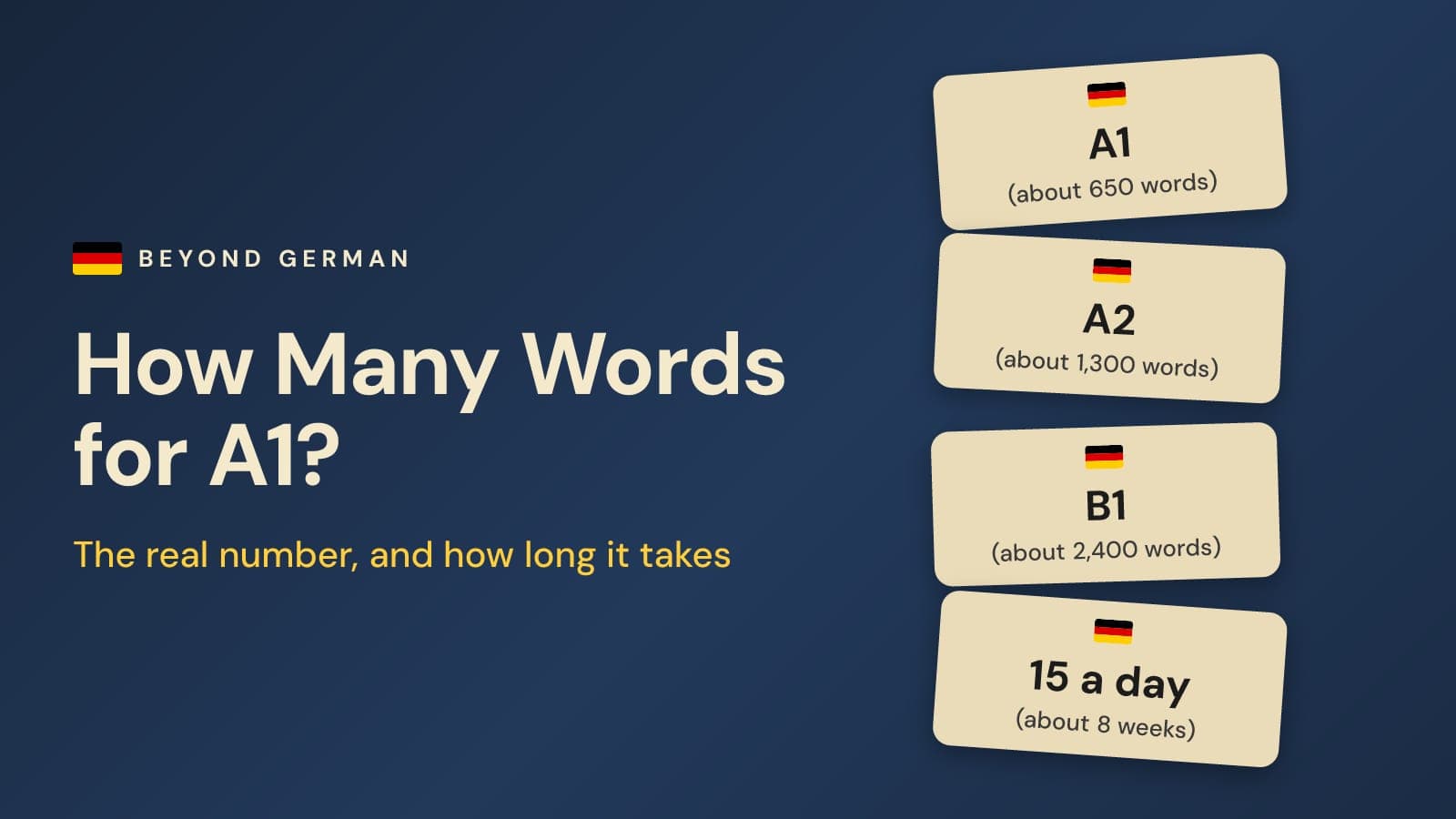
About 650 words for A1, 1,300 for A2 and 2,400 for B1. What an A1 vocabulary really looks like, which words to learn first and how long it takes.
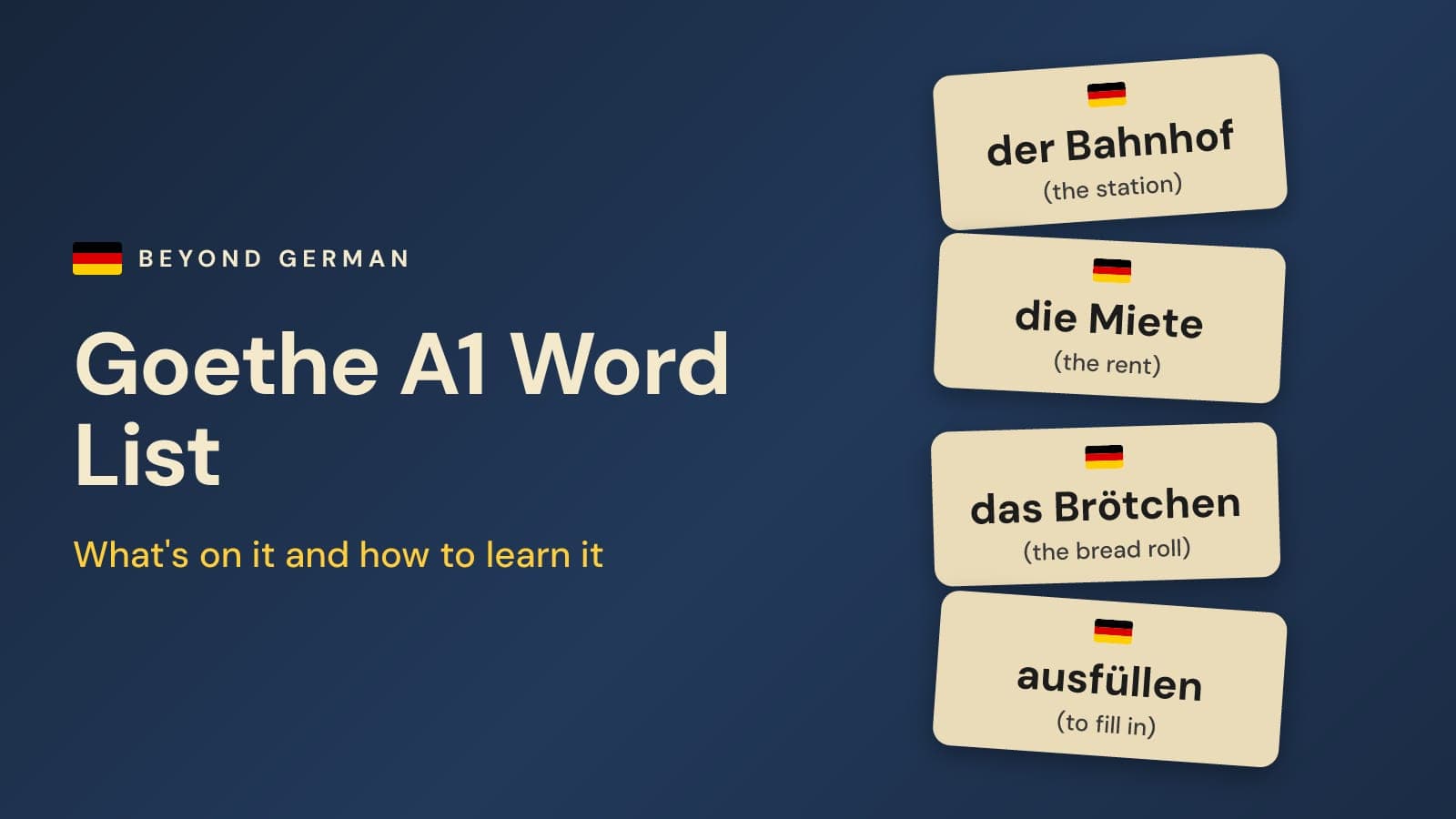
What's on the official Goethe A1 word list (Wortliste), how to read it, a free 40-word extract with English, and the fastest way to learn every word.
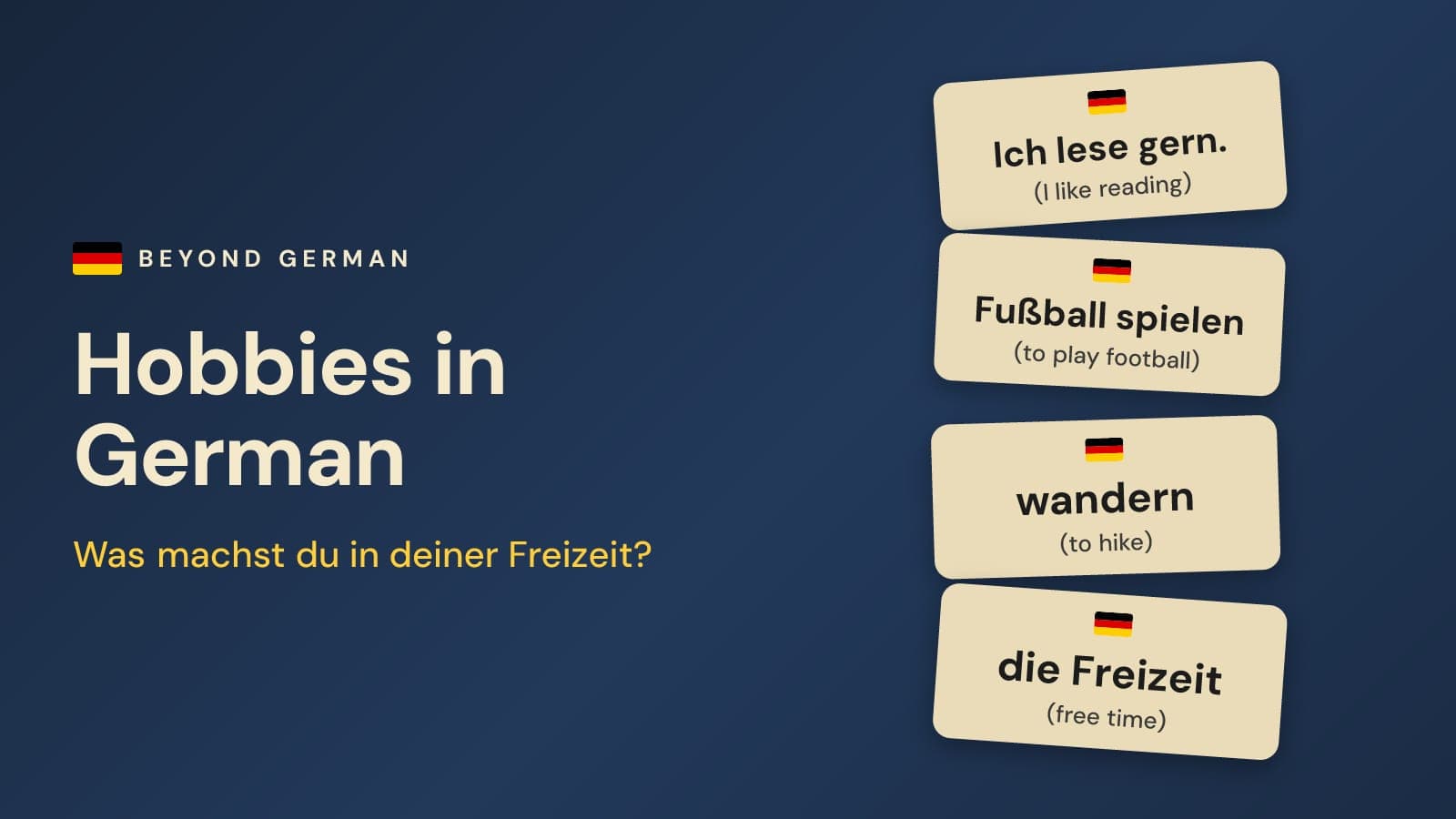
How to talk about hobbies in German: ask Was machst du in deiner Freizeit?, answer with gern, lieber and am liebsten, and learn Freizeit vocabulary by category.
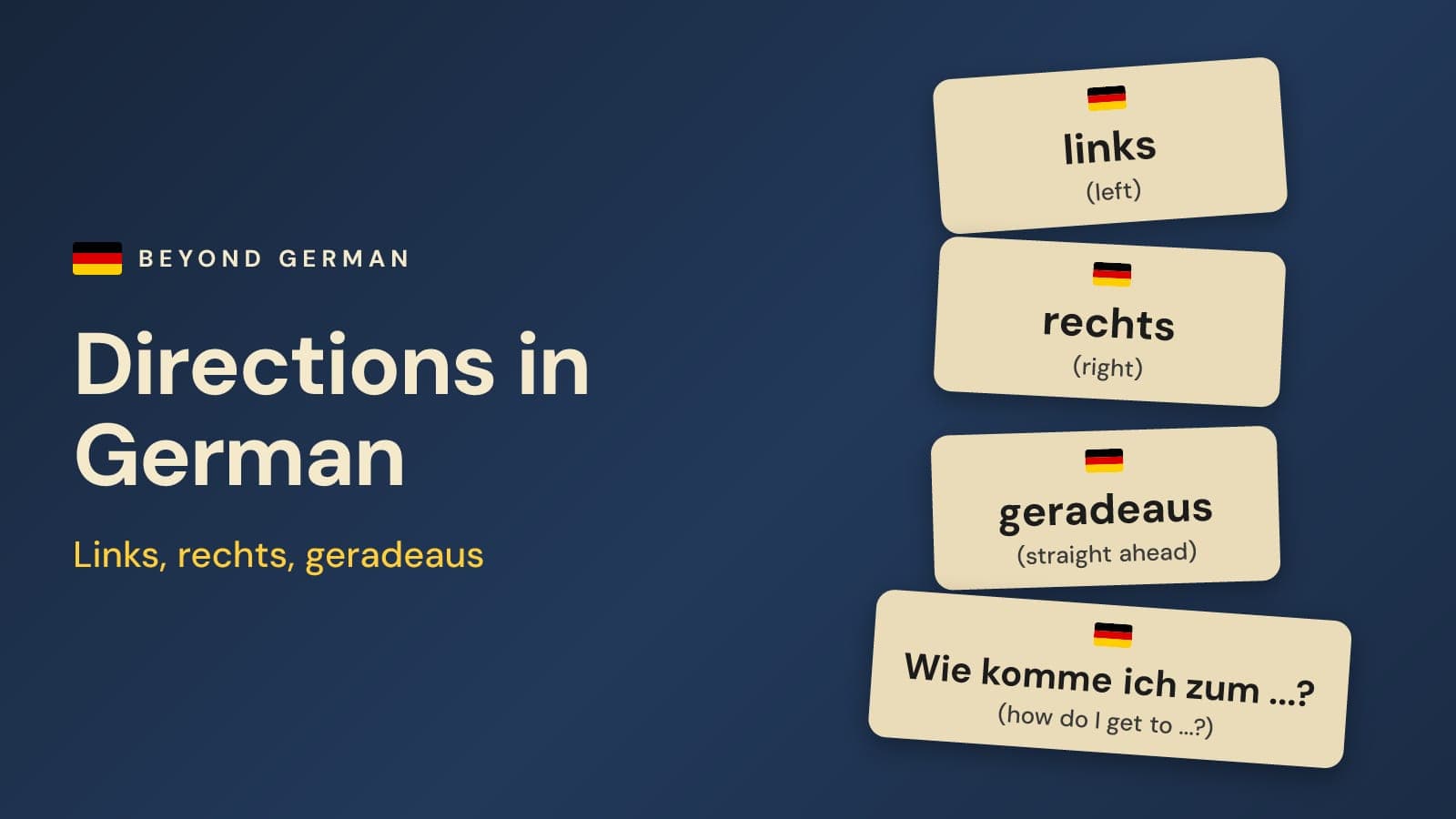
How to ask for directions in German (Wie komme ich zum Bahnhof?), understand links, rechts and geradeaus, plus city vocabulary, two dialogues and common mistakes.
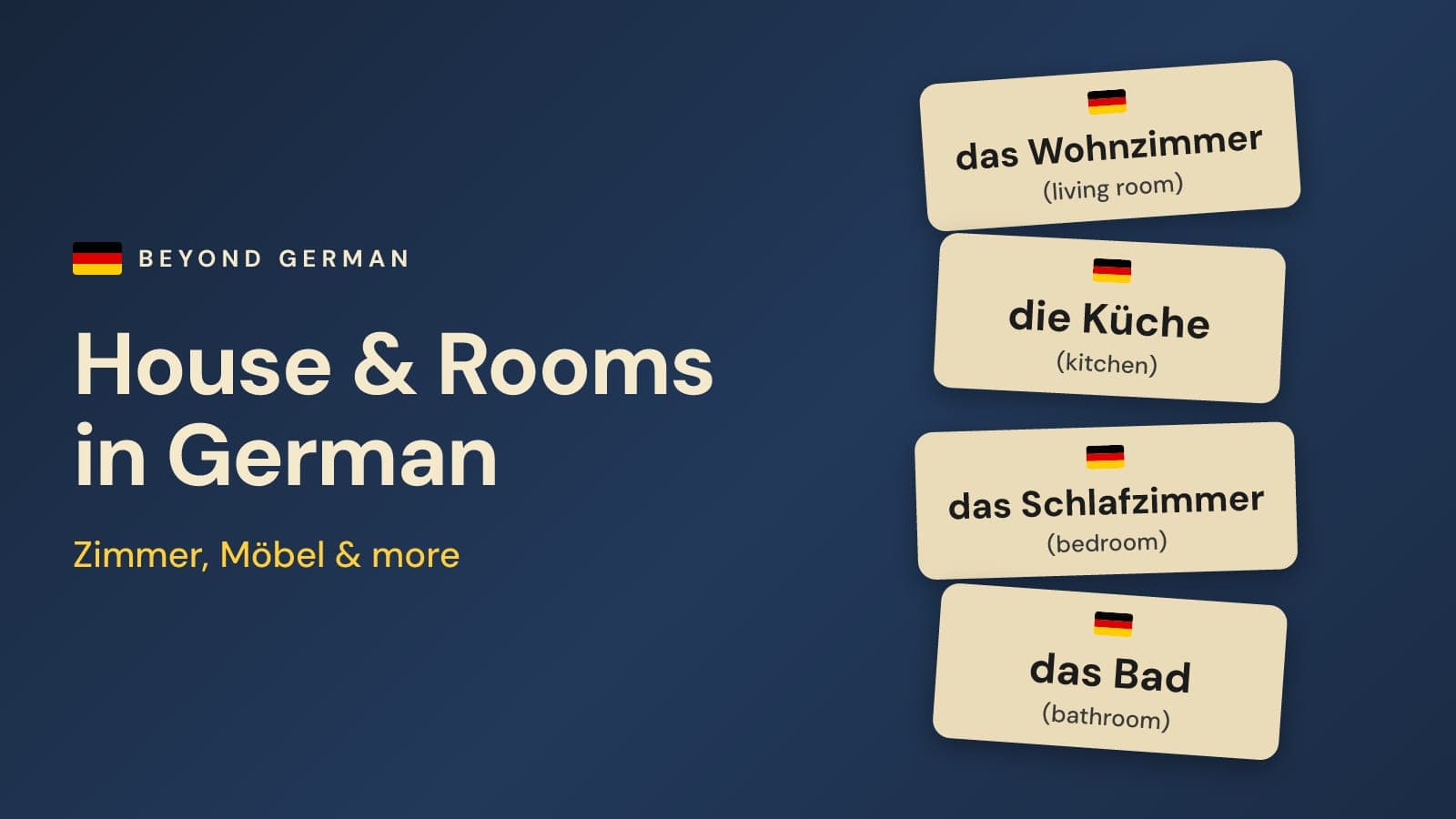
Rooms, furniture and appliances in German with articles and plurals, plus how to describe your home, which floor the Erdgeschoss is, and why Germans air their rooms.
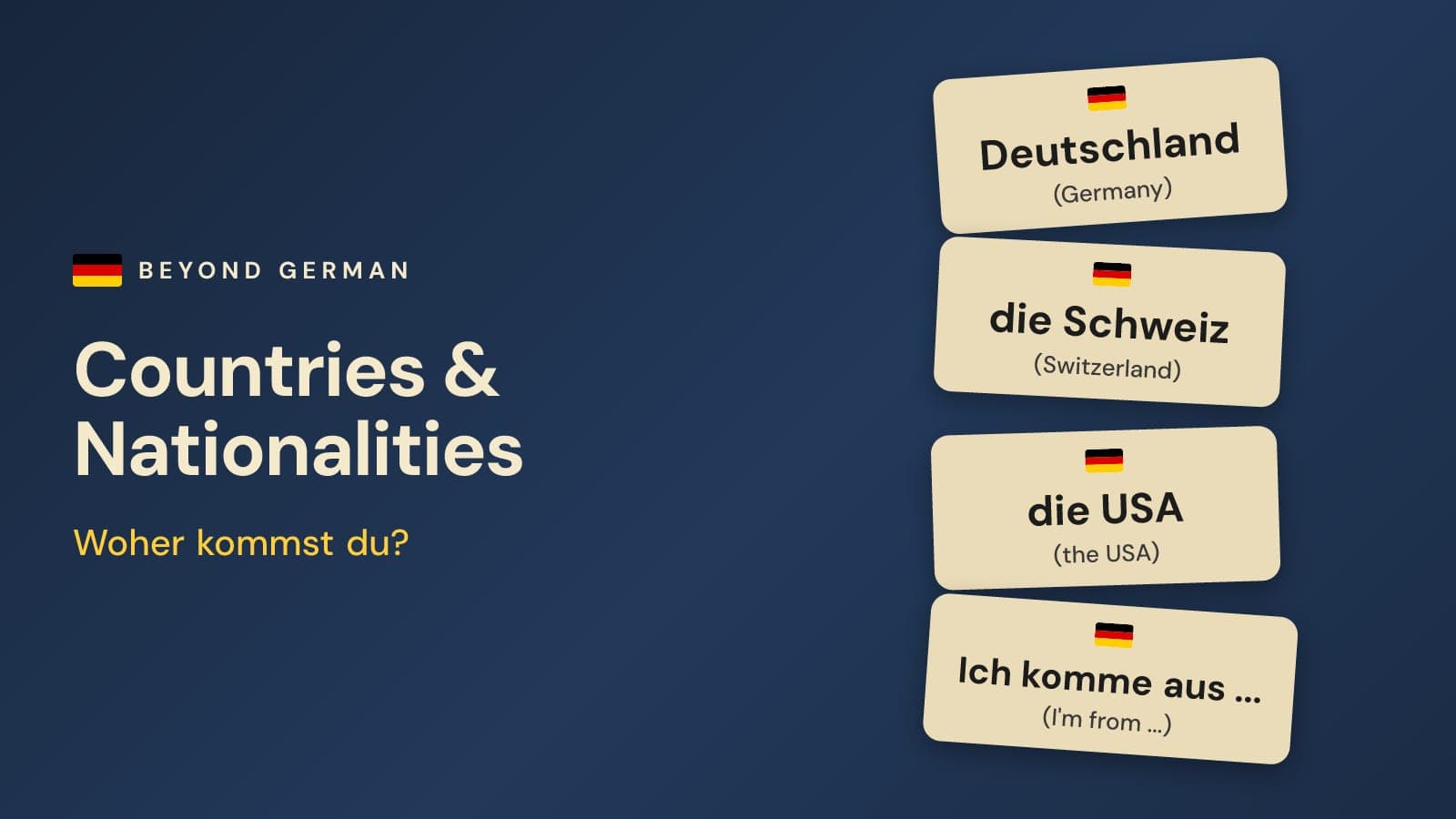
Most countries in German have no article, but die Schweiz, die Türkei and die USA do. Learn aus, in and nach, plus 34 countries with their nationalities and languages.
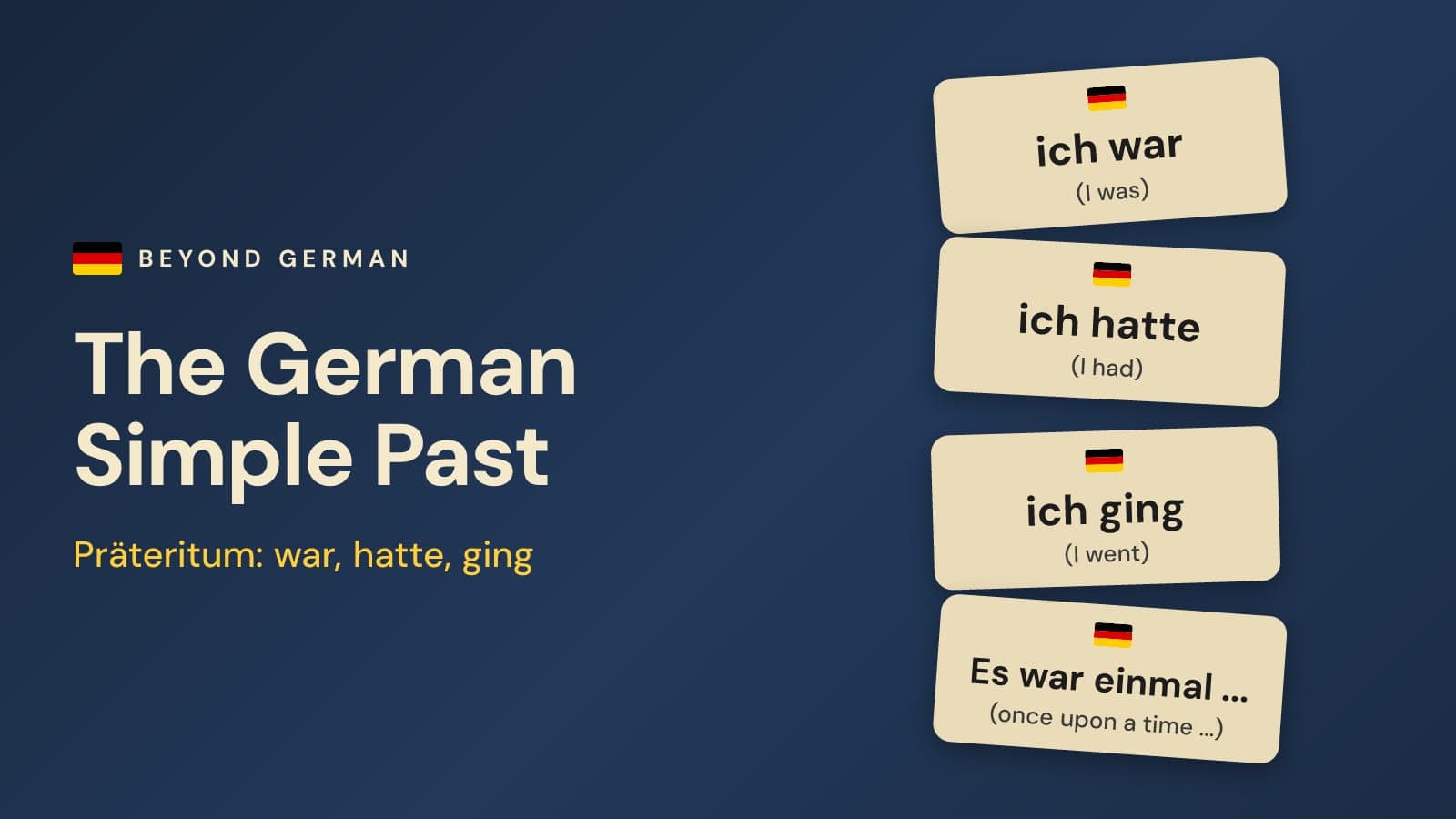
The Präteritum is the German past tense of stories and writing. Learn when to use it instead of the Perfekt, the -te endings, the vowel changes and 30 must-know verbs.
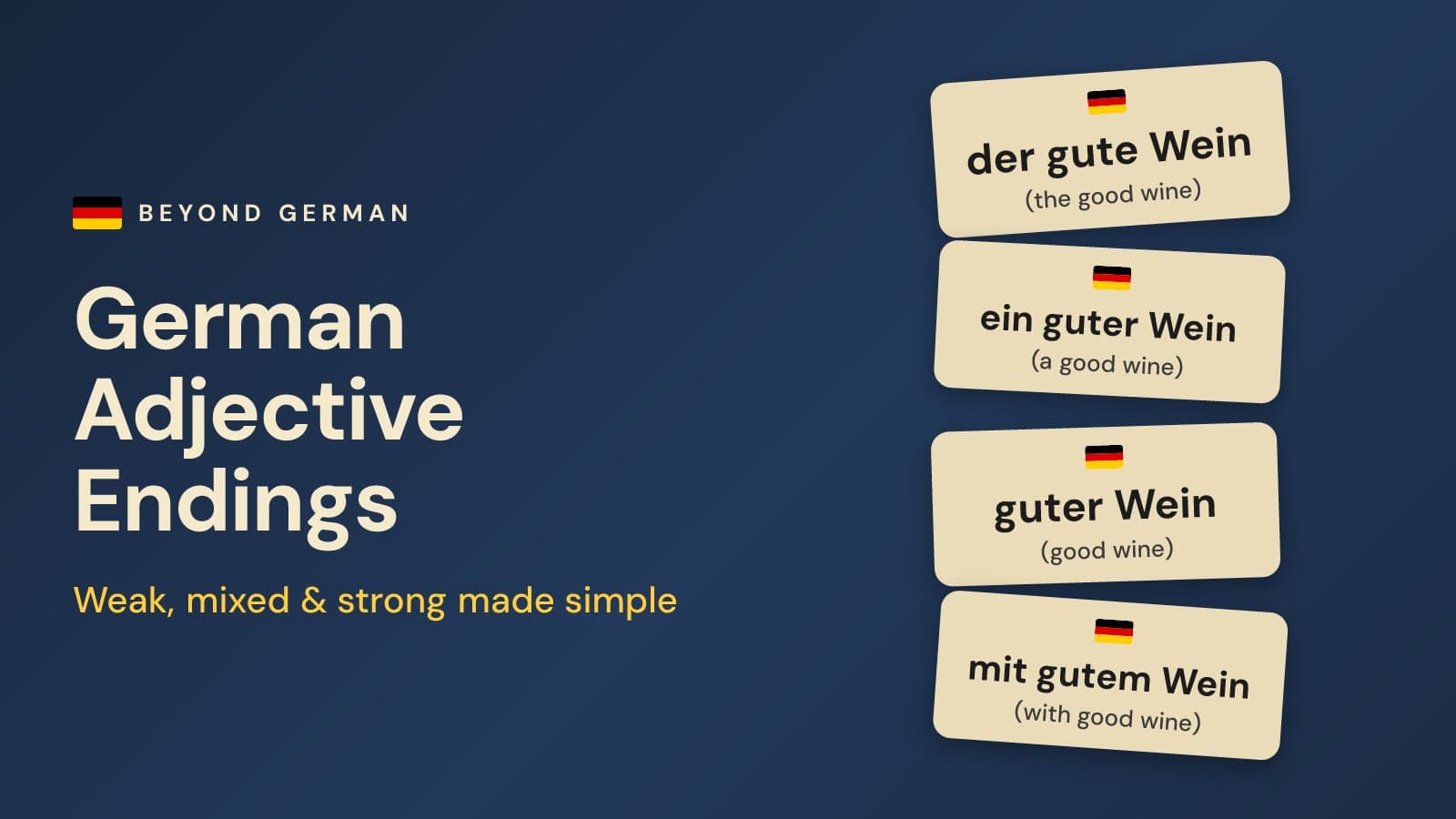
German adjective endings made simple: when adjectives need an ending, full charts for der-words, ein-words and no article, five shortcuts and practice with answers.
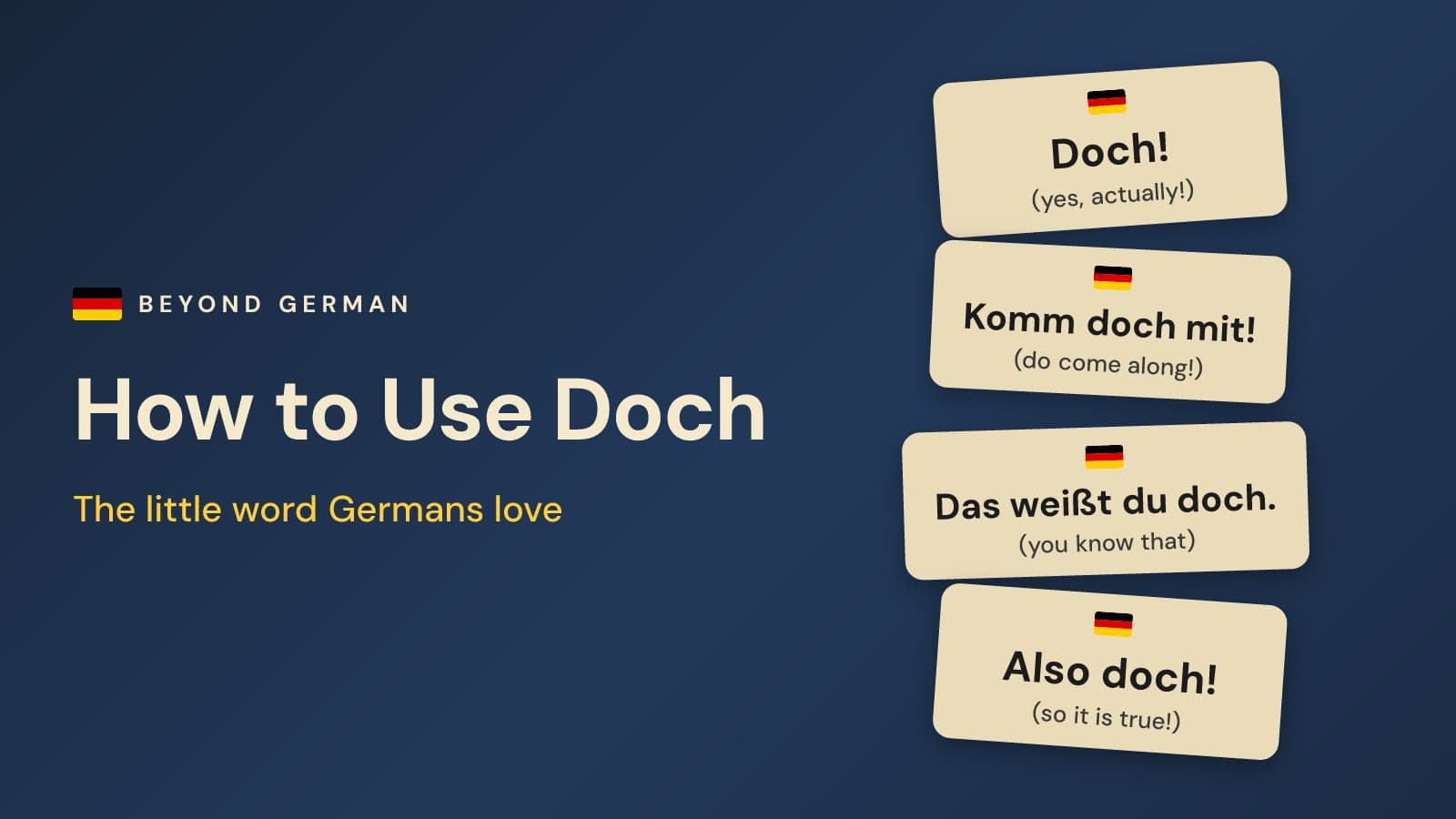
Doch is the yes that contradicts a negative question, a written "but" and a particle that urges, reminds and insists. Here's every use, plus ja doch, doch noch and doch vs ja.
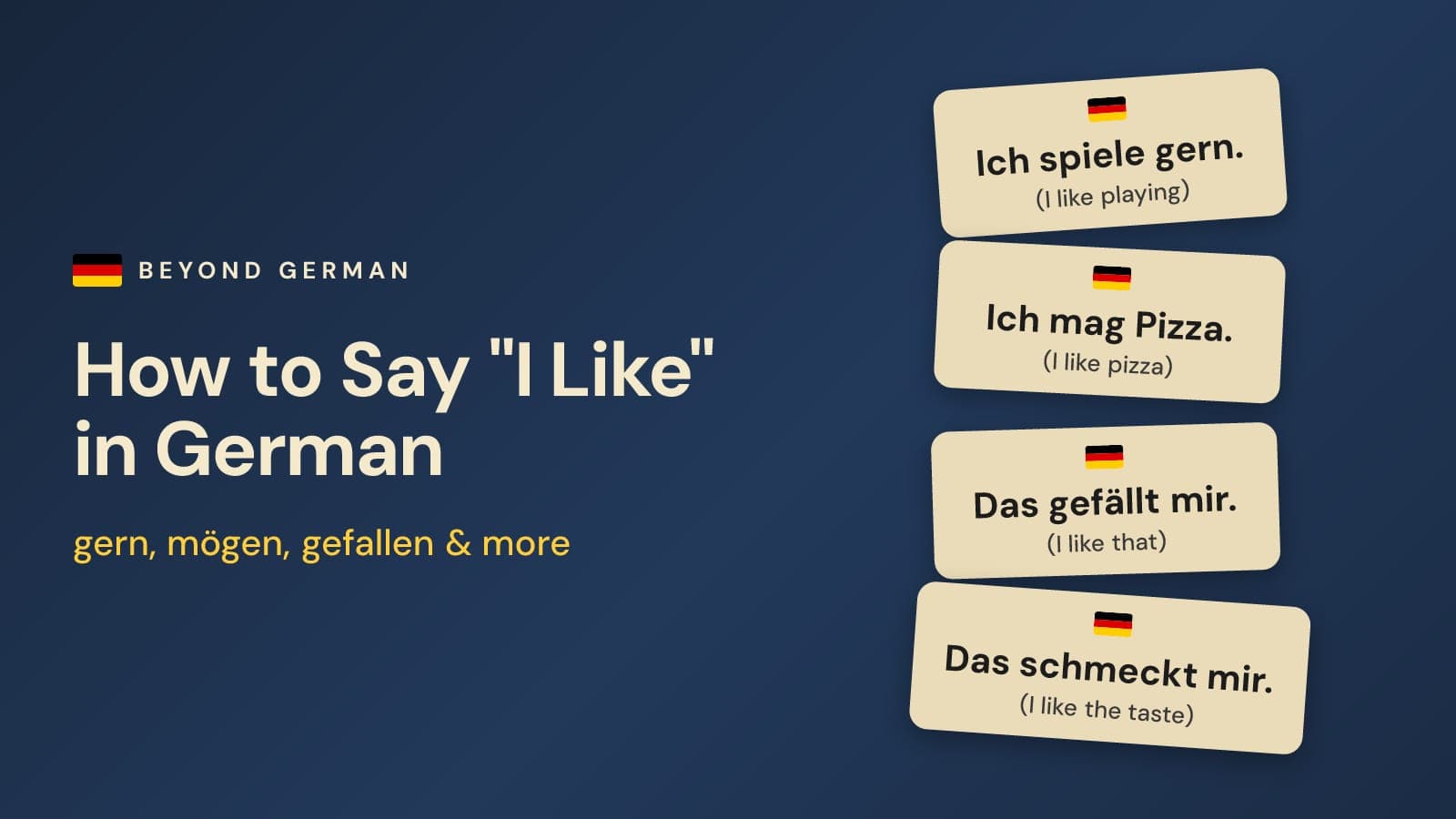
Use gern with verbs, mögen with nouns, gefallen and schmecken with the dative, and möchte for I'd like. With a big comparison table, lieber, am liebsten and common mistakes.
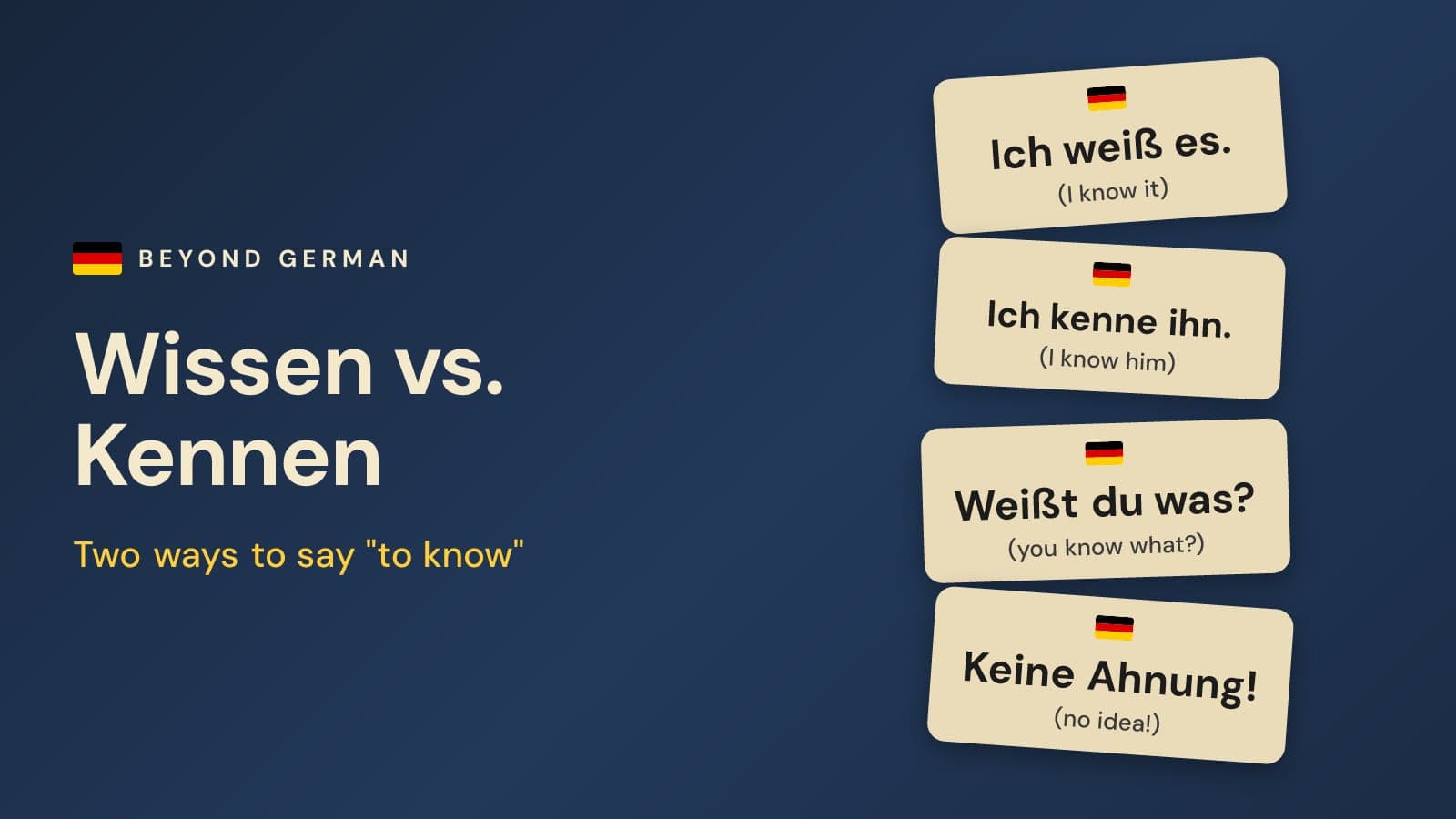
Wissen is for facts, kennen for people, places and things you're familiar with, and können for languages and skills. With a decision table, conjugations, idioms and common mistakes.
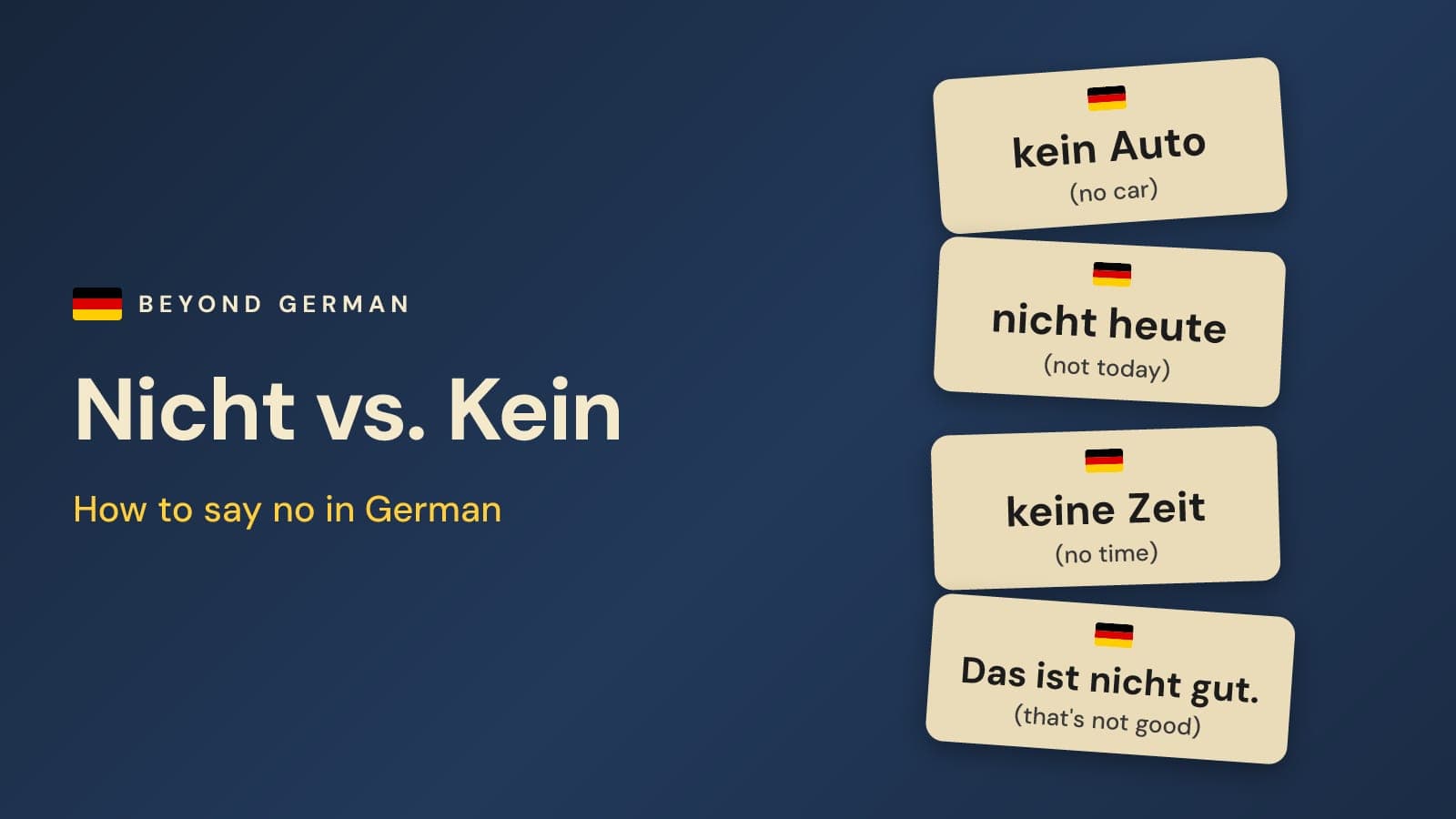
Use kein for nouns with ein or no article (kein Auto, keine Zeit) and nicht for everything else. Plus kein endings, where nicht goes, sondern, doch and nicht mehr.
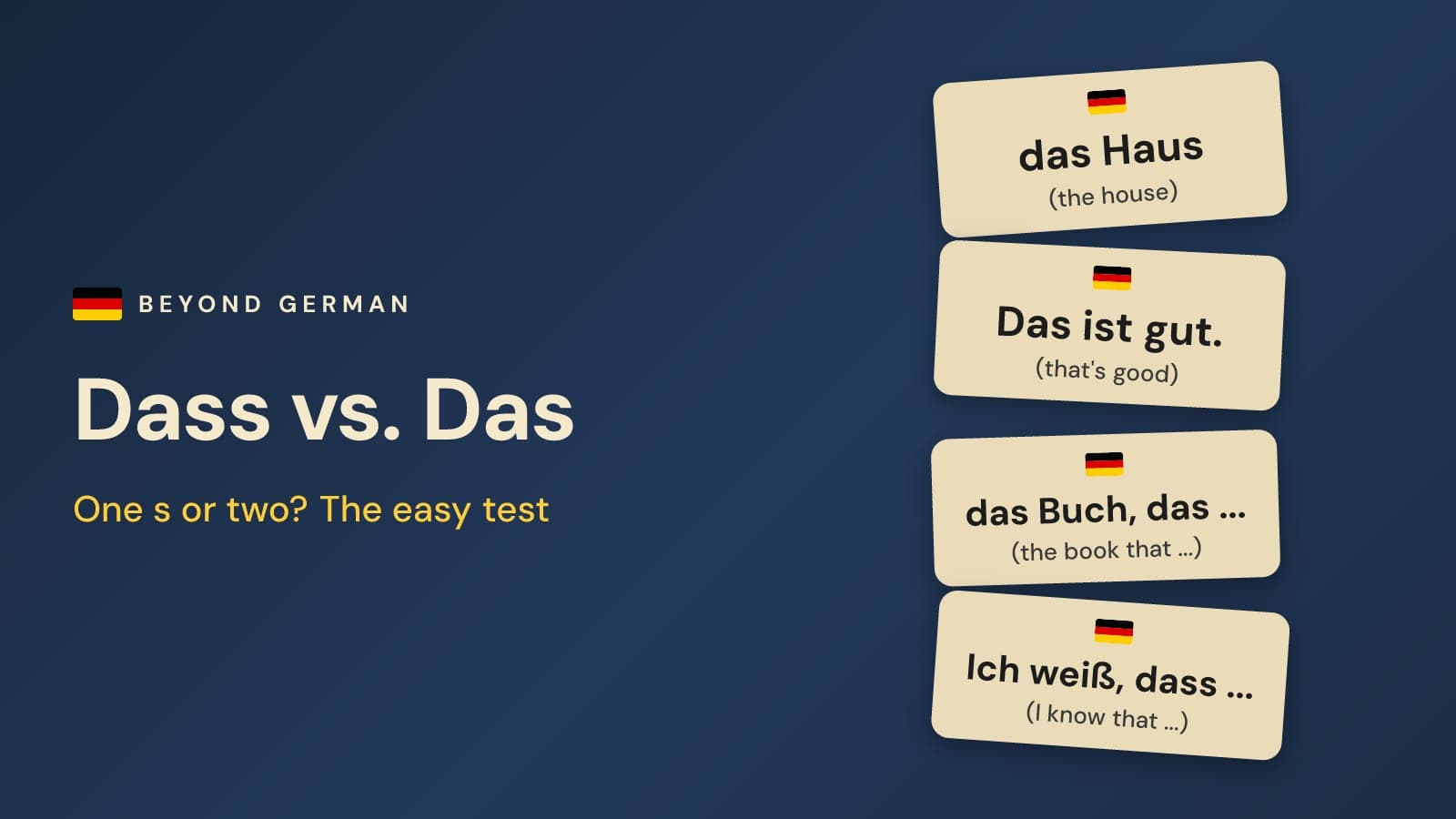
Das is an article or a pronoun (das Haus; Das ist gut; das Haus, das ich kaufe), while dass is a conjunction that sends the verb to the end. One quick test tells them apart.
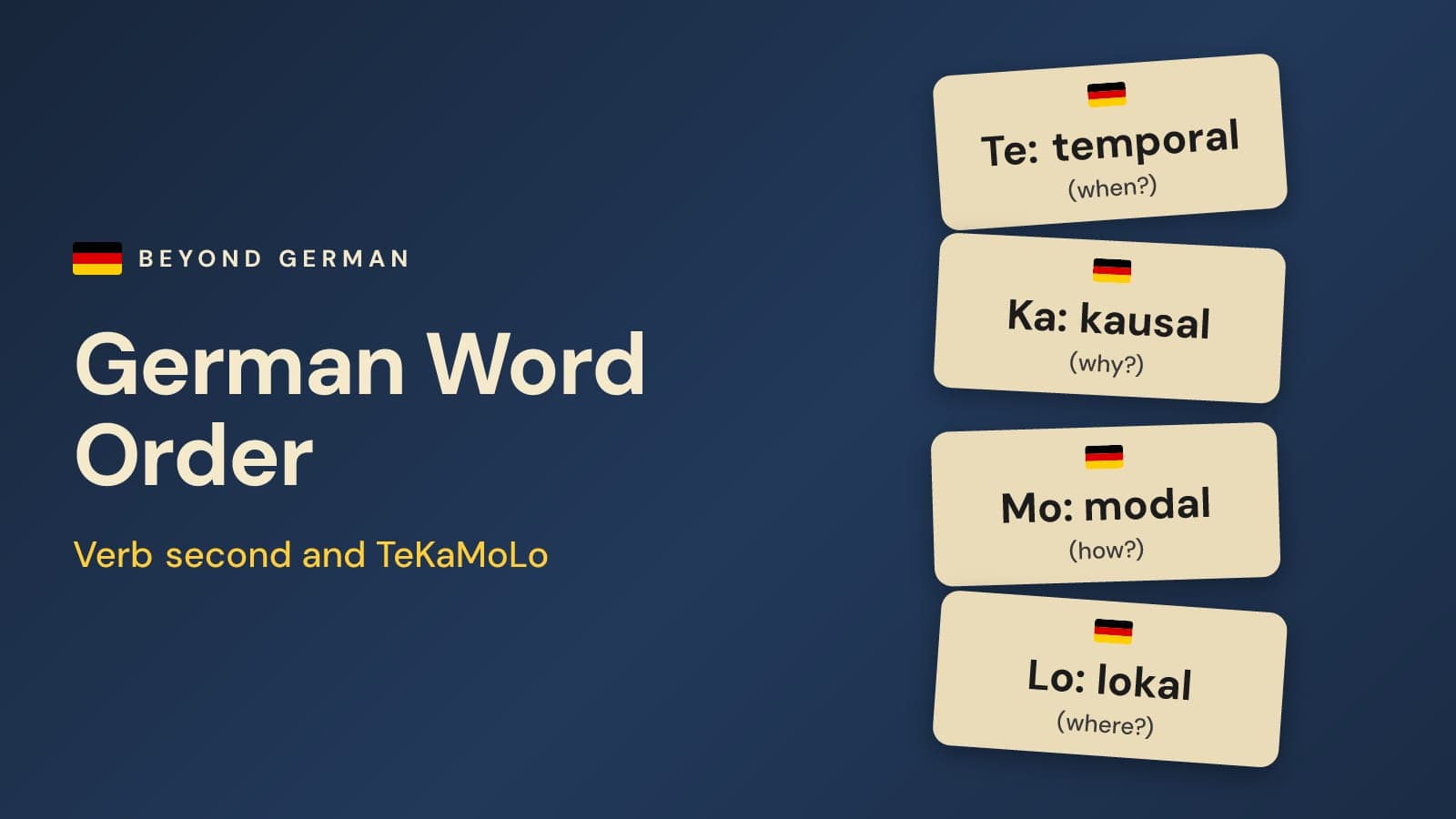
German word order in 7 rules: verb second, verb first in yes/no questions, verb last after weil and dass, the verb bracket, TeKaMoLo, object order and where nicht goes.
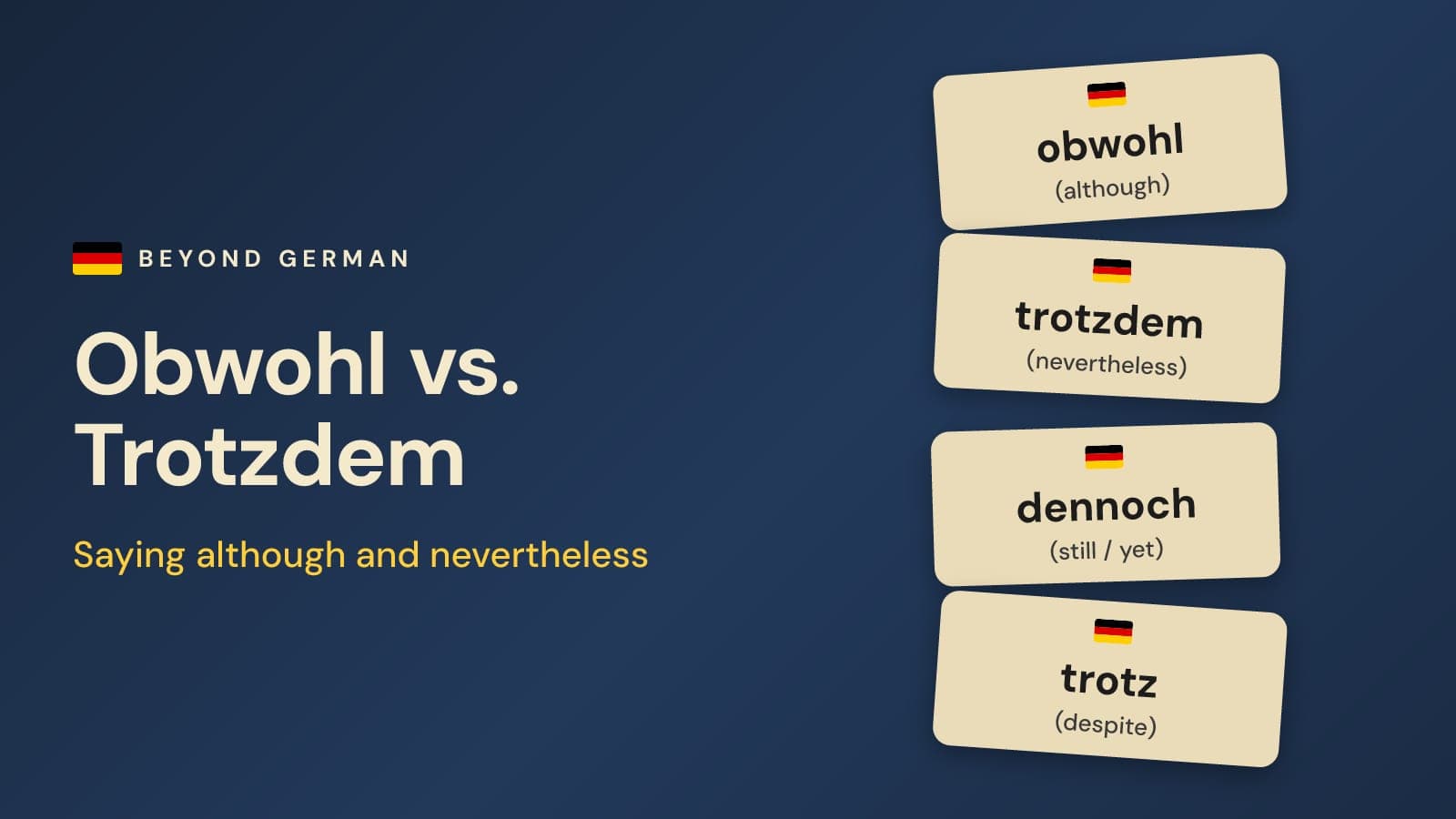
Obwohl means although and sends the verb to the end, while trotzdem and dennoch mean nevertheless and take the verb right after them. Allerdings, trotz and sondern are covered too.
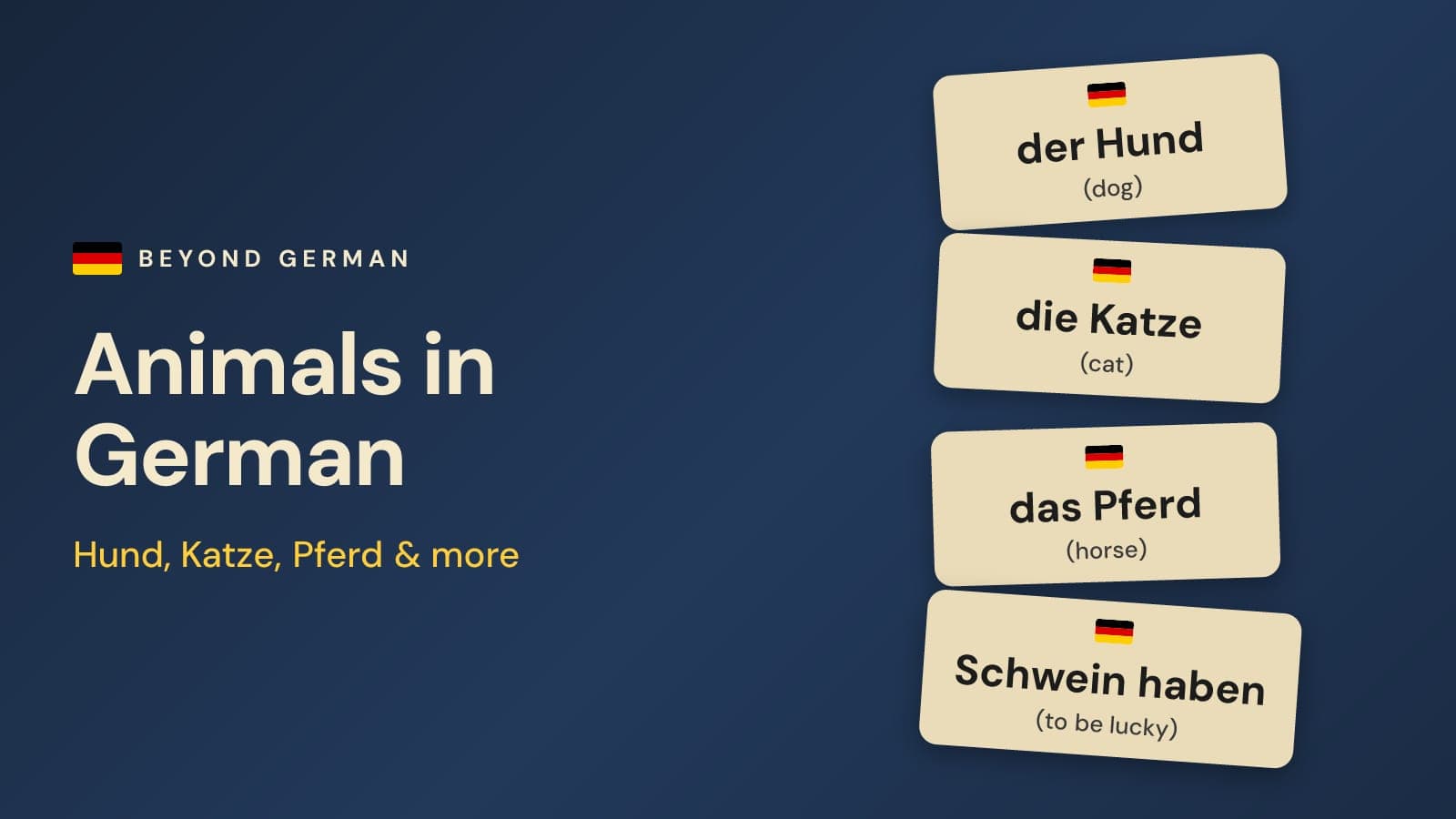
The most common animals in German, from der Hund and die Katze to der Igel, with articles, plurals, male and female forms, animal sounds and the idioms Germans love.
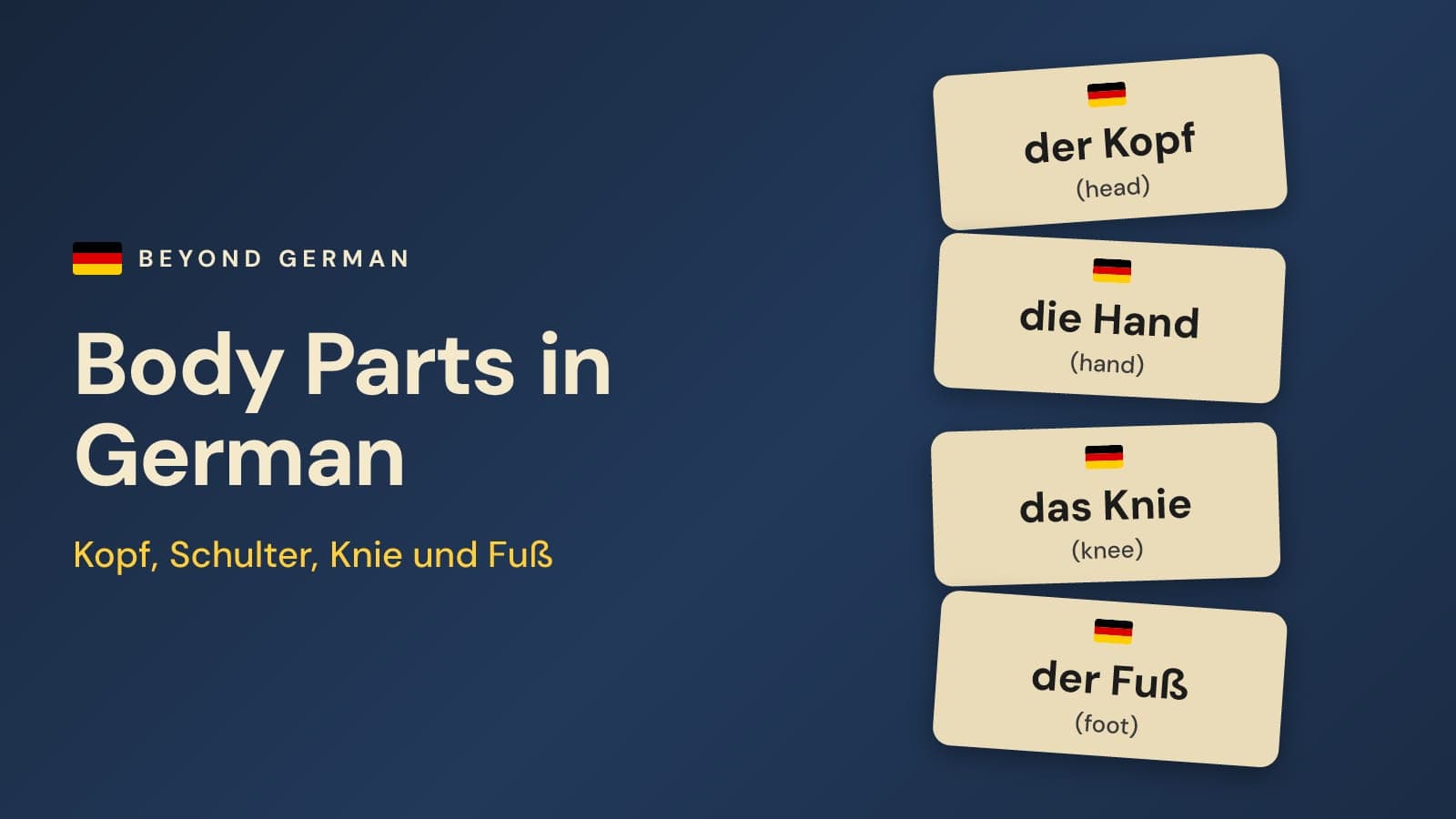
All the body parts in German with articles and plurals, how to say what hurts, the German "Head, Shoulders, Knees and Toes" song and everyday body idioms.
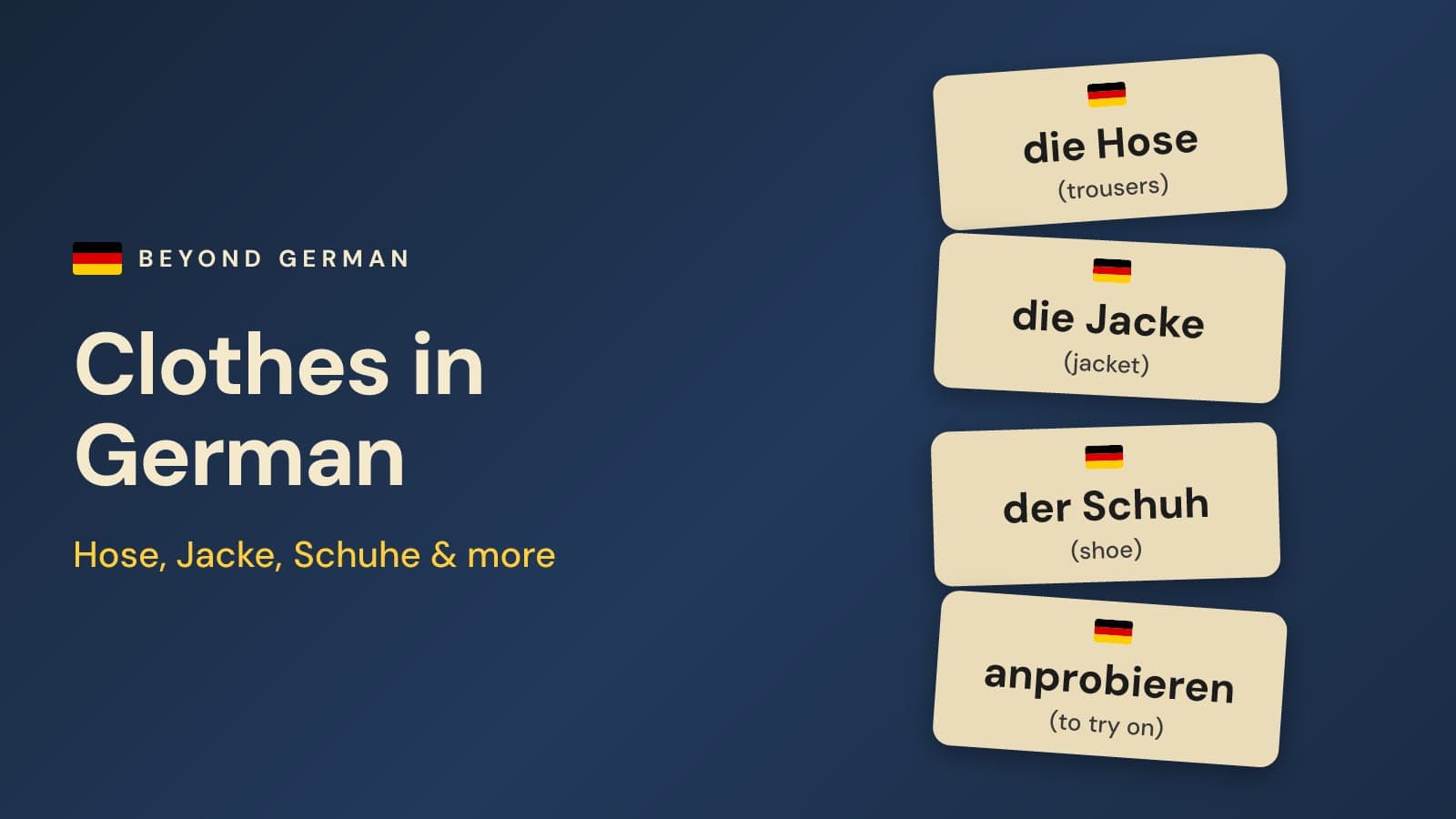
German clothing words from das Hemd to die Hose (yes, singular), with articles and plurals, plus anziehen vs. tragen, EU sizes and phrases for the fitting room.
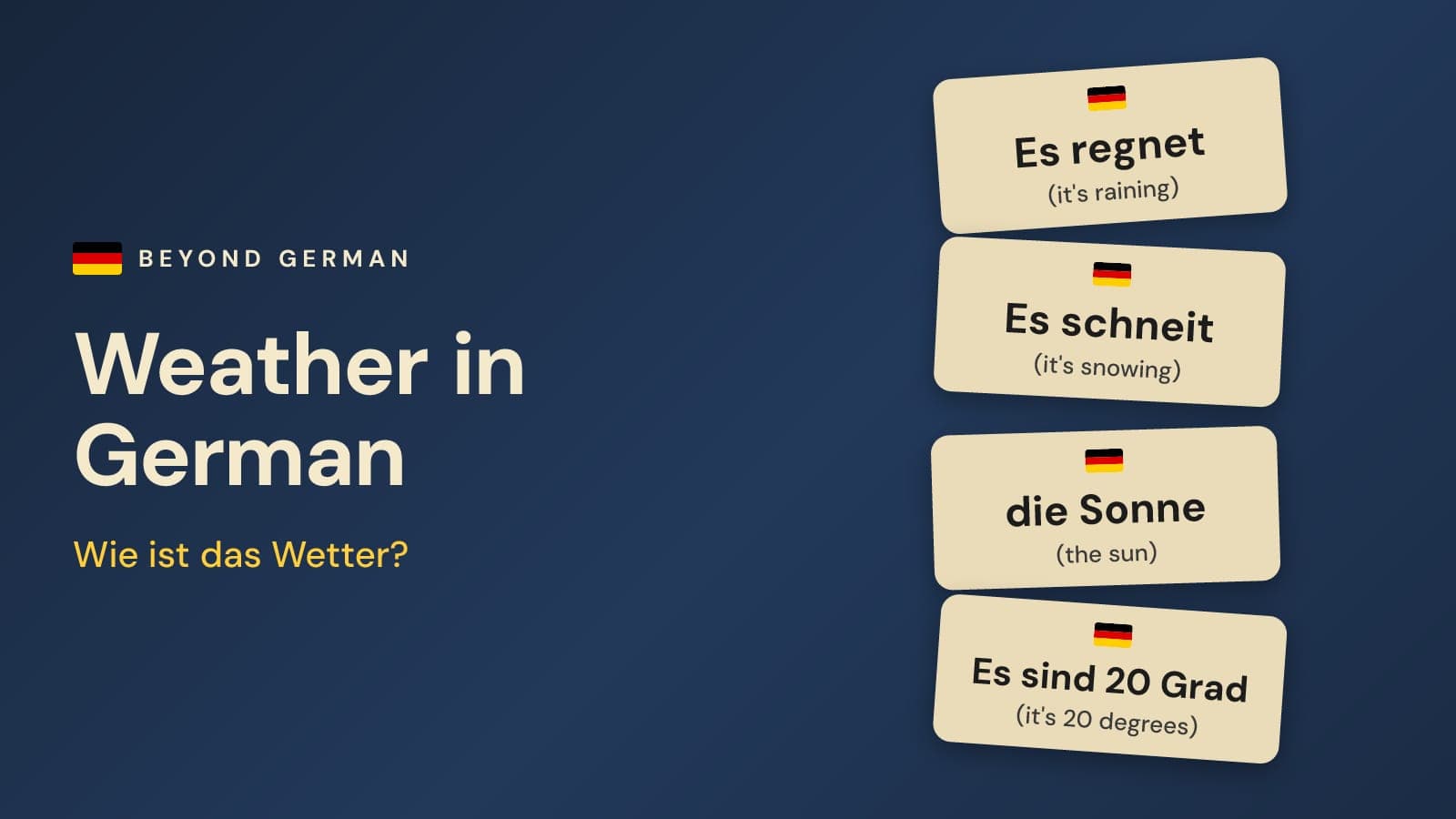
How to talk about the weather in German: Wie ist das Wetter?, es regnet, es schneit, temperatures in Grad, forecast words, small talk and idioms like Sauwetter.
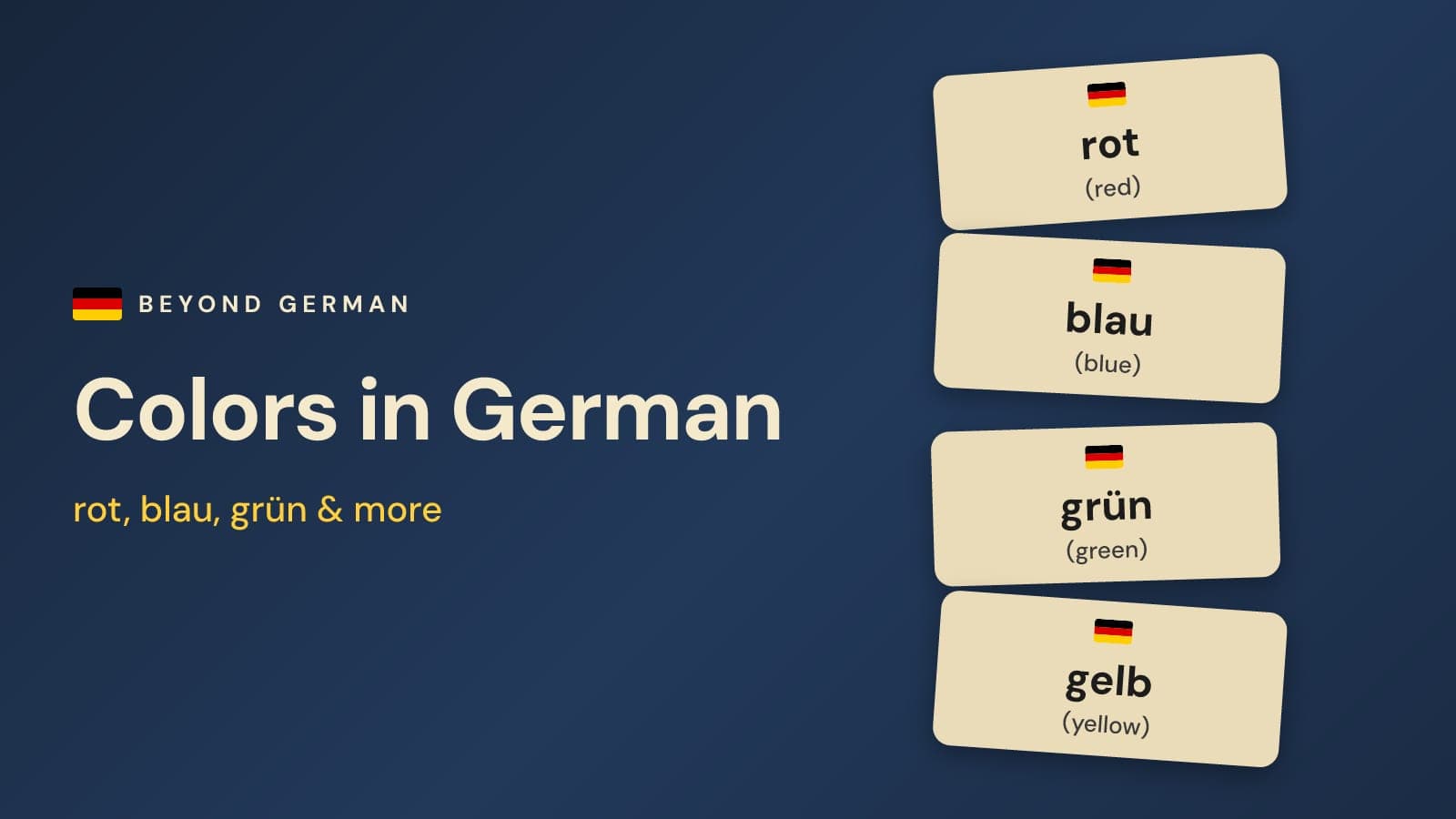
All the colors in German with pronunciation, light and dark shades, when colors take endings, how to ask Welche Farbe hat…?, and the color idioms Germans really use.
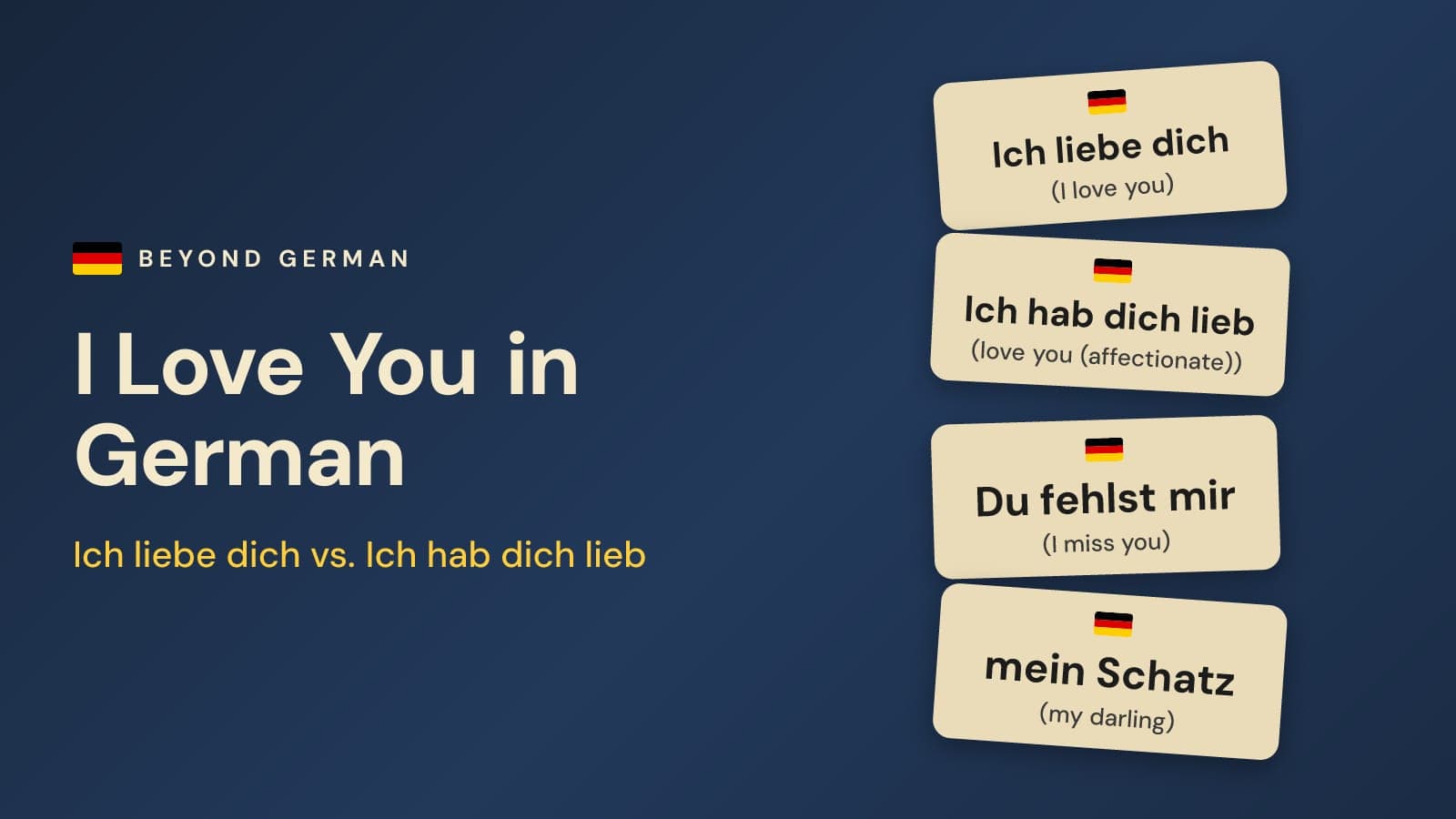
Learn when to say Ich liebe dich and when to say Ich hab dich lieb, plus German pet names, romantic phrases, texting codes like HDL and Valentine's Day customs.
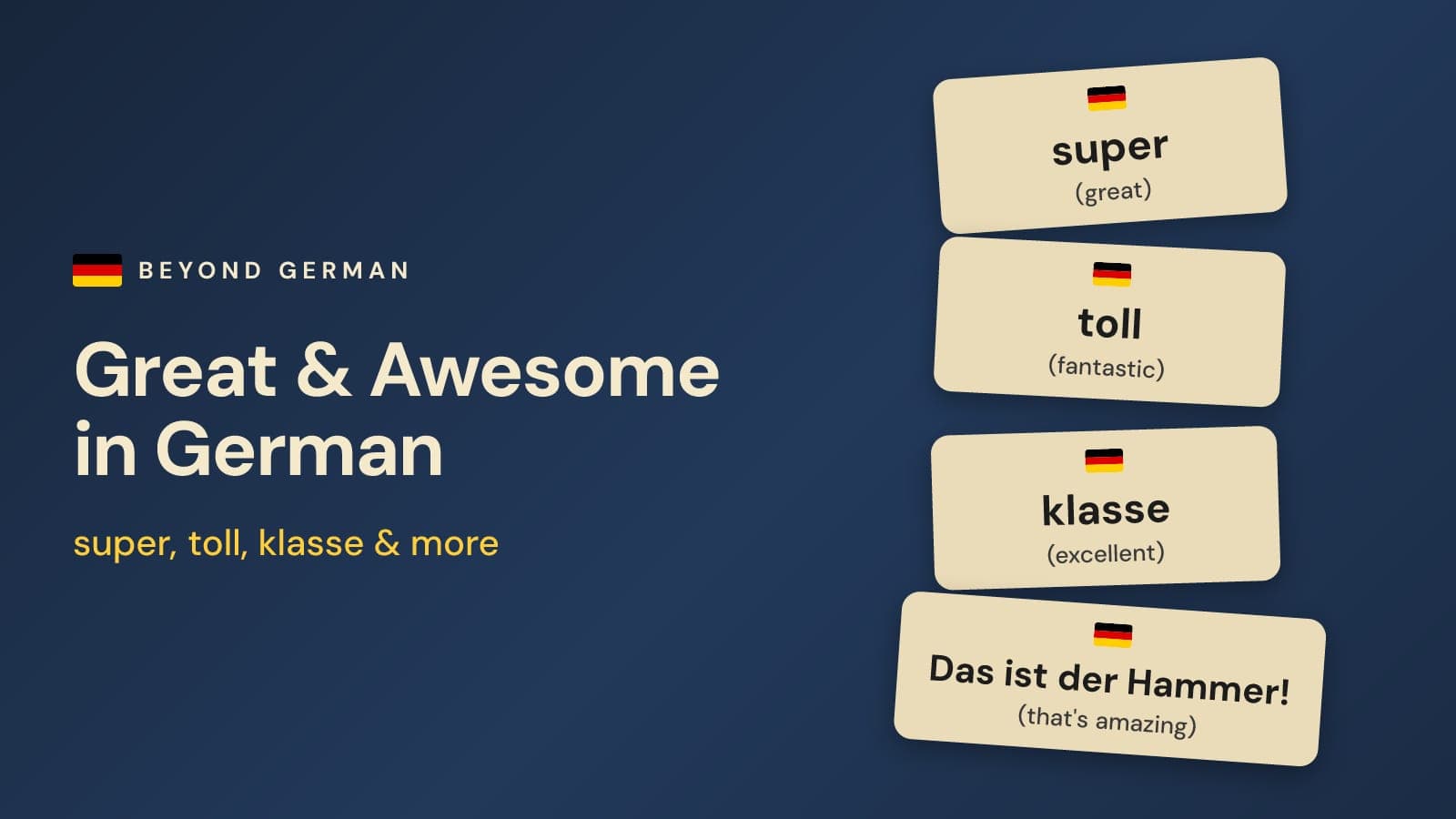
Super, toll, klasse or ausgezeichnet? Learn the German words for great, awesome, excellent and cool, from neutral to slang, plus compliments for people, food and looks.
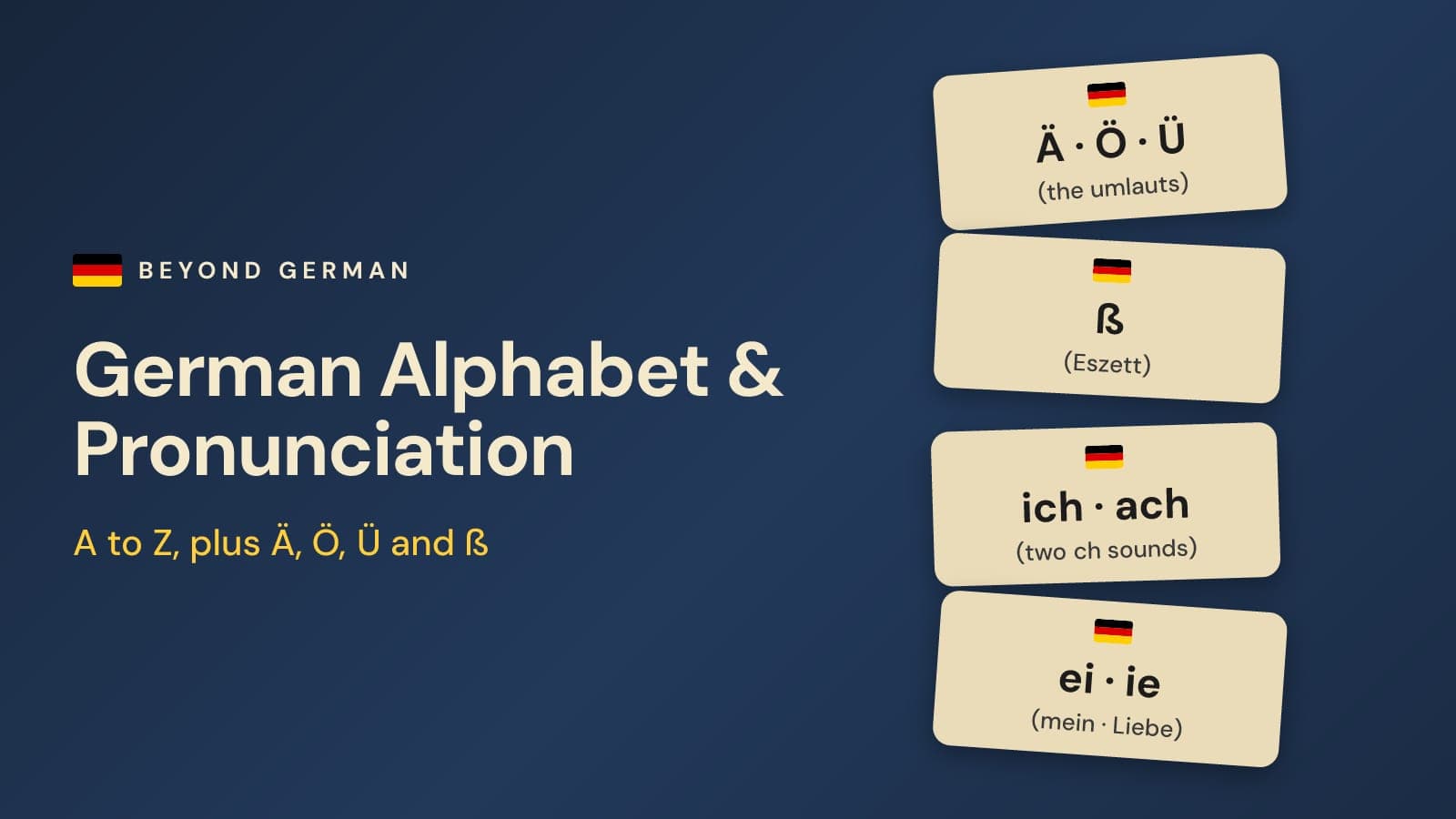
The German alphabet has 26 letters plus ä, ö, ü and ß. Learn each letter's name and sound, how to spell out loud on the phone, and the pronunciation rules English speakers need.
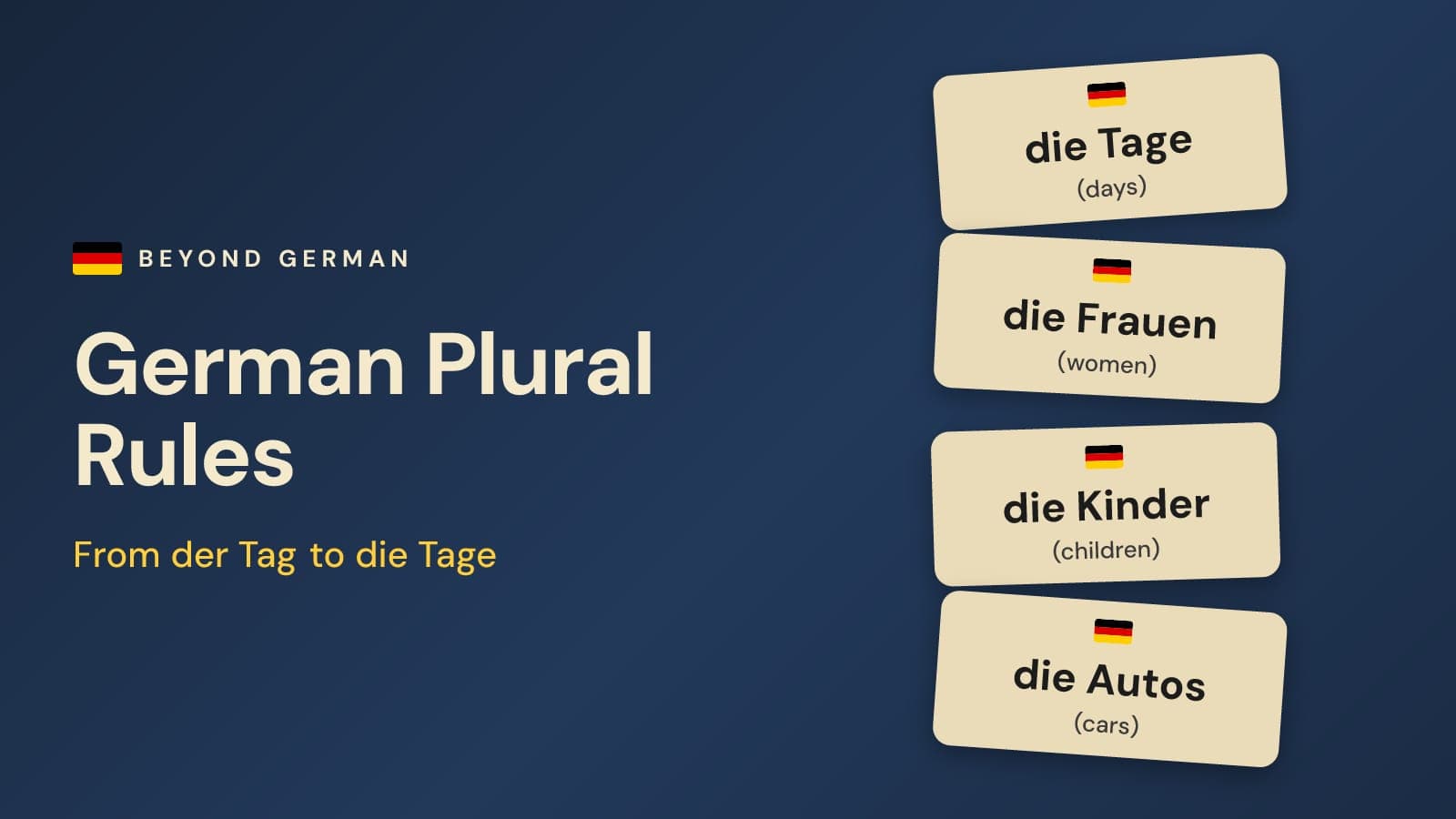
German nouns form plurals in five ways: -e, -(e)n, -er, -s or no ending, often with an umlaut. Learn which nouns take which ending, how reliable each pattern is, and the exceptions.
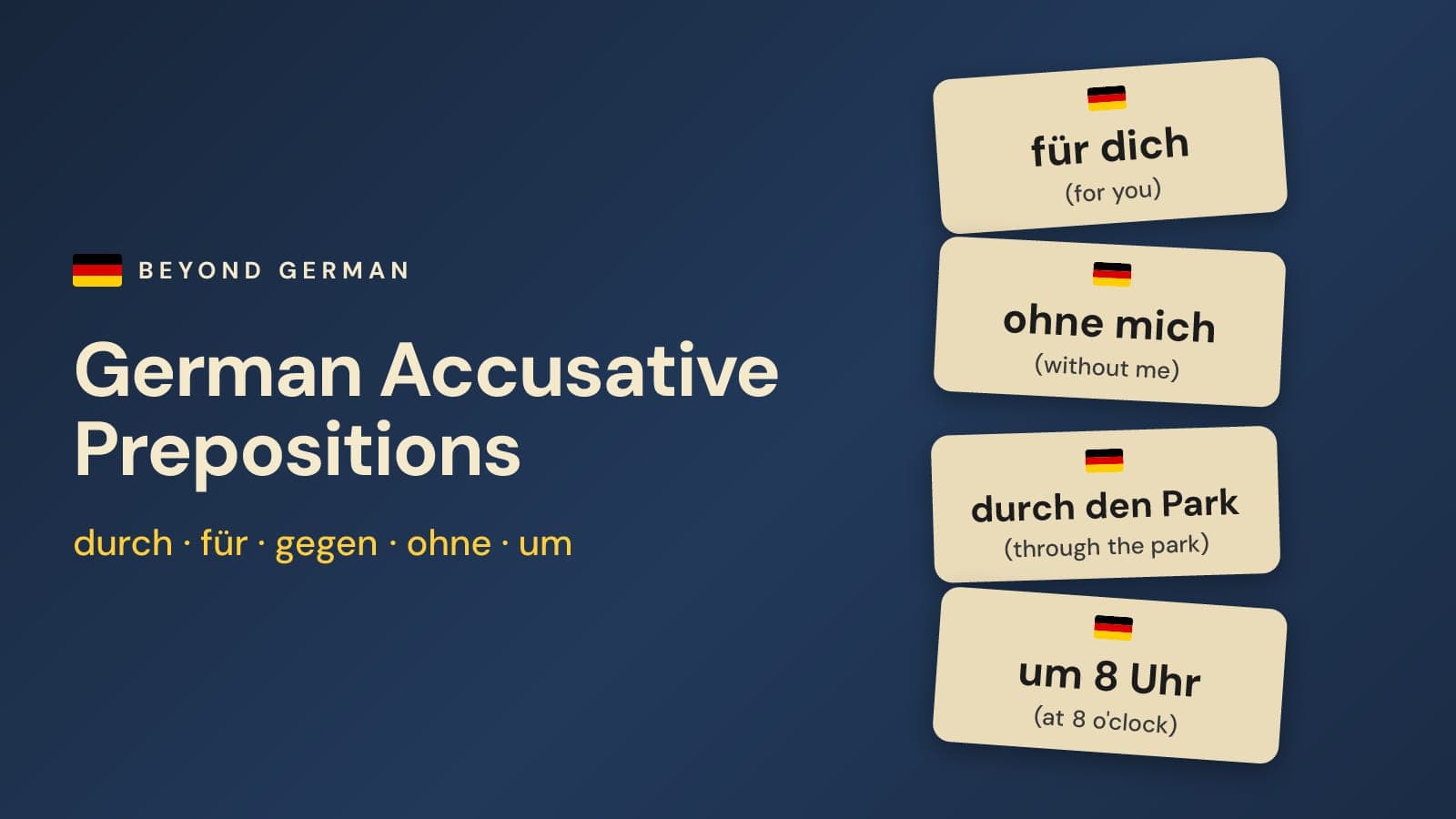
The German accusative prepositions durch, für, gegen, ohne and um (plus bis and entlang) with meanings, examples, endings, contractions and the DOGFU memory trick.
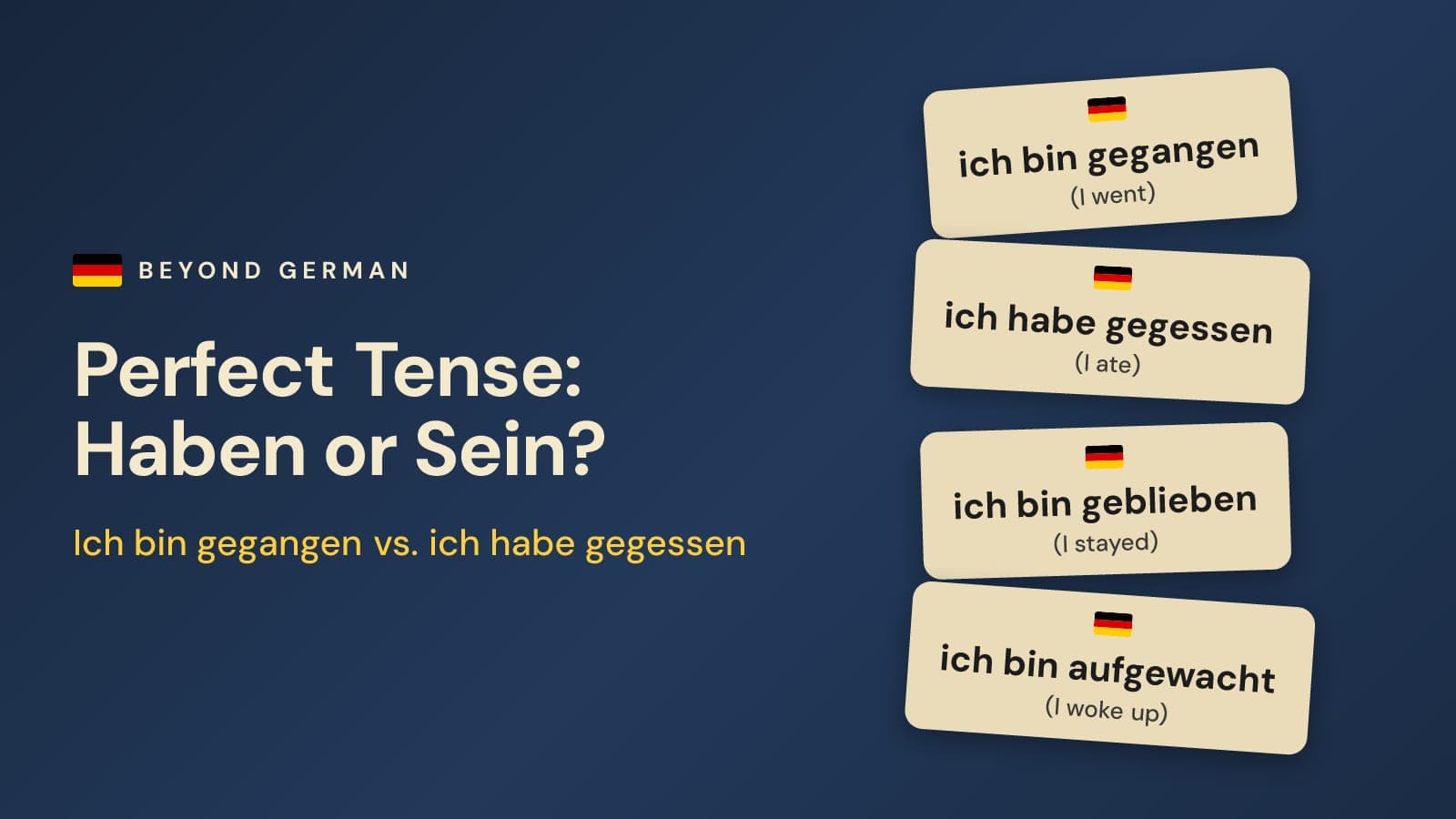
Most verbs form the German Perfekt with haben. Use sein for movement from A to B, a change of state, and sein, bleiben and passieren. Rules, tricky cases and 30 verbs.
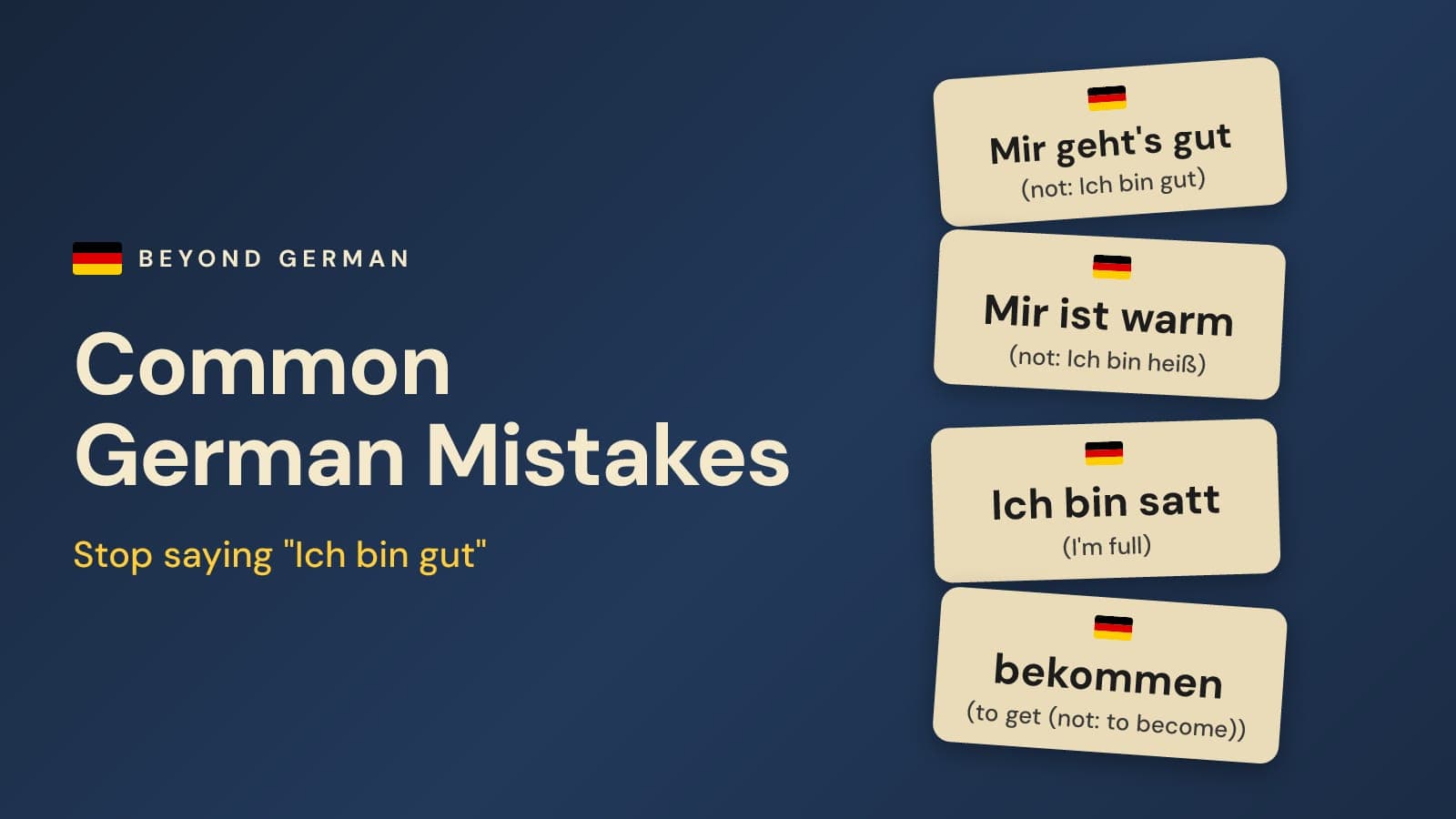
Why 'Ich bin heiß' gets laughs and 'Ich will' doesn't mean 'I will': 15 common German mistakes English speakers make, plus the false friends to watch out for.
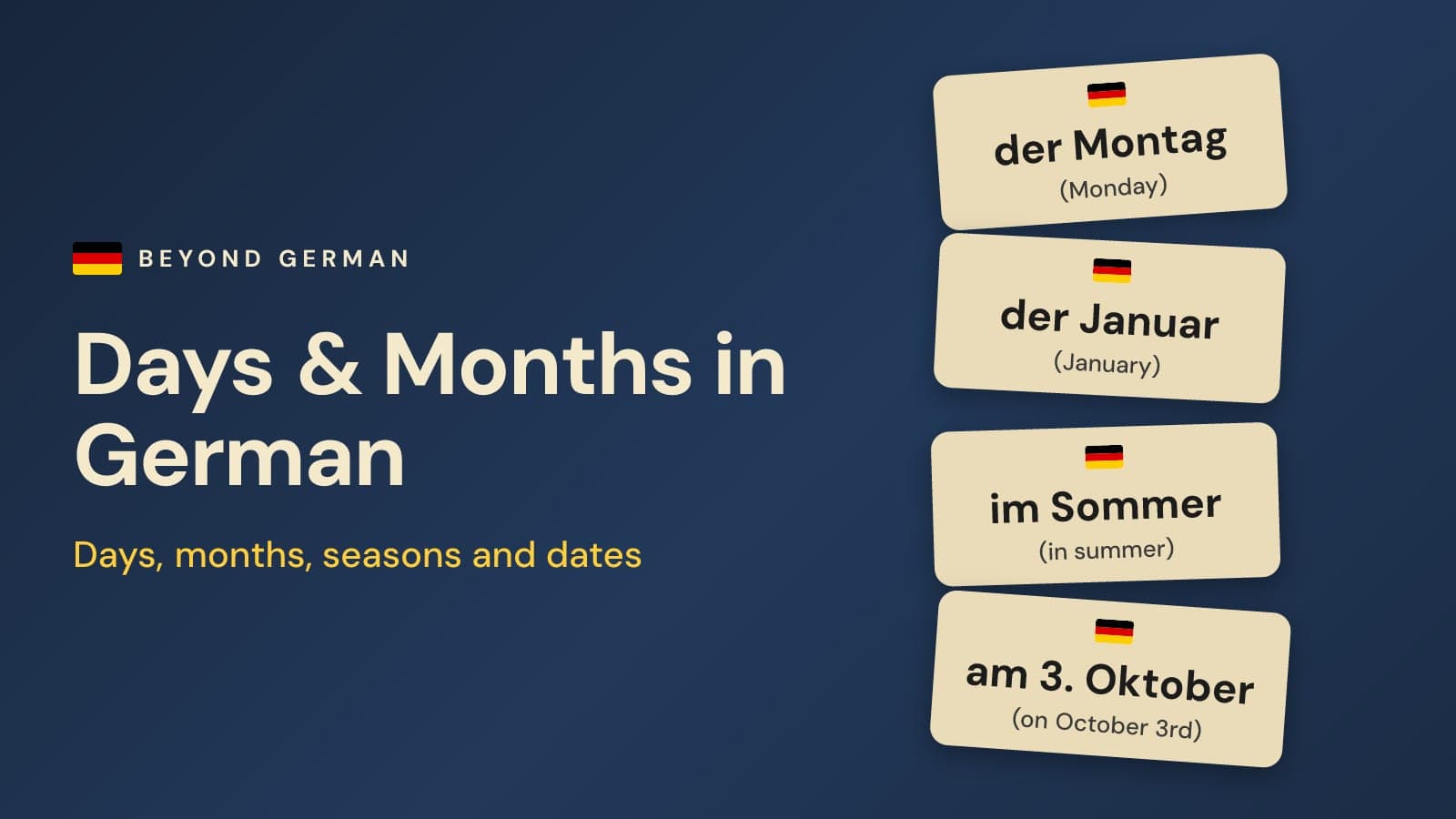
Learn the days of the week and months in German with articles, abbreviations and pronunciation, plus seasons, dates like am 3. Oktober, years and holidays.
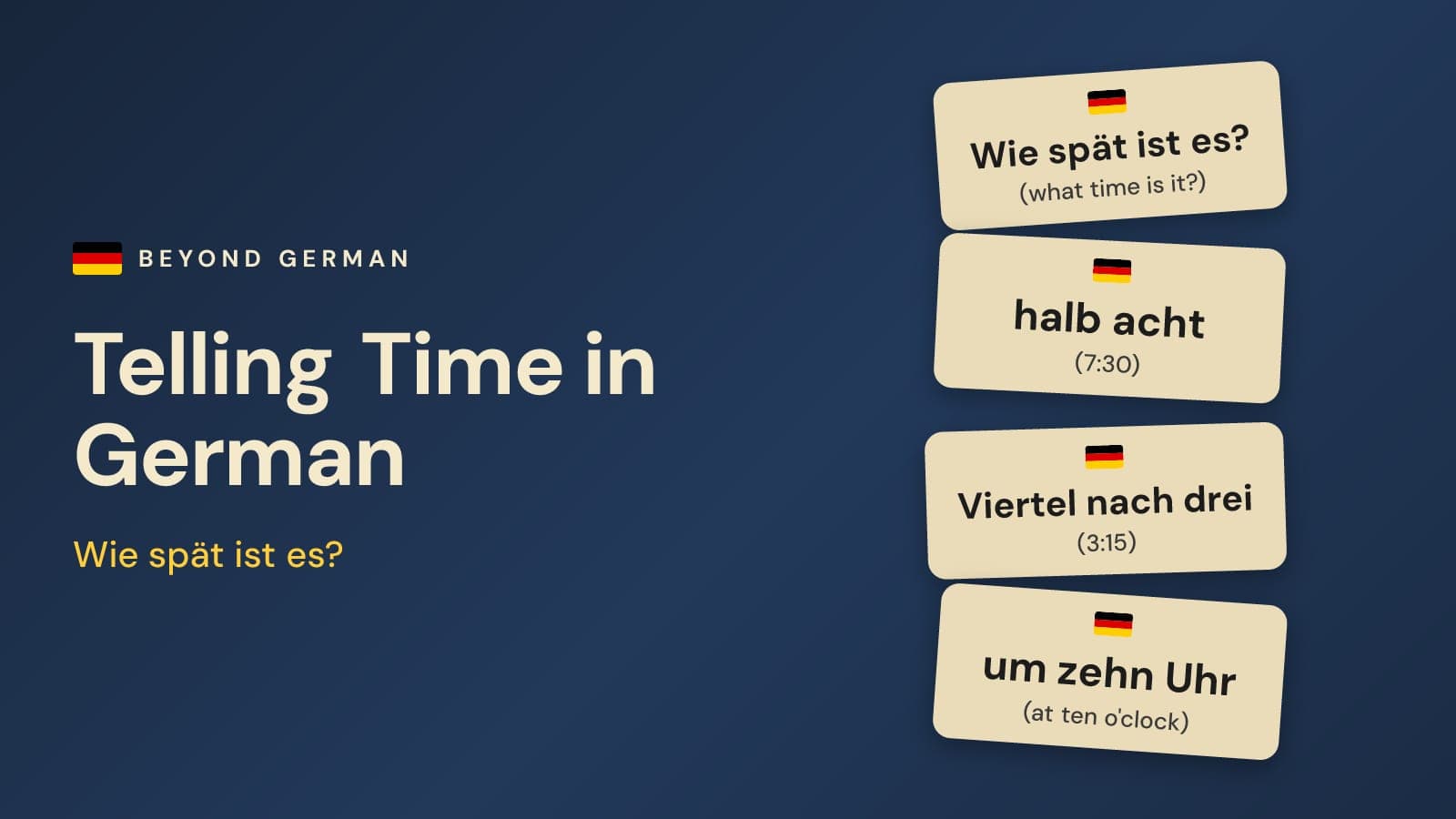
Learn how to tell time in German: ask Wie spät ist es?, use the 24-hour clock, master Viertel nach and Viertel vor, and see why halb acht means 7:30.
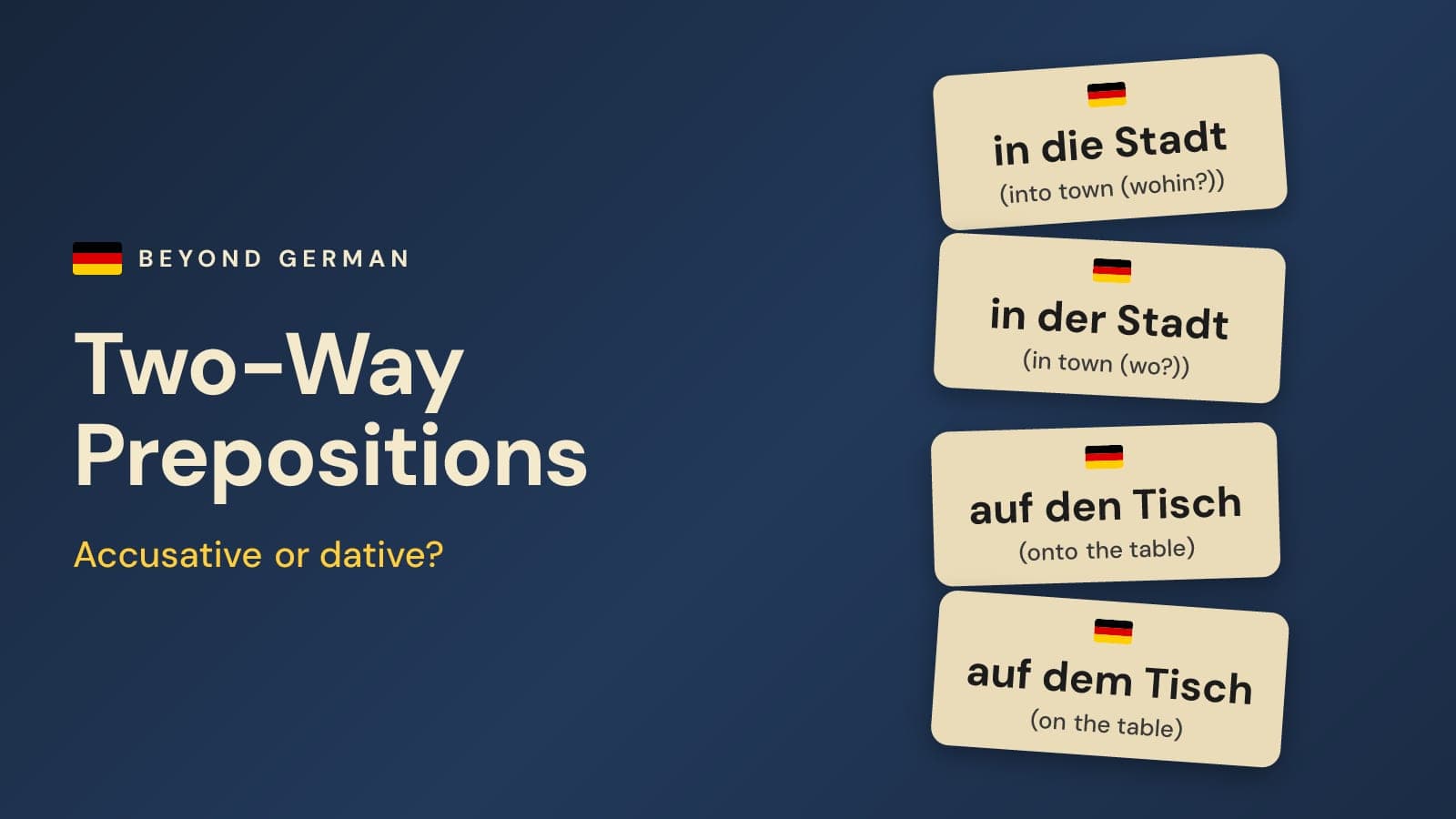
The nine German two-way prepositions (an, auf, hinter, in, neben, über, unter, vor, zwischen): when they take the accusative or dative, with verb pairs and examples.
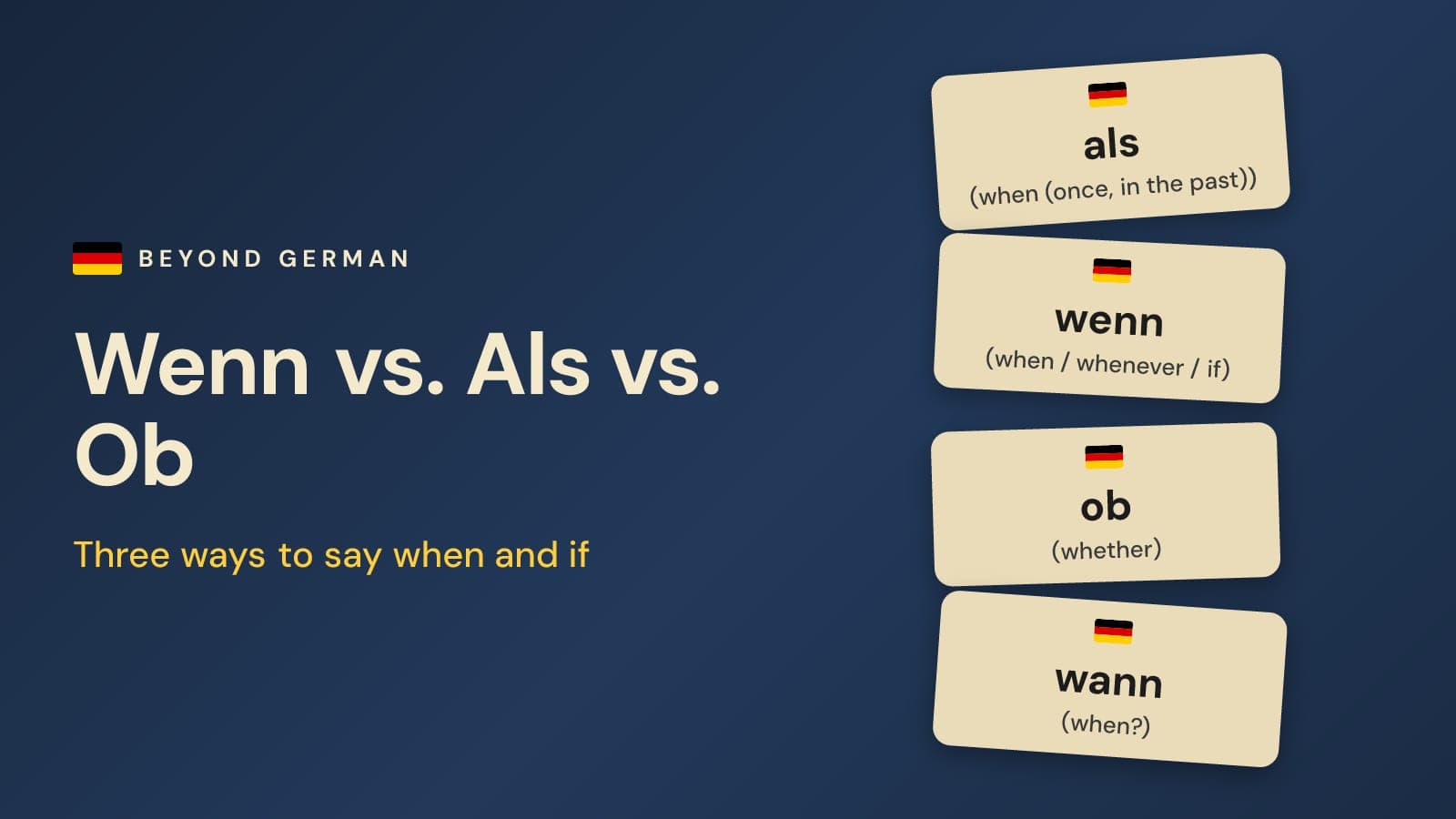
Als for one past event, wenn for whenever, now, later and if, ob for whether, and wann for questions: a quick decision table, clear examples and common mistakes.
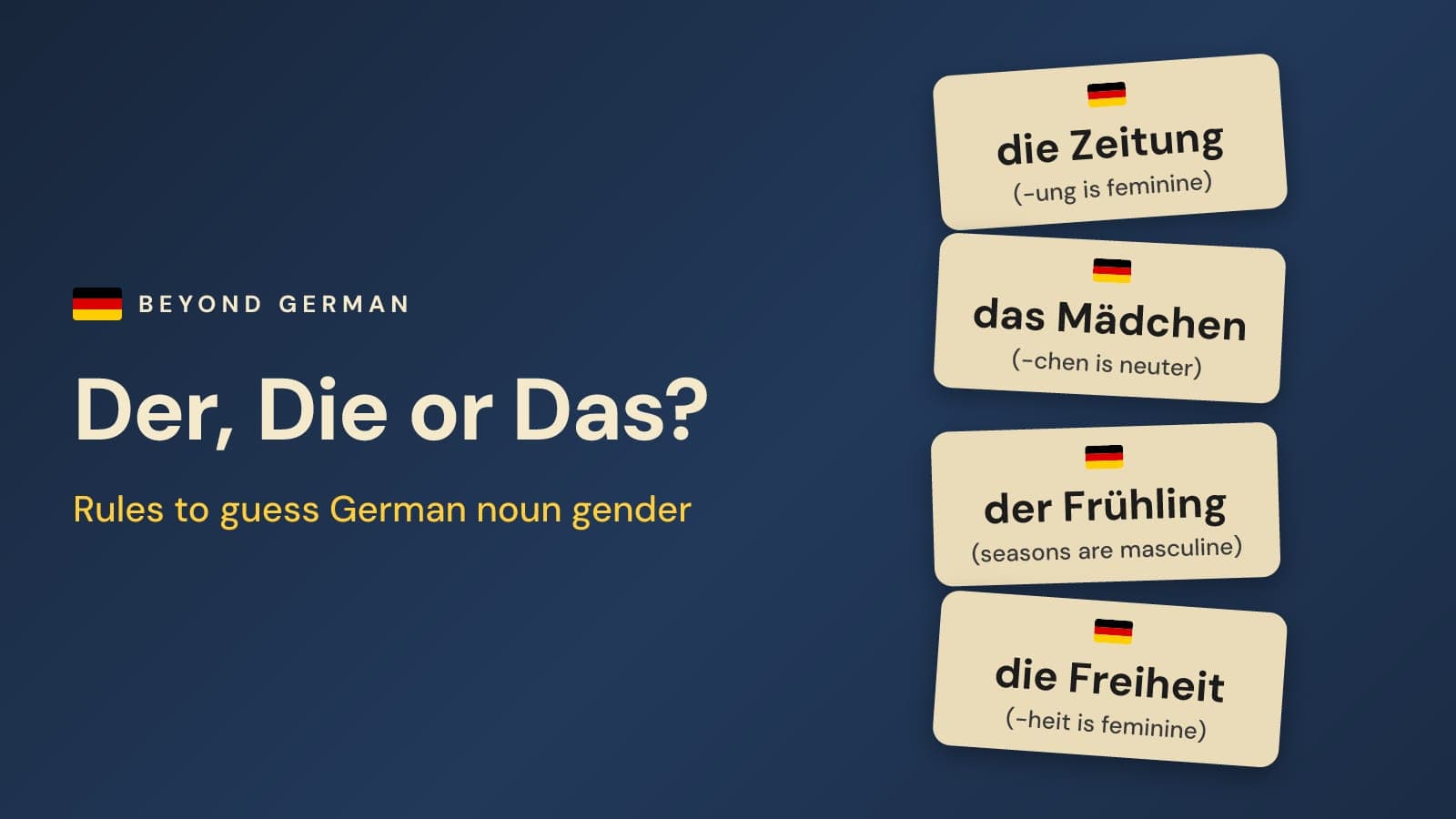
No single rule tells you if a German noun is der, die or das, but endings, meaning and compounds give strong clues. Here are the rules, how reliable each is, and the exceptions.
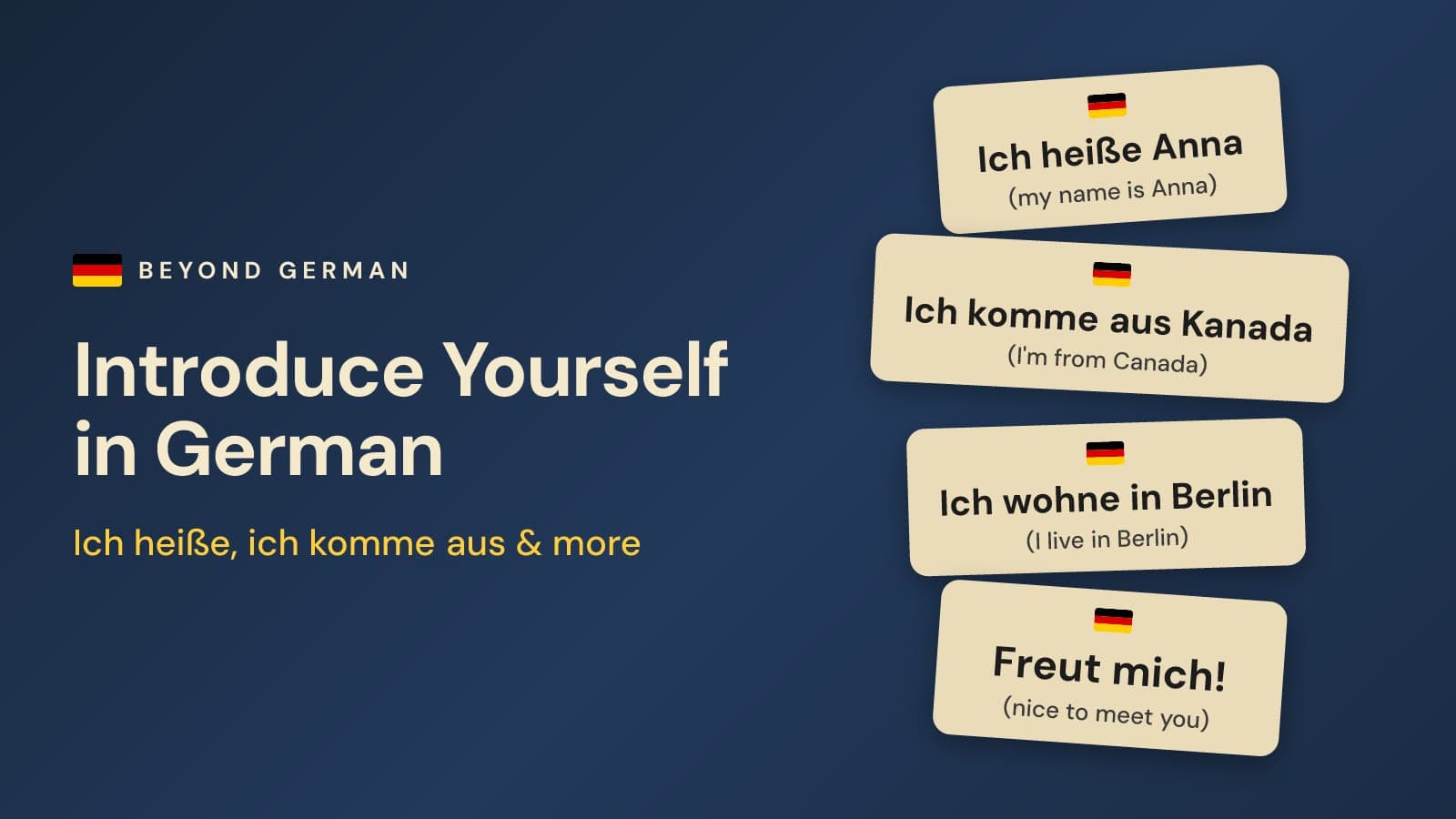
Everything you need to introduce yourself in German: ich heiße, ich komme aus, your age, job and hobbies, du vs. Sie, and two sample introductions with translations.
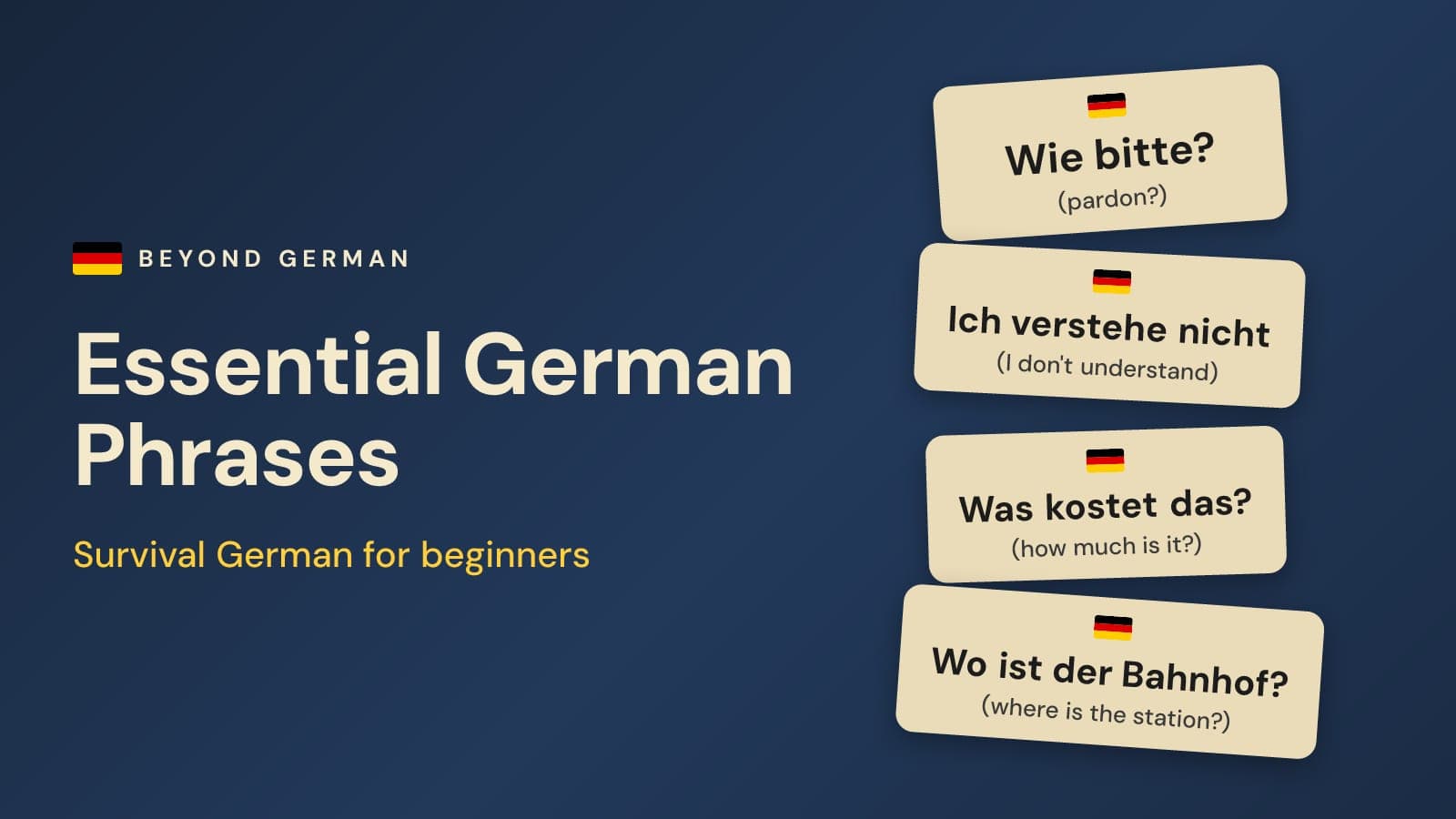
More than 60 essential German phrases for beginners, grouped by situation: greetings, not understanding, directions, shopping, eating out, small talk and emergencies.
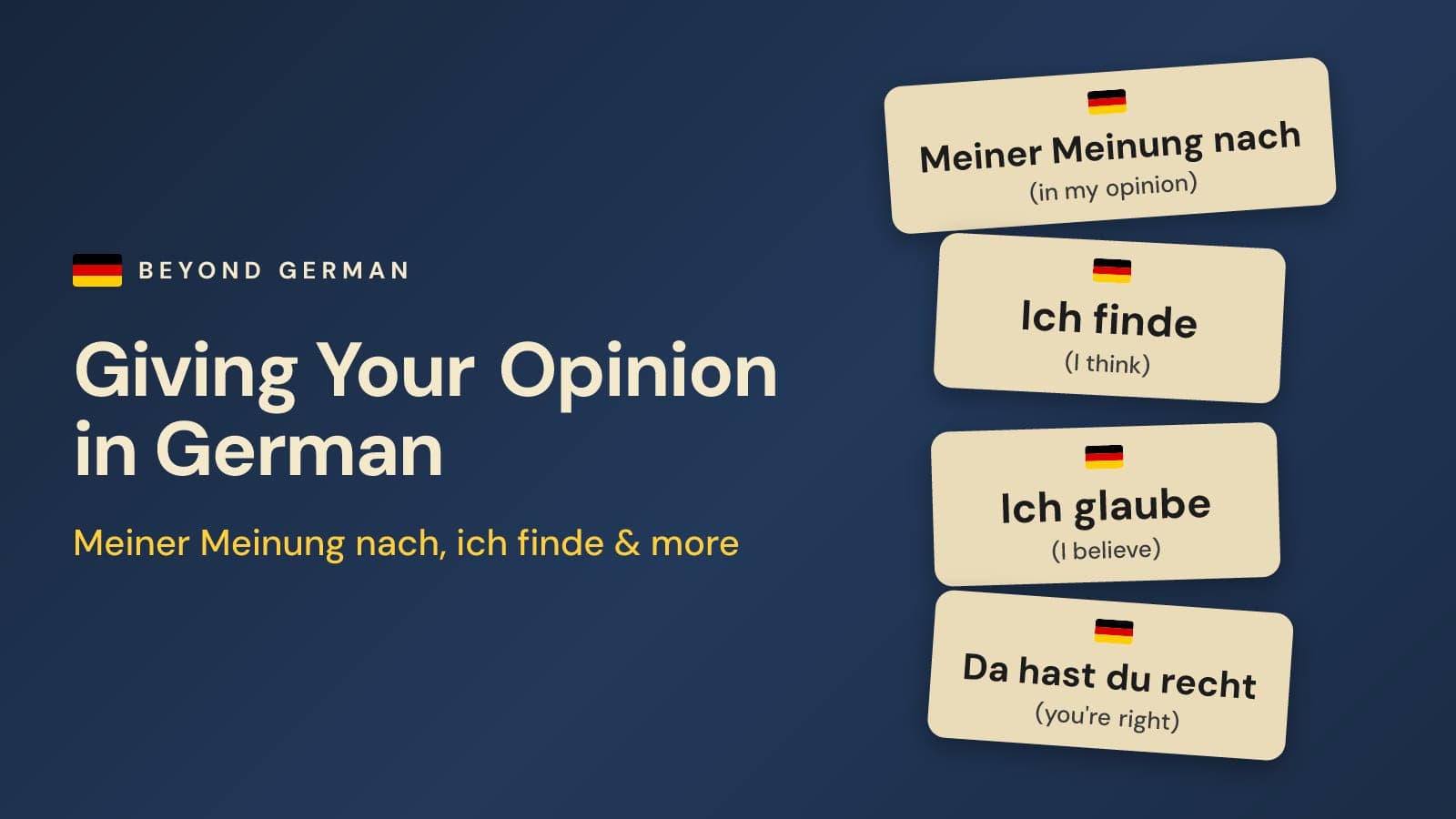
How to give your opinion in German: meiner Meinung nach, ich finde vs. ich denke vs. ich glaube, the word order rules, and phrases to agree and disagree politely.
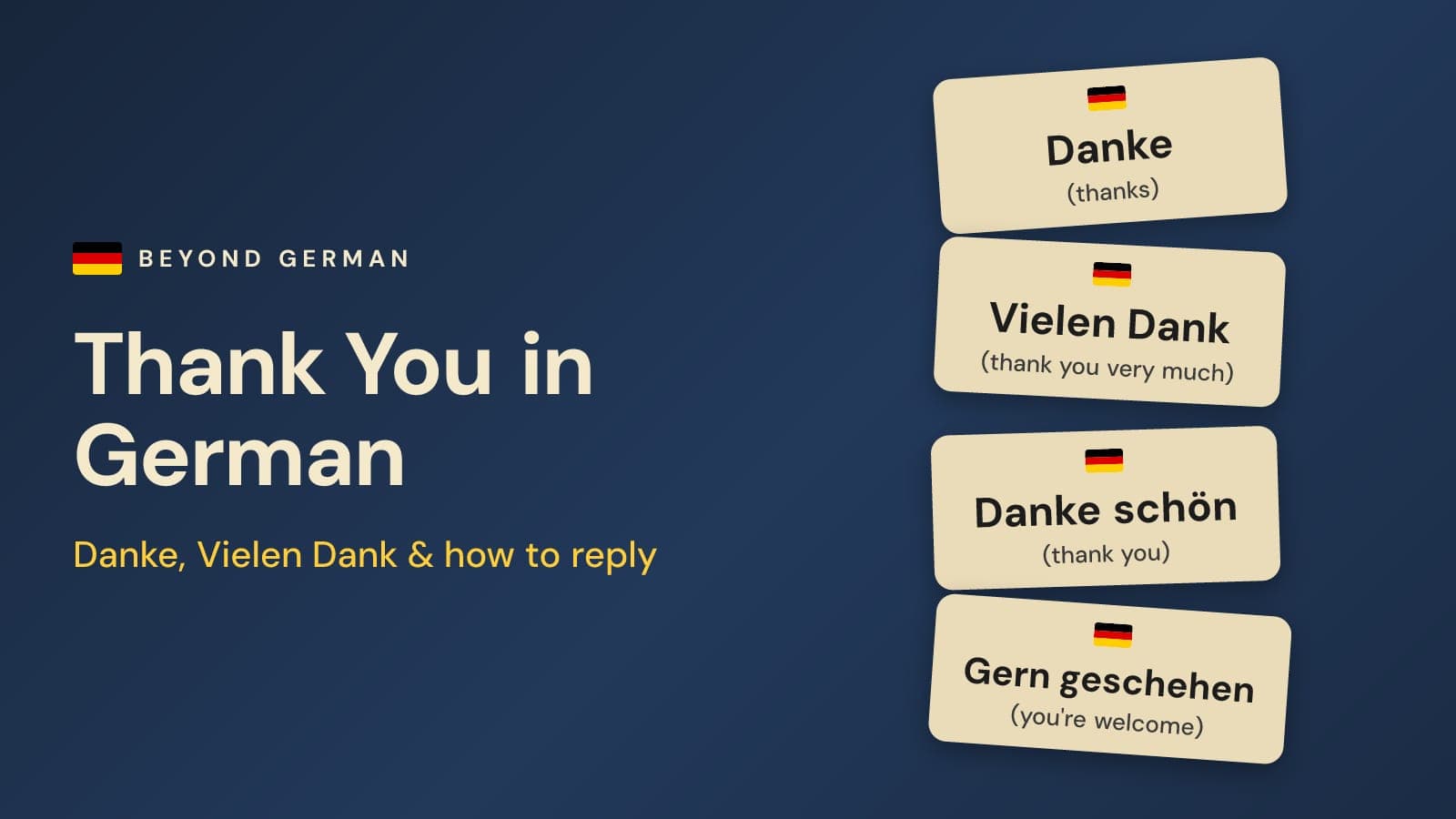
Learn how to say thank you in German, from a quick Danke to a formal Ich bin Ihnen sehr dankbar, plus phrases for emails and how to reply when someone thanks you.
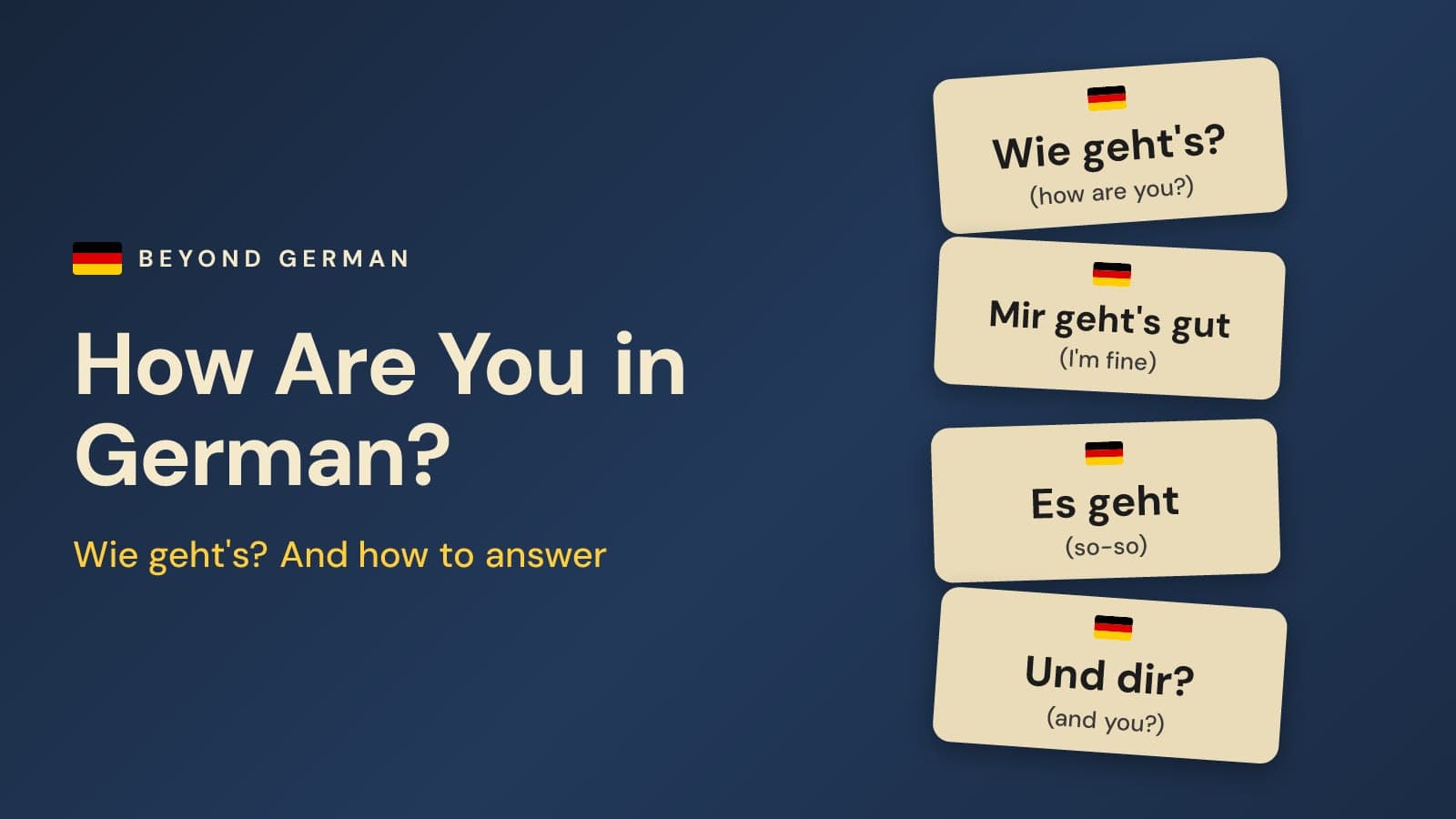
Wie geht's or Wie geht es Ihnen? Learn the formal and casual ways to ask how are you in German, how to answer from great to bad, and why it's never Ich bin gut.
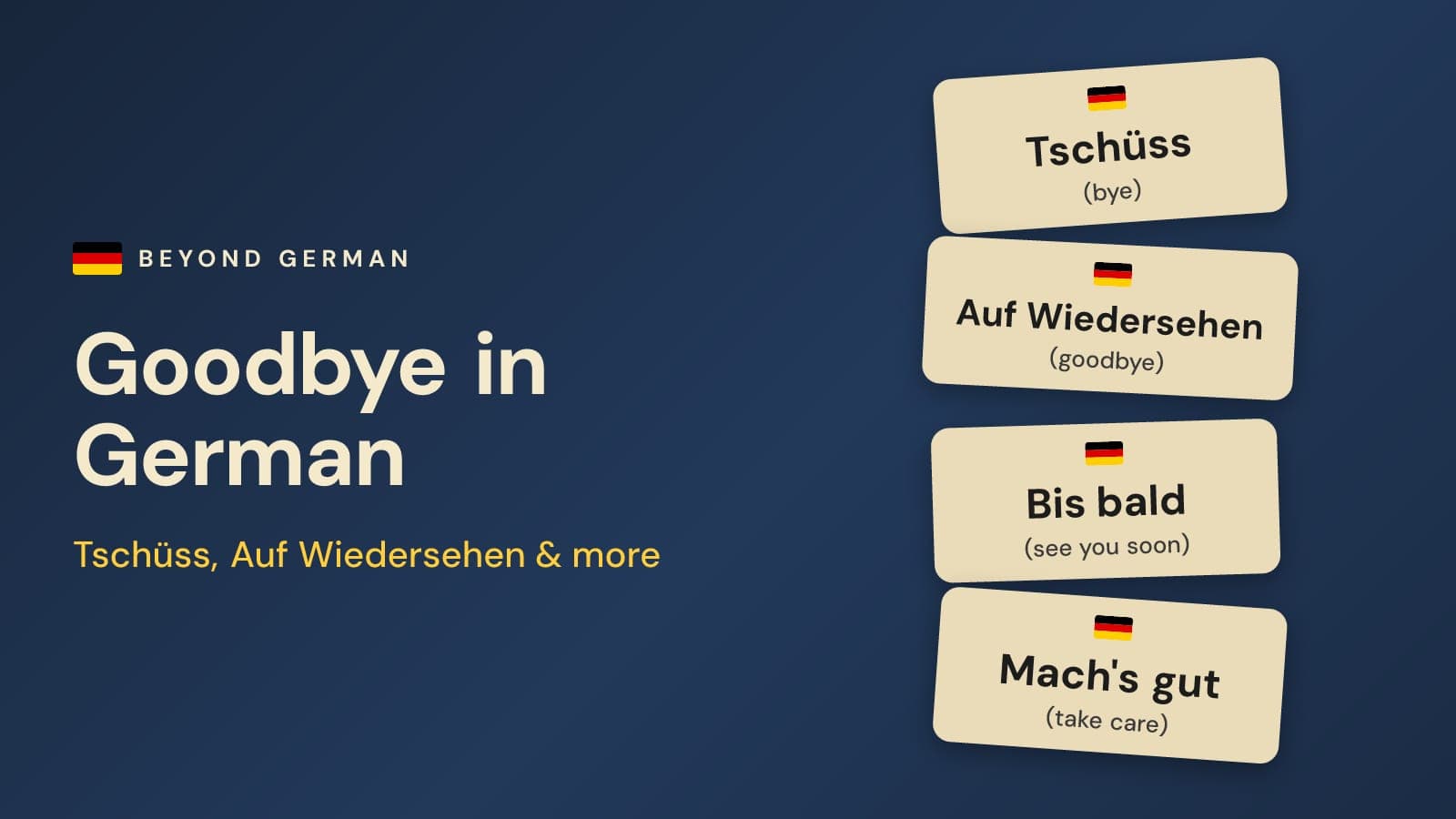
Tschüss or Auf Wiedersehen? Learn every way to say goodbye in German, from Bis später and Schönen Tag noch to Servus, Auf Wiederhören and email sign-offs.
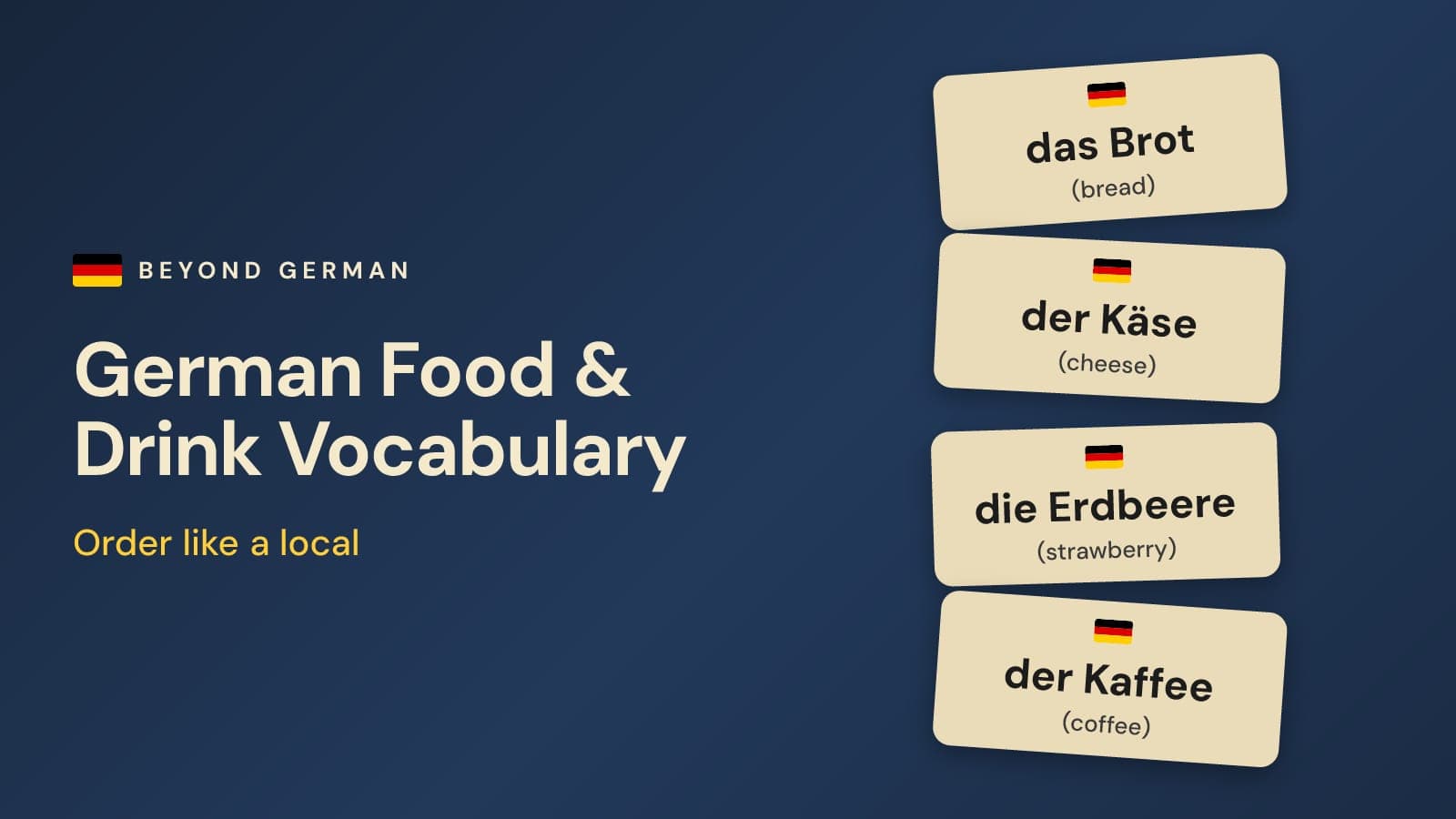
Learn German food and drink words with their articles and plurals, the meals of the day, and the exact phrases to order in a German café or restaurant.
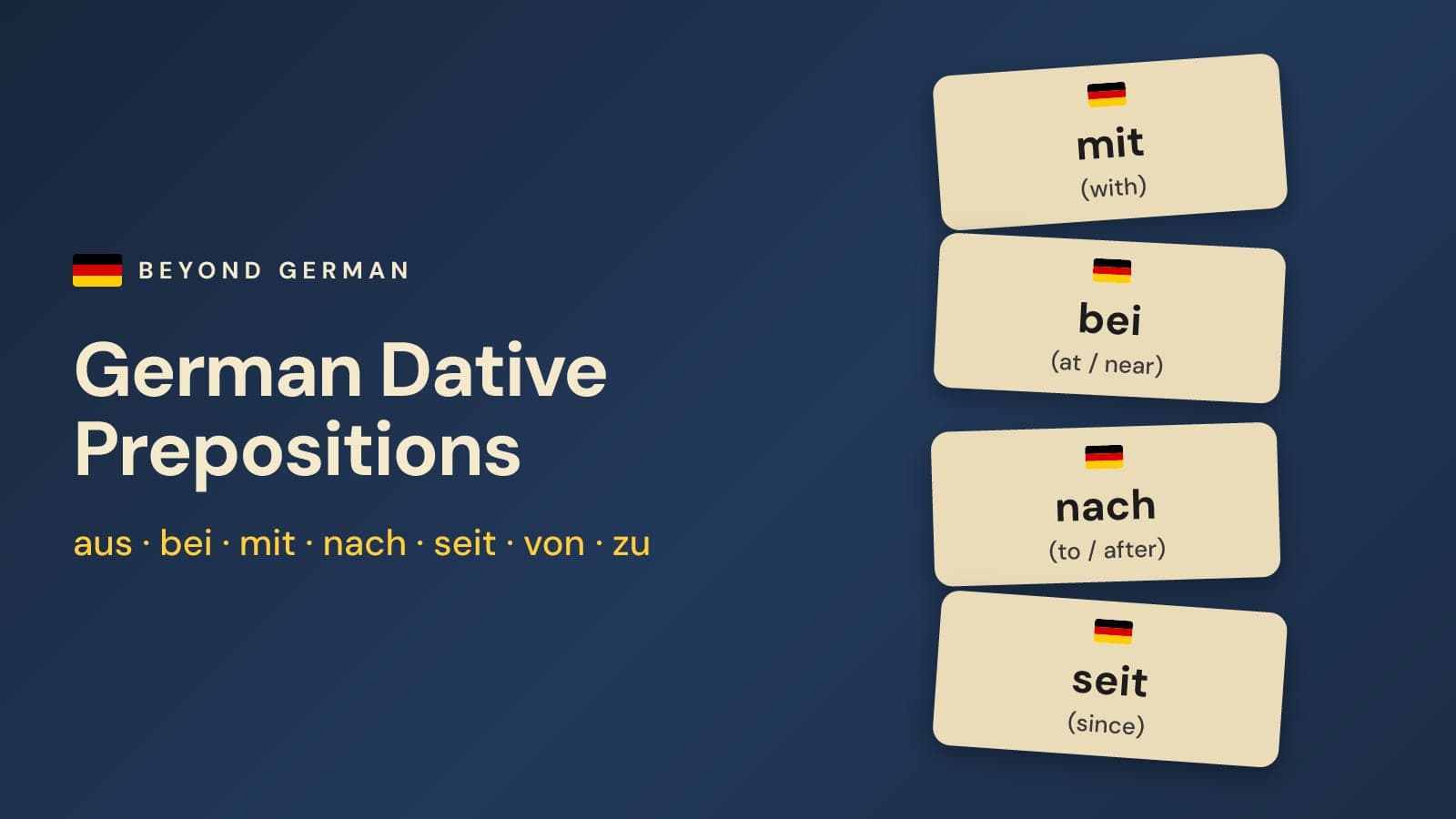
The nine German dative prepositions (aus, außer, bei, gegenüber, mit, nach, seit, von, zu) with meanings, examples, dative endings, contractions and a memory trick.
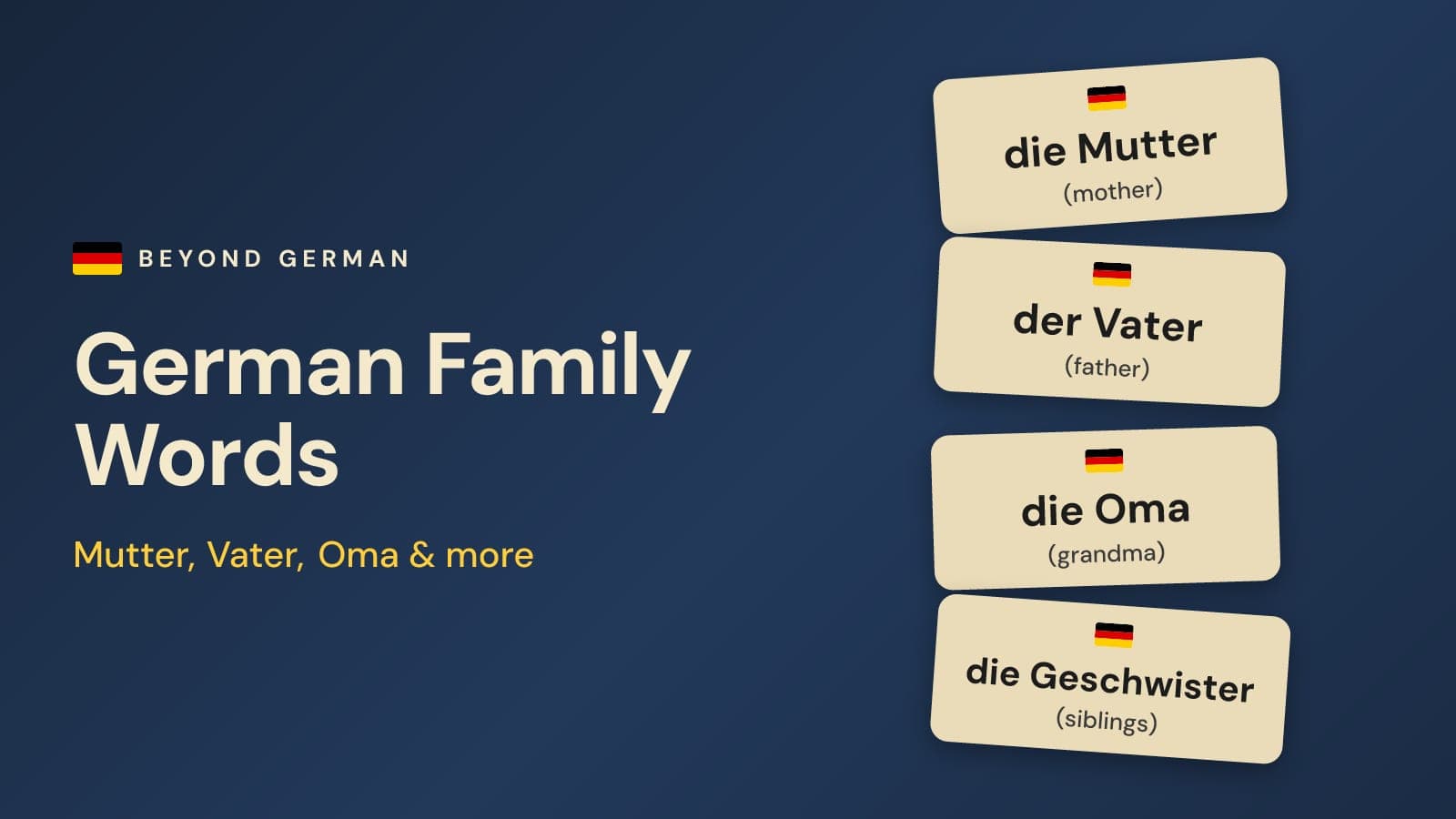
All the German family words you need, from Mutter and Oma to in-laws and step-siblings, with articles, plurals, possessives and everyday example sentences.
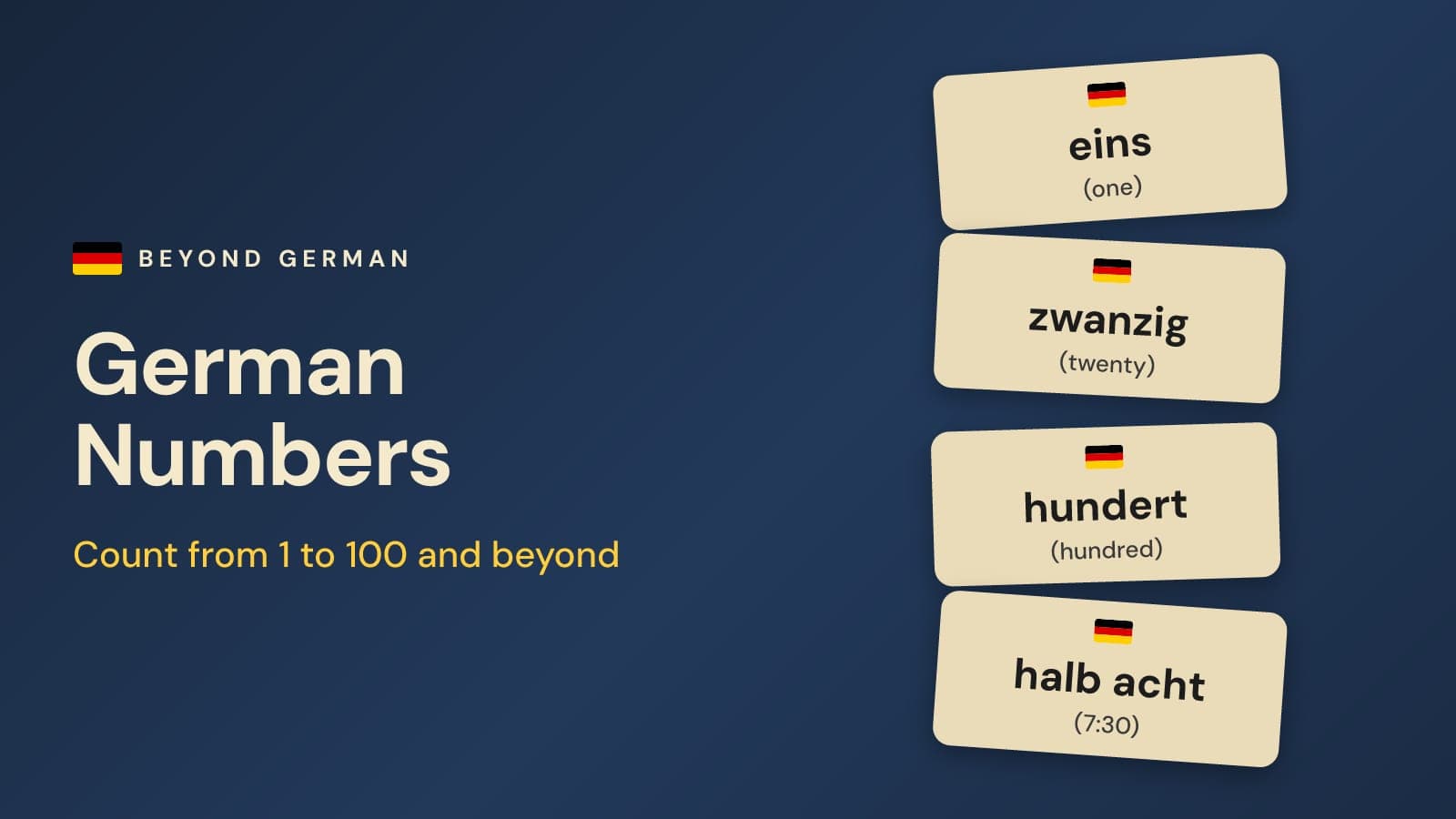
Learn German numbers from 0 to 100 and beyond, plus how to say years, prices, phone numbers, dates and the time, with clear tables and examples.

Asking questions is essential in any language. Whether you're ordering food, asking for directions, or having a conversation - you need to know how to ask questions in German. German question words are called W-Fragen (W-questions)...
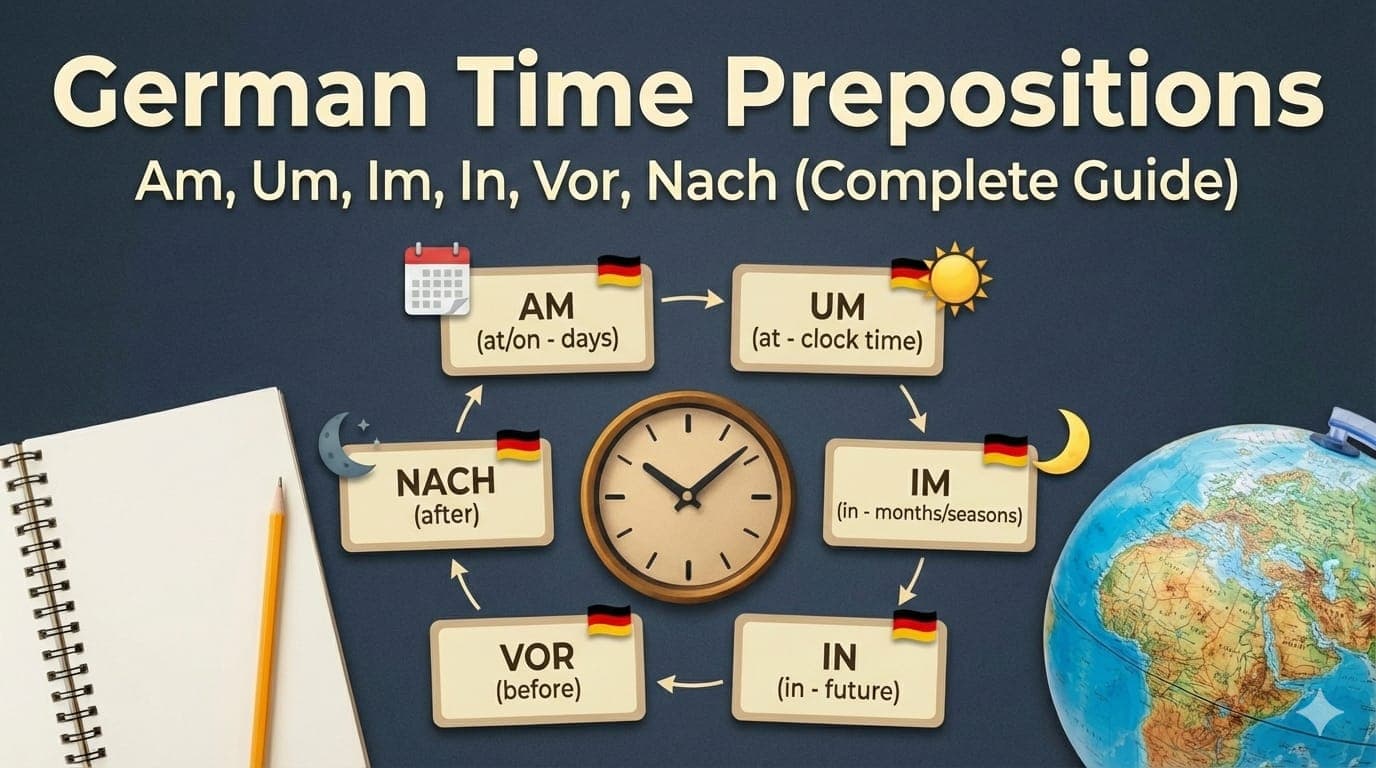
One of the trickiest parts of German for beginners is knowing which preposition to use when talking about time. Should you say 'am Montag' or 'an Montag'? This guide will clear up all the confusion...
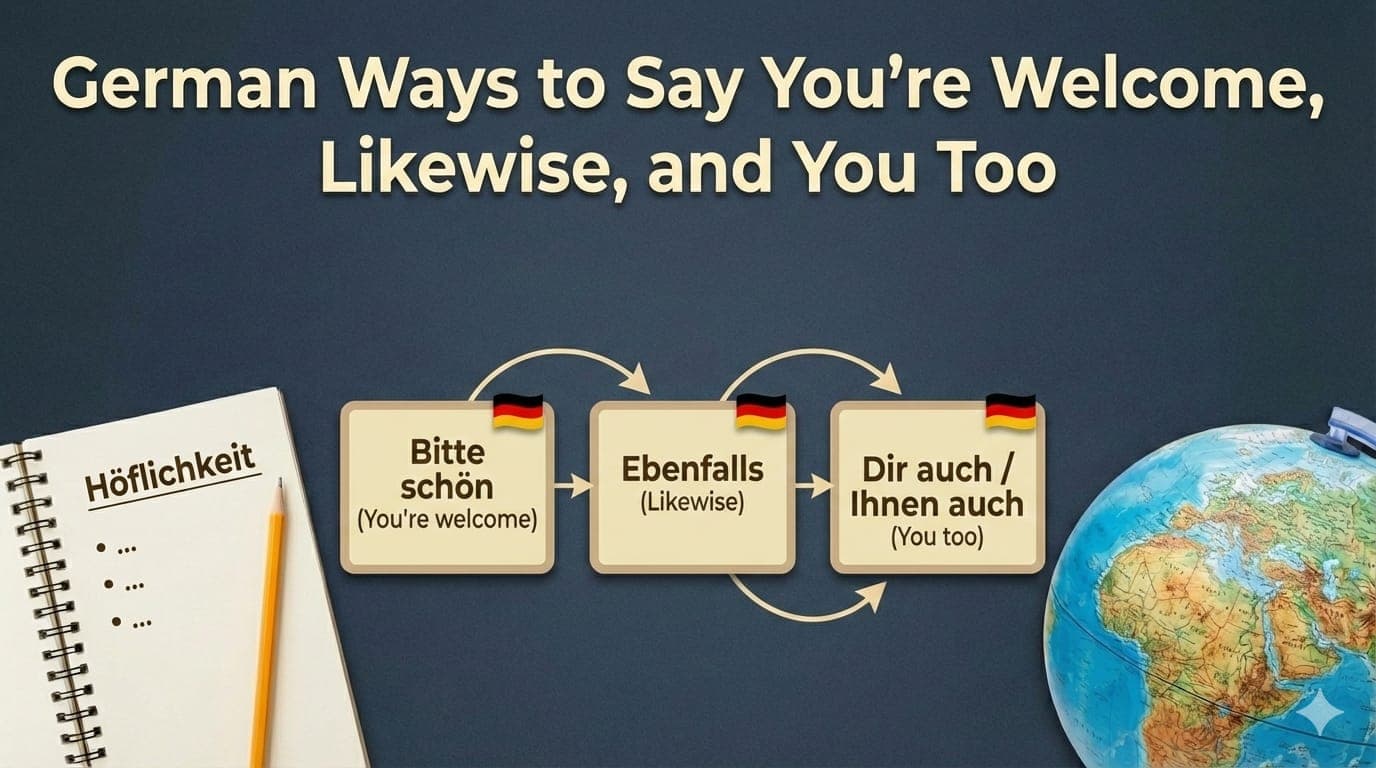
Someone wishes you a nice day. Someone thanks you for holding the door. Someone says 'Guten Appetit' before a meal. What do you say back? This guide covers all the ways to respond politely in German...

Confused about when to use weil, denn, or deshalb? This guide breaks down the key differences between German causal connectors, including word order rules, common mistakes, and real-life examples.

Modal verbs are the 'cheat code' to speaking German fast. Learn all 6 Modalverben (können, müssen, wollen, sollen, dürfen, mögen), their conjugations, word order rules, and common mistakes to avoid.

Stop defaulting to 'Wie geht es dir?' in every situation. Learn 20+ authentic German greetings natives actually use-from formal business settings to casual friend hellos, with regional favorites like Moin, Servus, and Na.
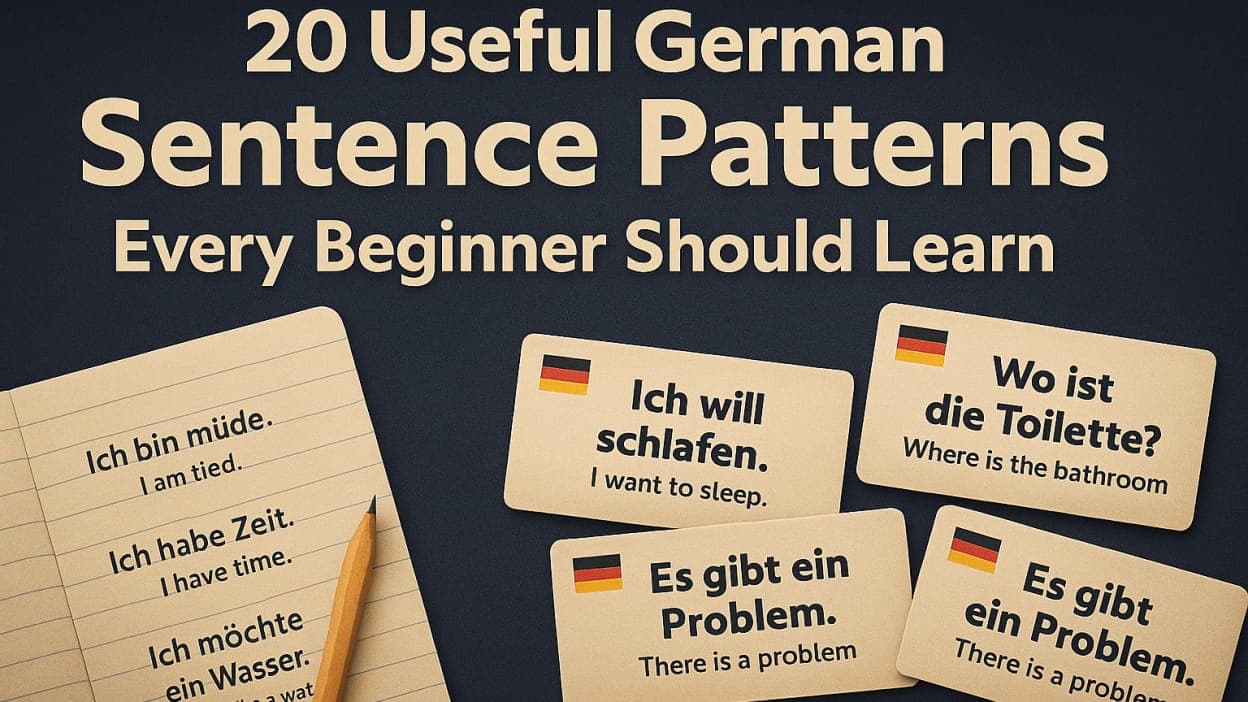
Learn 20 essential German sentence patterns with simple examples and English translations — the fastest way to build your own sentences and speak with confidence.

Learning German feels hard when progress is invisible. This simple daily routine — listening, words in context, reading, speaking and writing — keeps you moving forward.

A step-by-step roadmap for learning German from zero: what to learn first, the grammar order that works, a daily routine, and how long A1, A2 and B1 really take.