Common German Nouns With Articles and Plurals: 100 A1 Words
 Beyond German Team
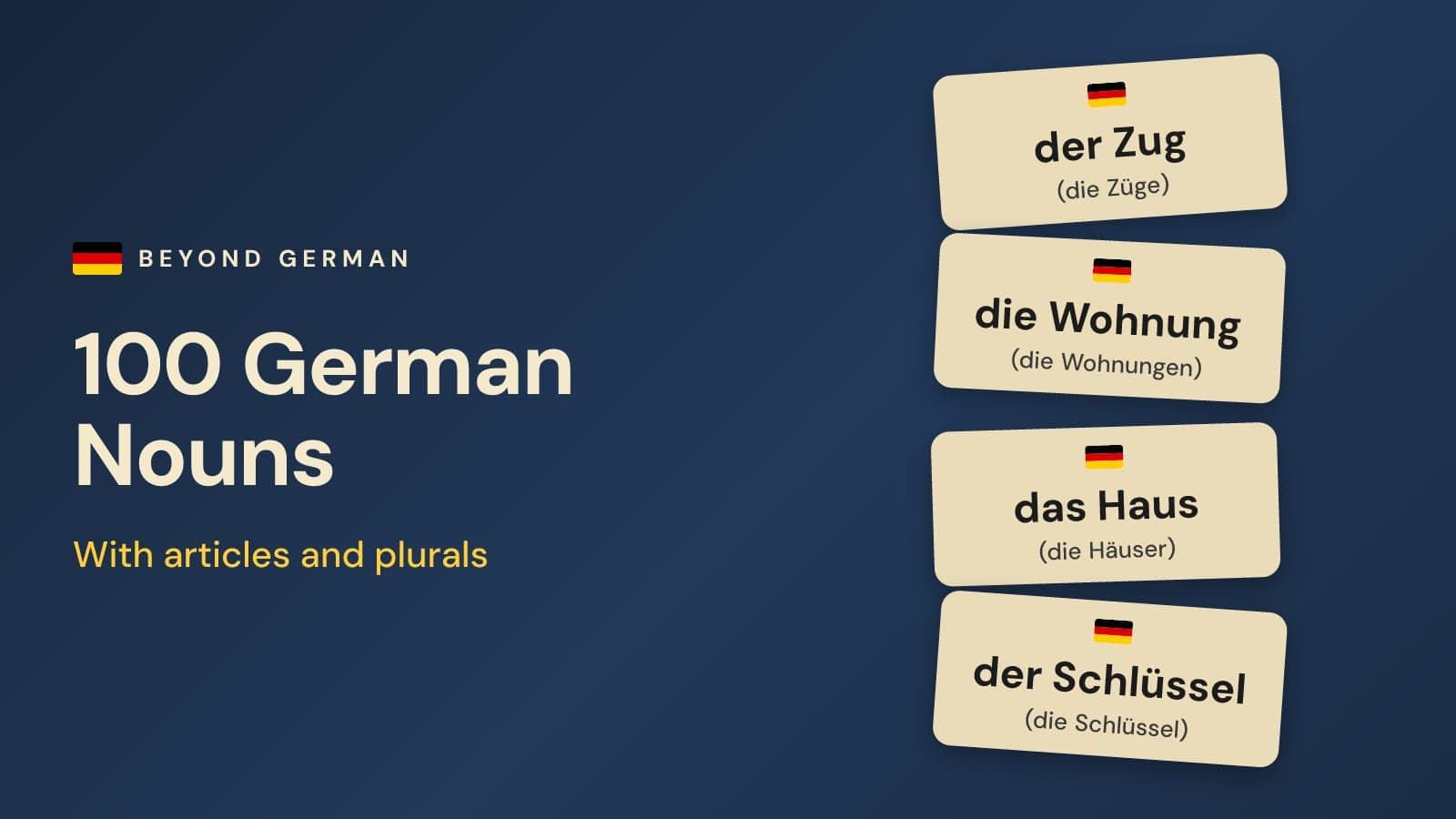
Here are 100 common German nouns with their articles and plurals, the ones you'll use most at A1. Each comes with der, die or das, its plural and the English meaning, sorted by the situations where you'll actually need them: your flat, the bakery, the station, work, the doctor's and the Bürgeramt.
Learn each noun as one unit with its article and plural, like der Bahnhof, die Bahnhöfe. That single habit saves you hundreds of mistakes later, because the article changes how every sentence around the noun is built.
How to Use This List
- Say the whole unit out loud: "der Tisch, die Tische". Your ear remembers the rhythm better than your eyes remember the letters.
- Learn one group at a time. Ten words that belong to the same situation stick together.
- Read the example sentences. They show the noun in a real sentence, which is how you'll meet it.
- Cover the article column and test yourself before moving to the next group.
If you want rules that help you guess an article you don't know yet, read der, die, das rules. For the logic behind the plurals, see German plural rules. This post is the practical list to go with them.
People
| German | Plural | English |
|---|---|---|
| der Mann | die Männer | man; husband |
| die Frau | die Frauen | woman; wife; Mrs/Ms |
| das Kind | die Kinder | child |
| die Mutter | die Mütter | mother |
| der Vater | die Väter | father |
| der Freund | die Freunde | friend; boyfriend |
| der Mensch | die Menschen | person, human being |
| das Mädchen | die Mädchen | girl |
| der Junge | die Jungen | boy |
| die Leute | (plural only) | people |
- Das ist mein Mann, Thomas. This is my husband, Thomas.
- Die Leute hier sind nett. The people here are nice.
Das Mädchen is neuter even though a girl is female, because the small-thing ending -chen always makes a noun das. And die Leute only exists in the plural, so it always takes a plural verb: die Leute sind. For the whole family, see family members in German.
Home and Your Flat
| German | Plural | English |
|---|---|---|
| die Wohnung | die Wohnungen | flat, apartment |
| das Haus | die Häuser | house; building |
| das Zimmer | die Zimmer | room |
| die Küche | die Küchen | kitchen |
| das Bad | die Bäder | bathroom |
| der Schlüssel | die Schlüssel | key |
| die Miete | die Mieten | rent |
| der Tisch | die Tische | table |
| das Bett | die Betten | bed |
| der Schrank | die Schränke | cupboard; wardrobe |
- Wie viele Zimmer hat die Wohnung? How many rooms does the flat have?
- Die Miete ist achthundert Euro warm. The rent is 800 euros including heating and service charges.
Notice that das Zimmer and der Schlüssel don't change in the plural: nouns ending in -er and -el often stay the same, and only the article tells you it's plural. More words for the flat are in our house and rooms vocabulary.
Food and Drink
| German | Plural | English |
|---|---|---|
| das Brot | die Brote | bread, loaf |
| das Brötchen | die Brötchen | bread roll |
| der Kaffee | die Kaffees | coffee |
| das Wasser | (usually no plural) | water |
| die Milch | (usually no plural) | milk |
| das Ei | die Eier | egg |
| der Apfel | die Äpfel | apple |
| die Kartoffel | die Kartoffeln | potato |
| das Fleisch | (usually no plural) | meat |
| das Glas | die Gläser | glass; jar |
- Vier Brötchen, bitte. Four rolls, please.
- Ich brauche sechs Eier. I need six eggs.
Words like Wasser, Milch and Fleisch are things you don't count, so you'll rarely need a plural. To order them, count the container instead: zwei Flaschen Wasser (two bottles of water), ein Glas Milch (a glass of milk).
Shopping and Money
| German | Plural | English |
|---|---|---|
| der Supermarkt | die Supermärkte | supermarket |
| das Geschäft | die Geschäfte | shop, store; business |
| die Kasse | die Kassen | checkout, till |
| der Preis | die Preise | price |
| das Geld | (usually no plural) | money |
| die Karte | die Karten | card; also ticket, map, menu |
| die Rechnung | die Rechnungen | bill, check |
| die Flasche | die Flaschen | bottle |
| die Tüte | die Tüten | (shopping) bag |
| das Angebot | die Angebote | offer, deal |
- Wo ist die Kasse? Where's the checkout?
- Der Käse ist im Angebot. The cheese is on sale.
Die Karte is one of the most useful words in this list: it means a bank card, but also a ticket, a map and a menu. In shops you'll hear Karte oder bar? (card or cash?). For the full shop routine, see German supermarket vocabulary.
Getting Around
| German | Plural | English |
|---|---|---|
| der Bahnhof | die Bahnhöfe | (train) station |
| die Haltestelle | die Haltestellen | stop (bus, tram) |
| der Zug | die Züge | train |
| der Bus | die Busse | bus |
| die Straße | die Straßen | street, road |
| das Auto | die Autos | car |
| das Fahrrad | die Fahrräder | bicycle |
| die Fahrkarte | die Fahrkarten | ticket (bus, train) |
| der Flughafen | die Flughäfen | airport |
| die Reise | die Reisen | trip, journey |
- Wie komme ich zum Bahnhof? How do I get to the station?
- Welcher Bus fährt zum Bahnhof? Which bus goes to the station?
Here the article pays off straight away: der Bahnhof becomes zum Bahnhof, but die Haltestelle becomes zur Haltestelle. More in our public transport vocabulary.
Time
| German | Plural | English |
|---|---|---|
| der Tag | die Tage | day |
| die Woche | die Wochen | week |
| der Monat | die Monate | month |
| das Jahr | die Jahre | year |
| die Stunde | die Stunden | hour; lesson |
| die Minute | die Minuten | minute |
| die Uhr | die Uhren | clock, watch; o'clock |
| der Abend | die Abende | evening |
| die Nacht | die Nächte | night |
| das Wochenende | die Wochenenden | weekend |
- Ich arbeite vier Tage pro Woche. I work four days a week.
- Was hast du am Wochenende gemacht? What did you do at the weekend?
Days of the week, months and parts of the day are masculine (der Montag, der Mai, der Abend), except die Nacht. Units like die Woche, die Stunde and das Jahr have to be learned one by one. Das Wochenende takes its article from the last part, das Ende. See also days of the week and months.
Work and Learning
| German | Plural | English |
|---|---|---|
| die Arbeit | die Arbeiten | work; job |
| der Beruf | die Berufe | job, profession |
| die Firma | die Firmen | company, firm |
| der Kollege | die Kollegen | colleague |
| der Kurs | die Kurse | course, class |
| der Lehrer | die Lehrer | teacher |
| die Schule | die Schulen | school |
| das Wort | die Wörter | word |
| die Frage | die Fragen | question |
| die Prüfung | die Prüfungen | exam |
- Was sind Sie von Beruf? What do you do for a living?
- Ich kenne das Wort nicht. I don't know that word.
Nouns made with the ending -ung are always feminine and add -en in the plural: die Prüfung, die Prüfungen, just like die Wohnung and die Rechnung above. For female job titles, add -in (dropping a final -e): die Lehrerin, die Kollegin.
Health and the Body
| German | Plural | English |
|---|---|---|
| der Arzt | die Ärzte | doctor |
| der Termin | die Termine | appointment |
| die Praxis | die Praxen | doctor's surgery, practice |
| der Kopf | die Köpfe | head |
| die Hand | die Hände | hand |
| der Fuß | die Füße | foot |
| das Auge | die Augen | eye |
| der Bauch | die Bäuche | stomach, belly |
| das Fieber | (usually no plural) | fever, temperature |
| die Hilfe | (usually no plural) | help |
- Ich möchte einen Termin machen. I'd like to make an appointment.
- Mein Kopf tut weh. My head hurts.
Most nouns ending in -e are feminine, but das Auge isn't, and neither are der Junge, der Kollege or das Wochenende from the lists above. The rest are in our guides to body parts in German and German at the doctor.
Free Time
| German | Plural | English |
|---|---|---|
| die Freizeit | (usually no plural) | free time, spare time |
| das Hobby | die Hobbys | hobby |
| der Sport | (usually no plural) | sport, exercise |
| das Kino | die Kinos | cinema |
| der Film | die Filme | film, movie |
| der Geburtstag | die Geburtstage | birthday |
| die Party | die Partys | party |
| das Geschenk | die Geschenke | present, gift |
| der Urlaub | die Urlaube | holiday, vacation; time off work |
| das Wetter | (usually no plural) | weather |
- Was machst du in deiner Freizeit? What do you do in your free time?
- Wann hast du Geburtstag? When is your birthday?
Words borrowed from English usually take -s in the plural: die Hobbys, die Partys, die Handys. Note the German spelling: -ys, not -ies.
Offices, Phone and Post
| German | Plural | English |
|---|---|---|
| das Formular | die Formulare | form |
| der Pass | die Pässe | passport |
| der Ausweis | die Ausweise | ID card |
| die Adresse | die Adressen | address |
| die Unterschrift | die Unterschriften | signature |
| das Konto | die Konten | bank account |
| die Bank | die Banken | bank |
| das Handy | die Handys | mobile (phone) |
| der Brief | die Briefe | letter |
| die Post | (usually no plural) | post office; post, mail |
- Haben Sie Ihren Pass dabei? Do you have your passport with you?
- Ich möchte ein Konto eröffnen. I'd like to open an account.
You'll need most of these in your first weeks in Germany. Our guide to German for the Anmeldung puts them to work at the Bürgeramt.
What These 100 Nouns Teach You About Articles and Plurals
Count the articles in this list and you get 35 der, 36 die and 29 das. So there's no "default" article you can fall back on. But the plurals do follow a handful of patterns:
| Plural pattern | Nouns in this list | Examples |
|---|---|---|
| -n or -en | 31 | die Woche, die Wochen; die Rechnung, die Rechnungen |
| -e (sometimes with an umlaut) | 31 | der Tag, die Tage; der Zug, die Züge |
| no ending (sometimes with an umlaut) | 9 | das Zimmer, die Zimmer; der Vater, die Väter |
| -er (umlaut where possible) | 8 | das Kind, die Kinder; das Haus, die Häuser |
| -s | 6 | das Auto, die Autos; das Handy, die Handys |
| other | 4 | der Bus, die Busse; das Konto, die Konten |
| no plural or plural only | 11 | das Geld; die Leute |
Three shortcuts you can use today:
- Most feminine nouns add -n or -en: die Straße, die Straßen; die Arbeit, die Arbeiten.
- Masculine and neuter nouns ending in -er, -el and -chen usually don't change: der Lehrer, die Lehrer; das Brötchen, die Brötchen.
- The plural article is always die in the nominative, whatever the singular: der Tag, die Tage; das Jahr, die Jahre.
Common Mistakes
- Adding an English -s to everything. It's die Tische, not die Tischs. The -s plural is mostly for borrowed words like Auto and Hobby.
- Using the singular article in the plural. Der Tisch becomes die Tische, not der Tische.
- Treating die Leute as singular. Die Leute sind nett, not ist.
- Calling a girl "die Mädchen". In the singular it's das Mädchen; die Mädchen means girls.
- Forgetting the umlaut. Der Apfel becomes die Äpfel, and der Zug becomes die Züge. Say the plural out loud so you hear the difference.
Practice: Article and Plural
Give the article and the plural for each noun, then check your answers below.
- Wohnung
- Bahnhof
- Kind
- Schlüssel
- Woche
- Handy
- Glas
- Kollege
Answers: 1. die Wohnung, die Wohnungen. 2. der Bahnhof, die Bahnhöfe. 3. das Kind, die Kinder. 4. der Schlüssel, die Schlüssel. 5. die Woche, die Wochen. 6. das Handy, die Handys. 7. das Glas, die Gläser. 8. der Kollege, die Kollegen.
Want more? Try the A1 German quiz, or click any noun's word page, for example Bahnhof or Wohnung, to see it in more sentences.
All 394 A1 Nouns, With Audio
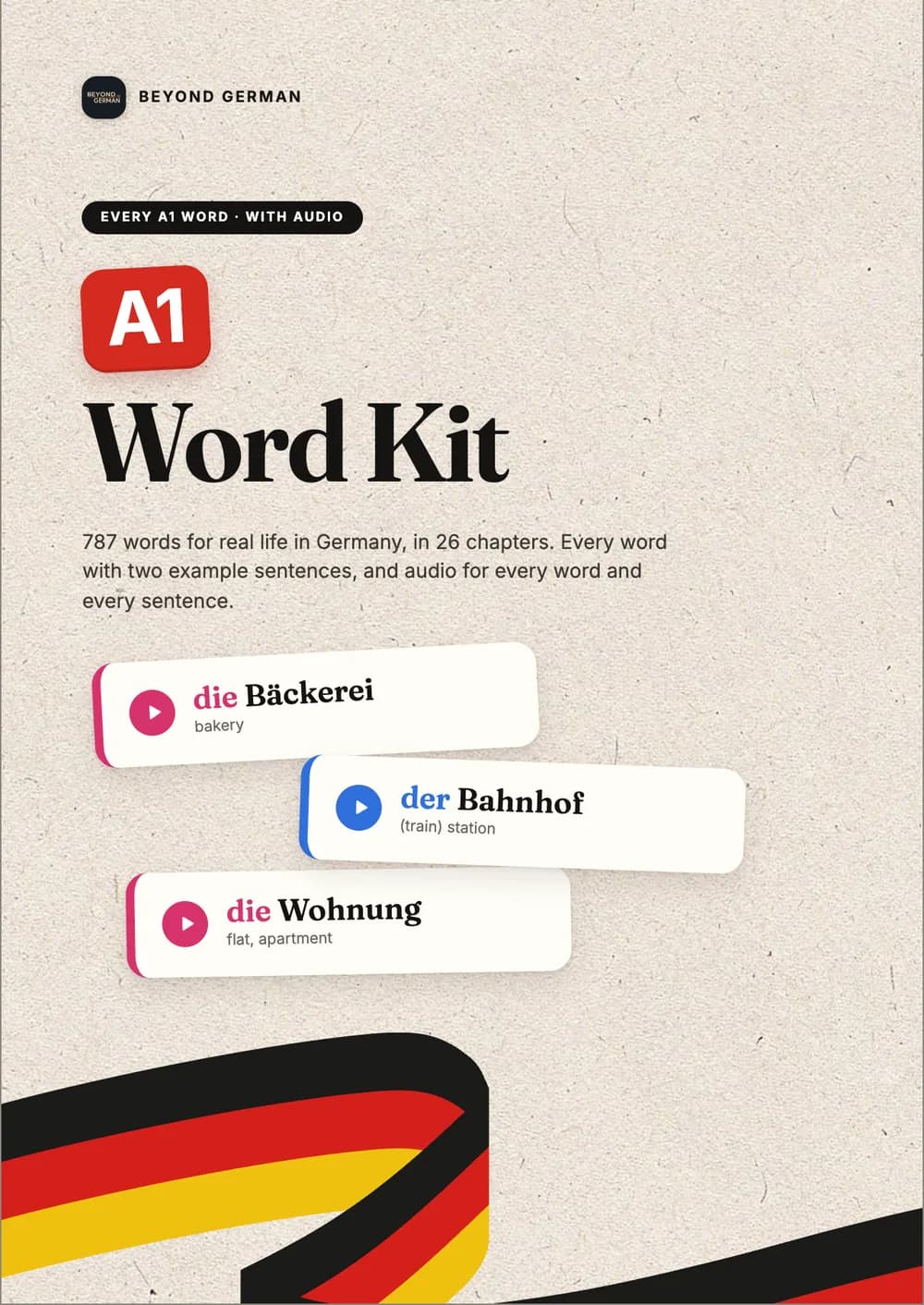
These 100 nouns are about a quarter of the nouns you meet at A1 (see how many words you need for A1). The A1 Word Kit has all 394 nouns from the Goethe A1 list and our everyday extras, each with its article, plural, two example sentences with English and audio, inside 787 words sorted into 26 real-life chapters. Its flashcards bring back each noun with its article until it sticks.
You can try it with the free 100-word sample, which includes the audio. And if you're wondering what else is on the official list, our guide to the Goethe A1 word list explains it.
FAQ
How do I know if a German noun is der, die or das?
Some endings tell you: nouns made with -ung, -heit and -keit are always die, and the small-thing endings -chen and -lein always make a noun das. For most other nouns there's no safe rule, so learn the article together with the word.
What is the plural of der, die and das?
In the nominative it's always die: der Tag, die Tage; die Woche, die Wochen; das Jahr, die Jahre.
Which German nouns have no plural?
Mostly things you don't count, like das Geld (money), die Milch (milk), das Wetter (weather) and die Freizeit (free time). A few words work the other way and only exist in the plural, like die Leute (people) and die Eltern (parents).
Why are German nouns capitalised?
It's simply a spelling rule: every German noun starts with a capital letter, wherever it is in the sentence. It's actually helpful, because you can spot the nouns at a glance.
New from Beyond German
Learn every A1 word, with audio
The A1 Word Kit: 787 words sorted by real life in Germany, two example sentences each, and flashcards that remember for you.
See the kit · launch price €29Level Up Your German
Join 1,000+ learners getting weekly tips, grammar shortcuts, and cultural insights.
Share this article
Continue Reading
How to Memorize German Vocabulary So It Actually Sticks
Seven habits that make German words stick: learn by situation, with articles, in sentences and out loud, then test yourself and review on a schedule.
How Many Words Do You Need for A1 German?
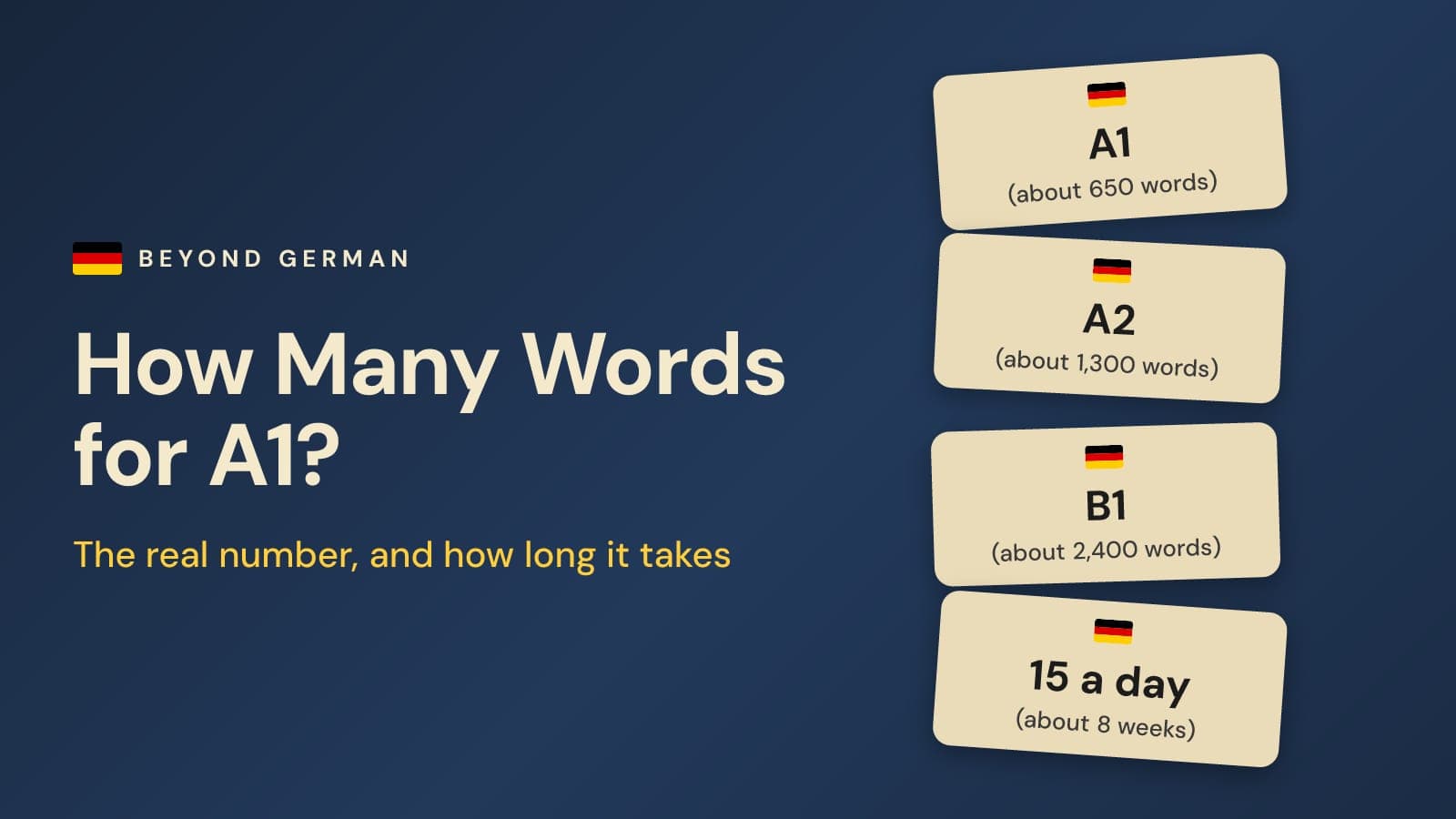
About 650 words for A1, 1,300 for A2 and 2,400 for B1. What an A1 vocabulary really looks like, which words to learn first and how long it takes.
Goethe A1 Word List: What's on It and How to Learn It
What's on the official Goethe A1 word list (Wortliste), how to read it, a free 40-word extract with English, and the fastest way to learn every word.