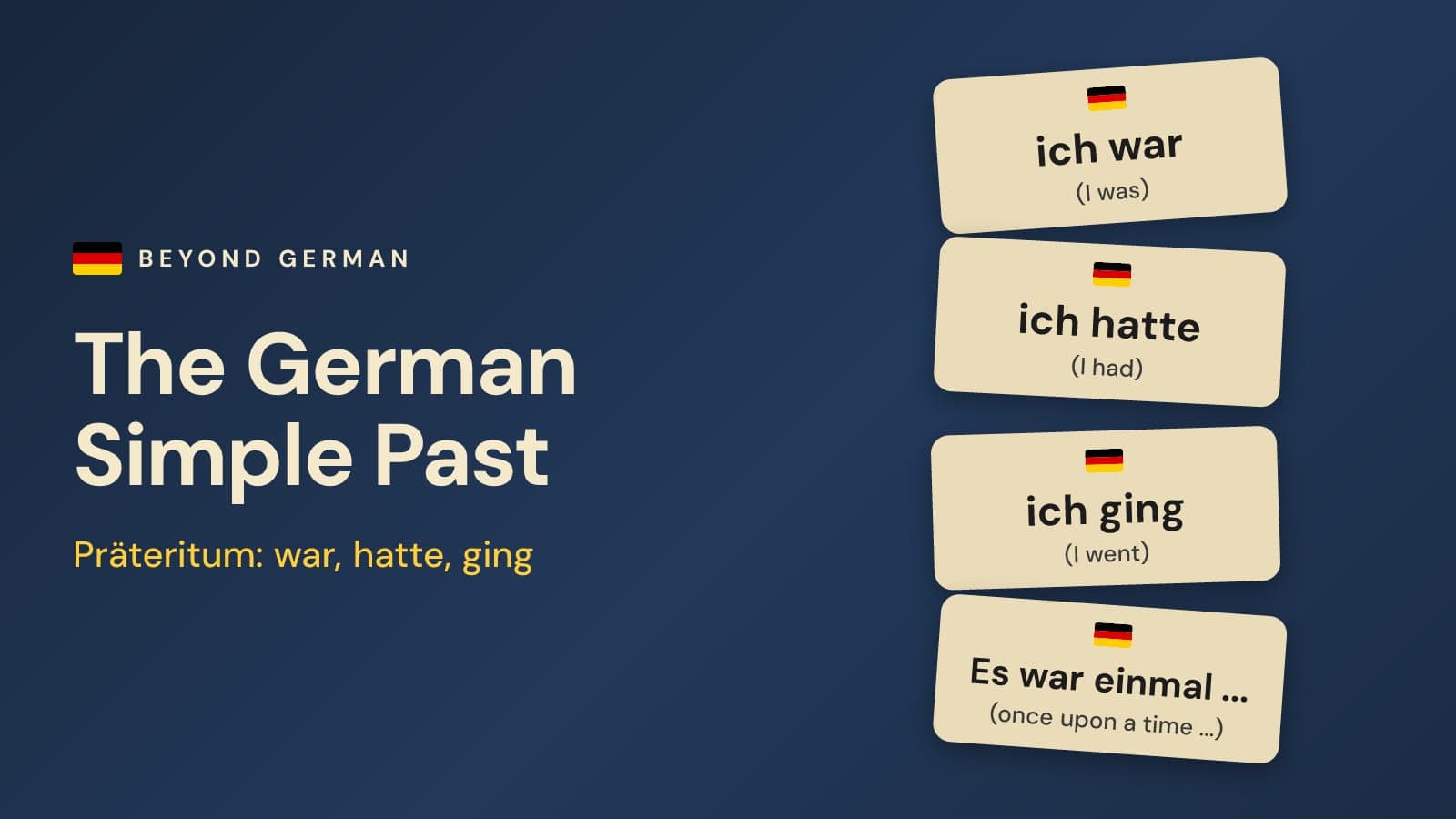
German Simple Past (Präteritum): War, Hatte, Ging + 30 Verbs
The Präteritum is the German past tense of stories and writing. Learn when to use it instead of the Perfekt, the -te endings, the vowel changes and 30 must-know verbs.

The Präteritum is the German past tense of stories and writing. Learn when to use it instead of the Perfekt, the -te endings, the vowel changes and 30 must-know verbs.
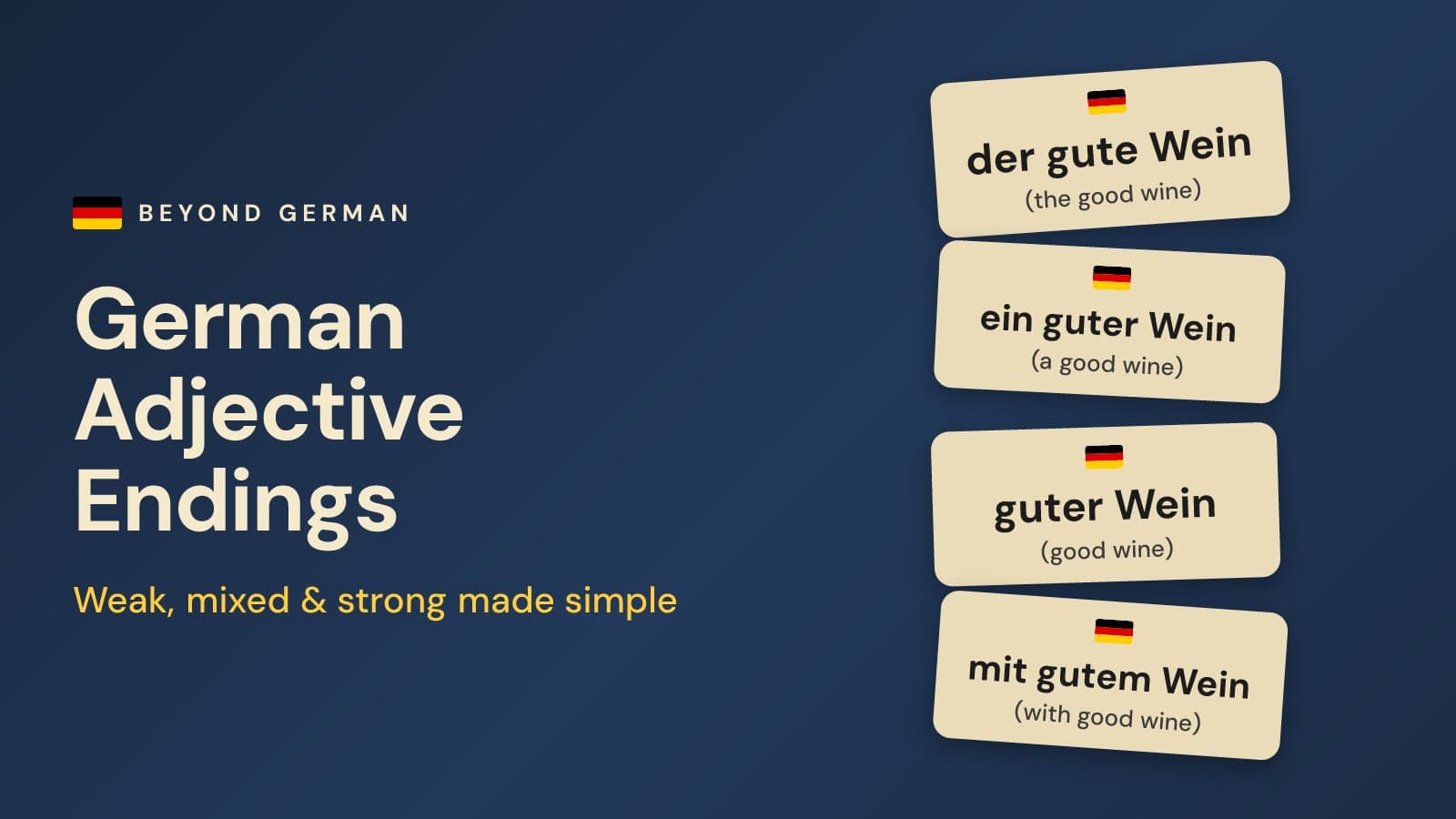
German adjective endings made simple: when adjectives need an ending, full charts for der-words, ein-words and no article, five shortcuts and practice with answers.
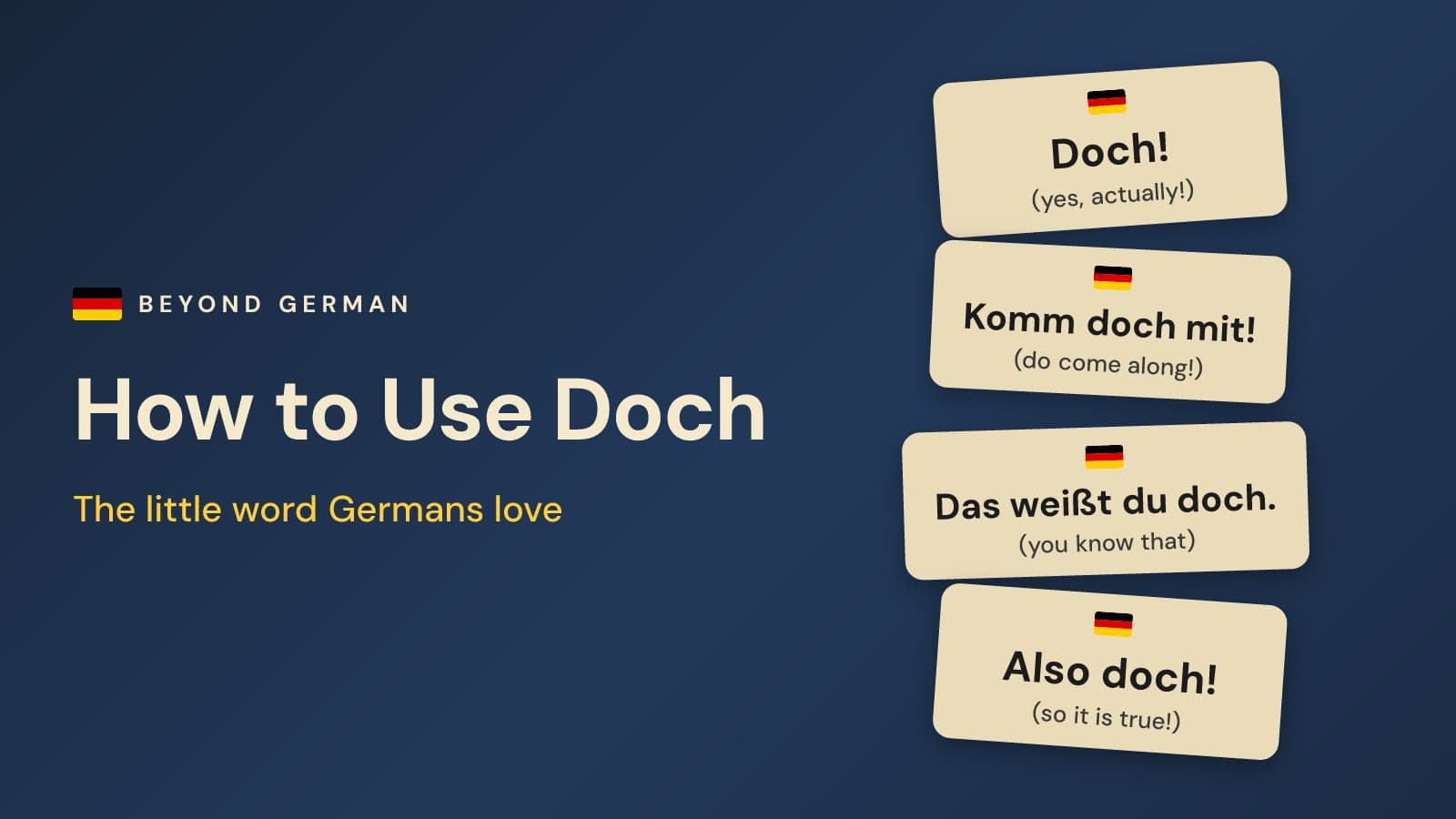
Doch is the yes that contradicts a negative question, a written "but" and a particle that urges, reminds and insists. Here's every use, plus ja doch, doch noch and doch vs ja.
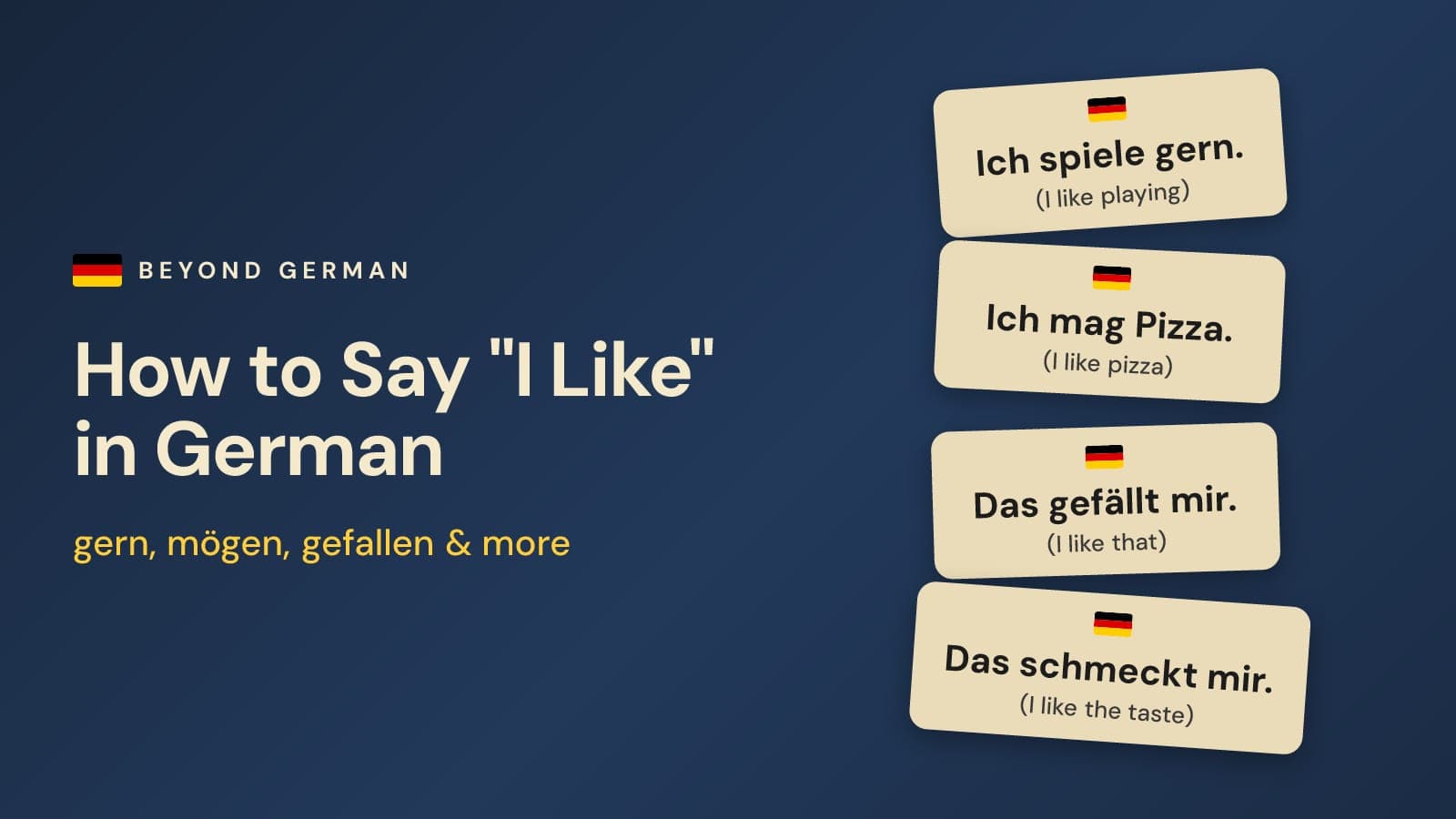
Use gern with verbs, mögen with nouns, gefallen and schmecken with the dative, and möchte for I'd like. With a big comparison table, lieber, am liebsten and common mistakes.
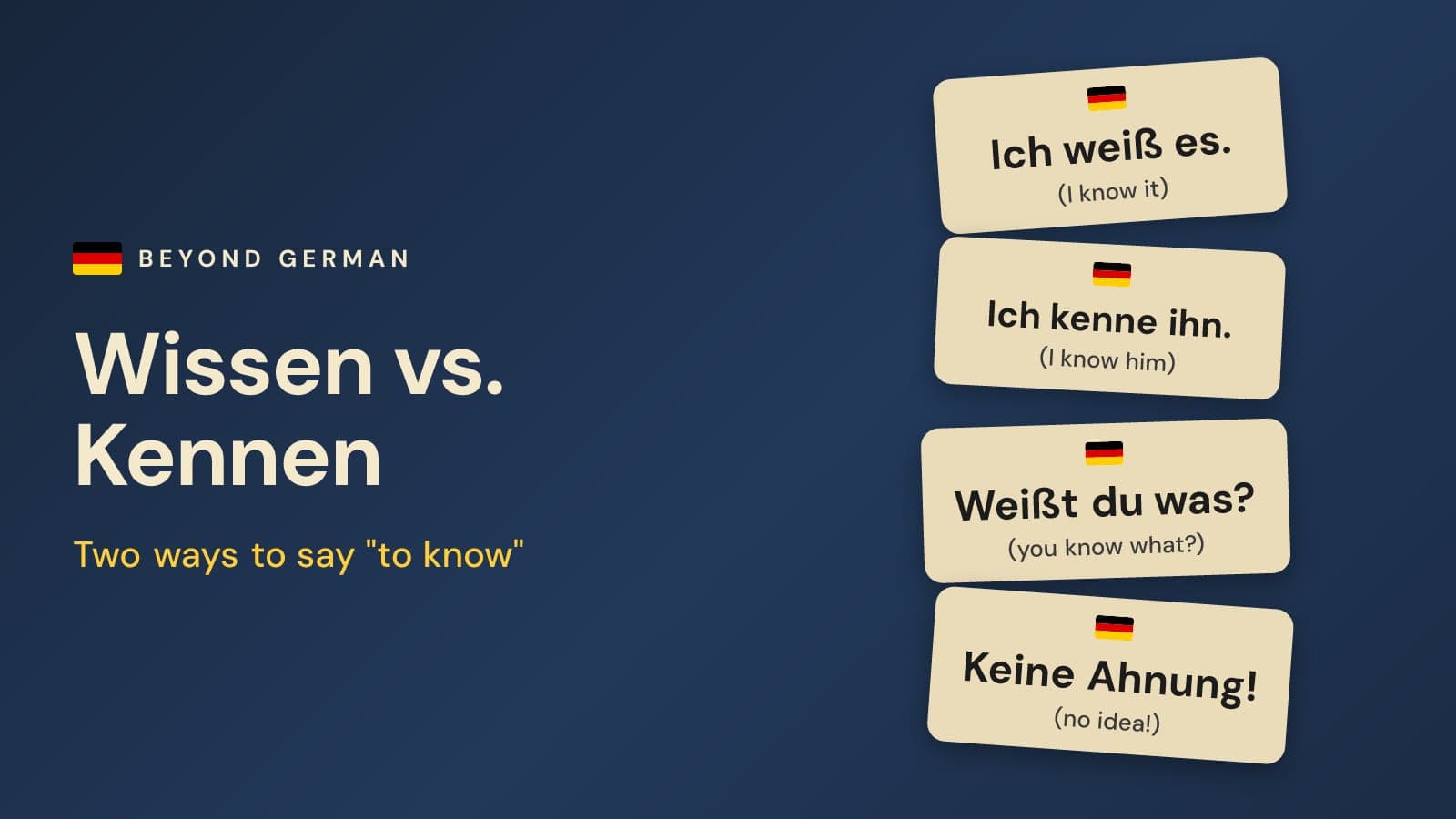
Wissen is for facts, kennen for people, places and things you're familiar with, and können for languages and skills. With a decision table, conjugations, idioms and common mistakes.
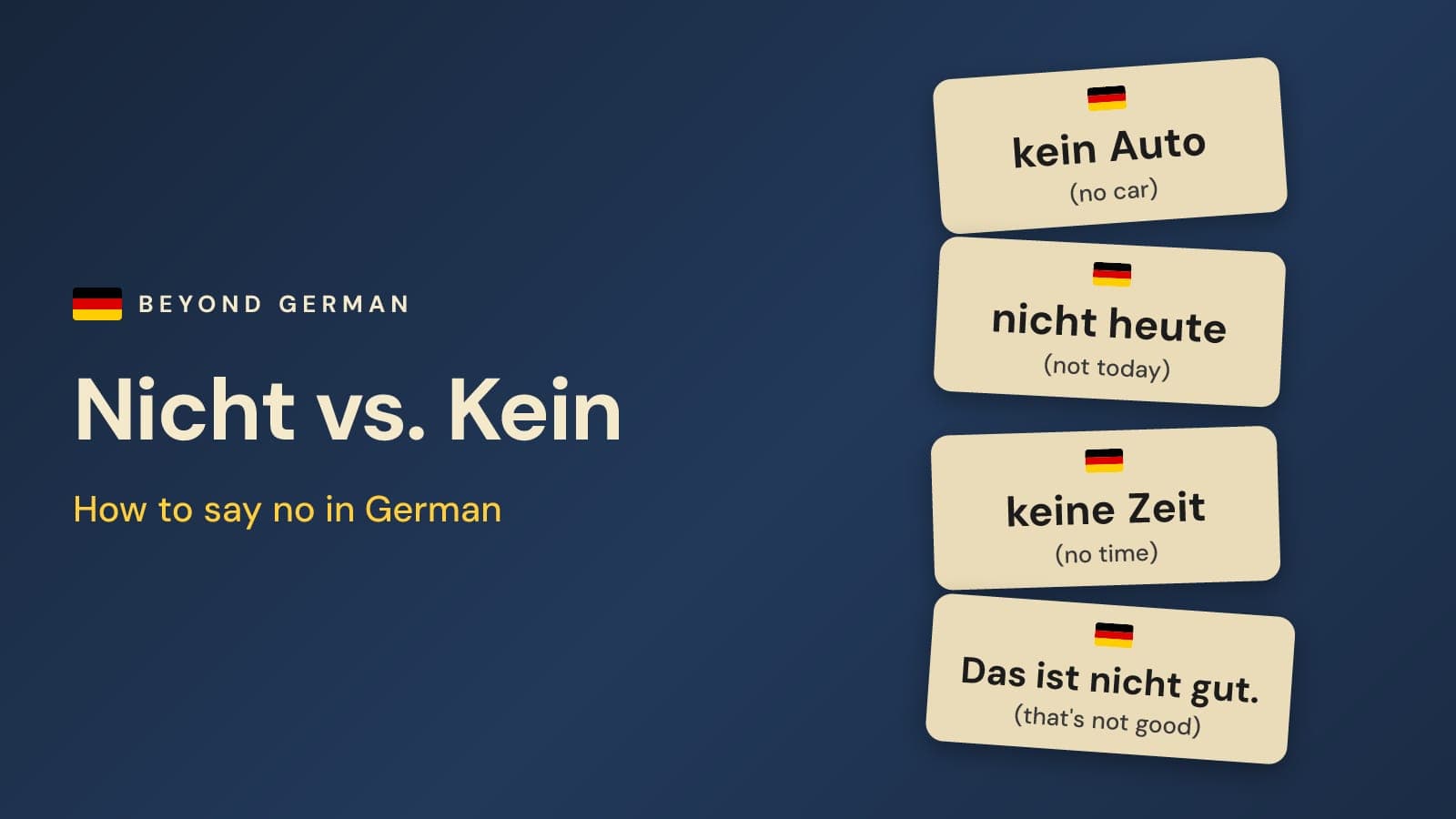
Use kein for nouns with ein or no article (kein Auto, keine Zeit) and nicht for everything else. Plus kein endings, where nicht goes, sondern, doch and nicht mehr.
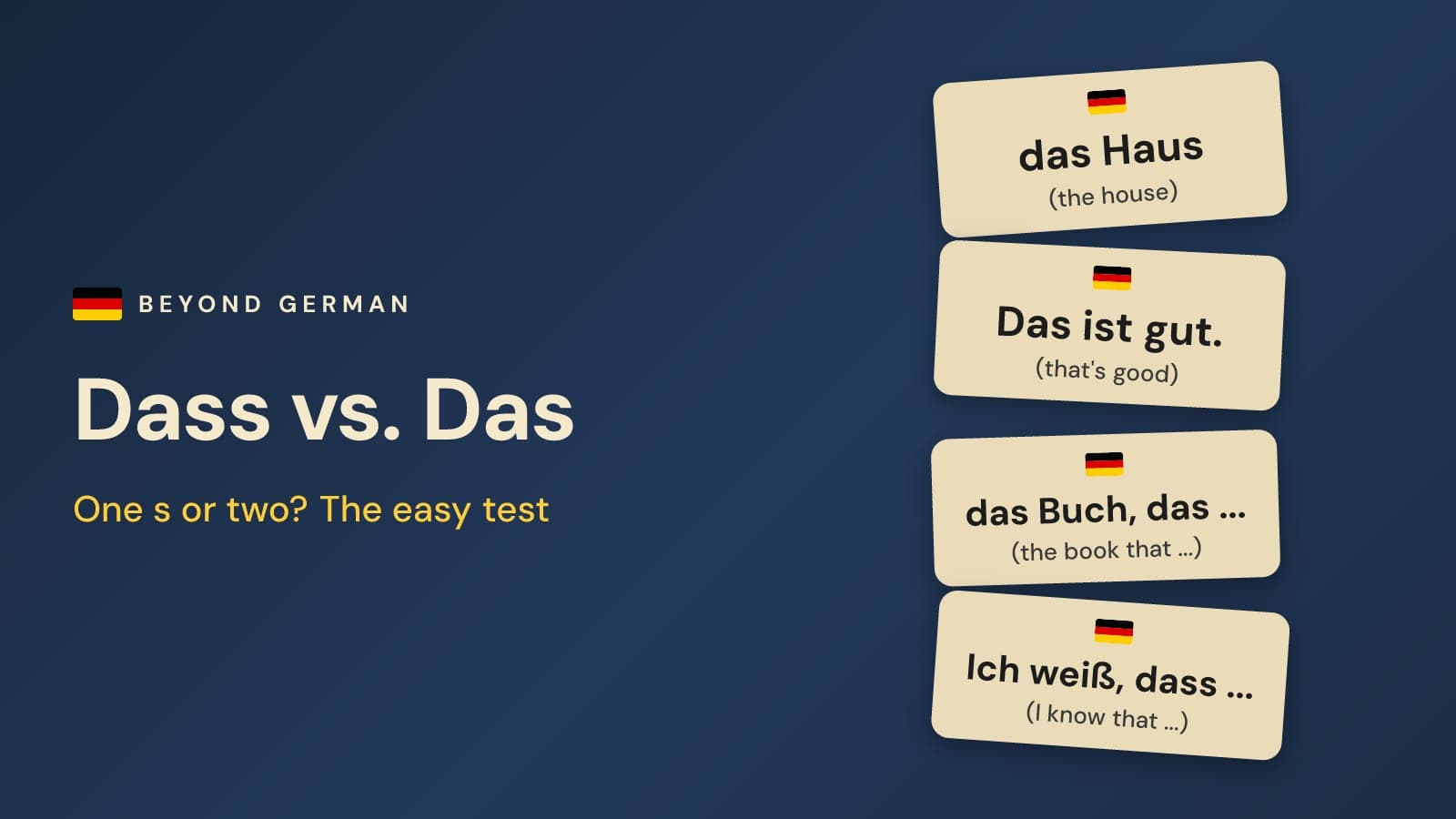
Das is an article or a pronoun (das Haus; Das ist gut; das Haus, das ich kaufe), while dass is a conjunction that sends the verb to the end. One quick test tells them apart.
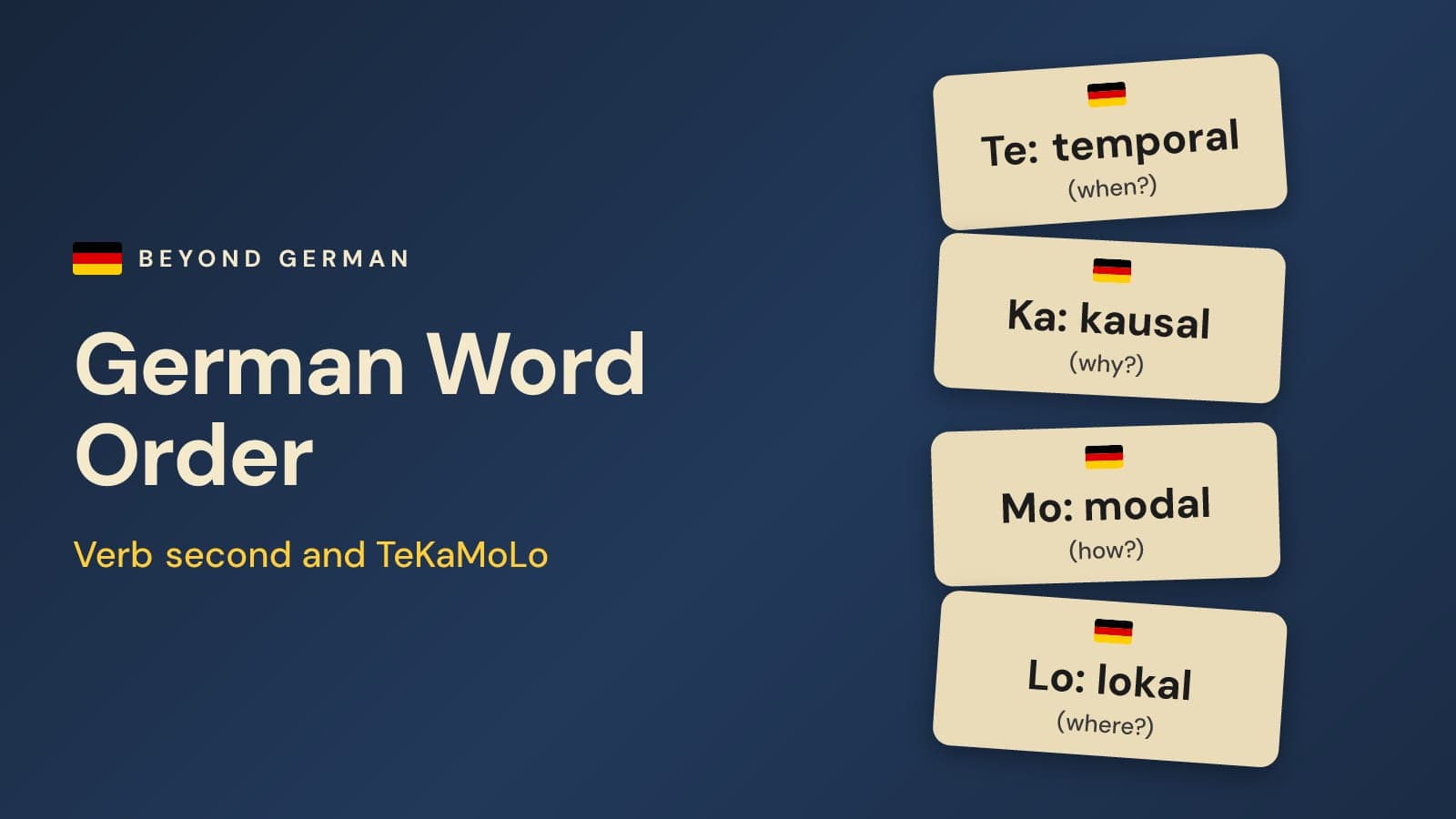
German word order in 7 rules: verb second, verb first in yes/no questions, verb last after weil and dass, the verb bracket, TeKaMoLo, object order and where nicht goes.
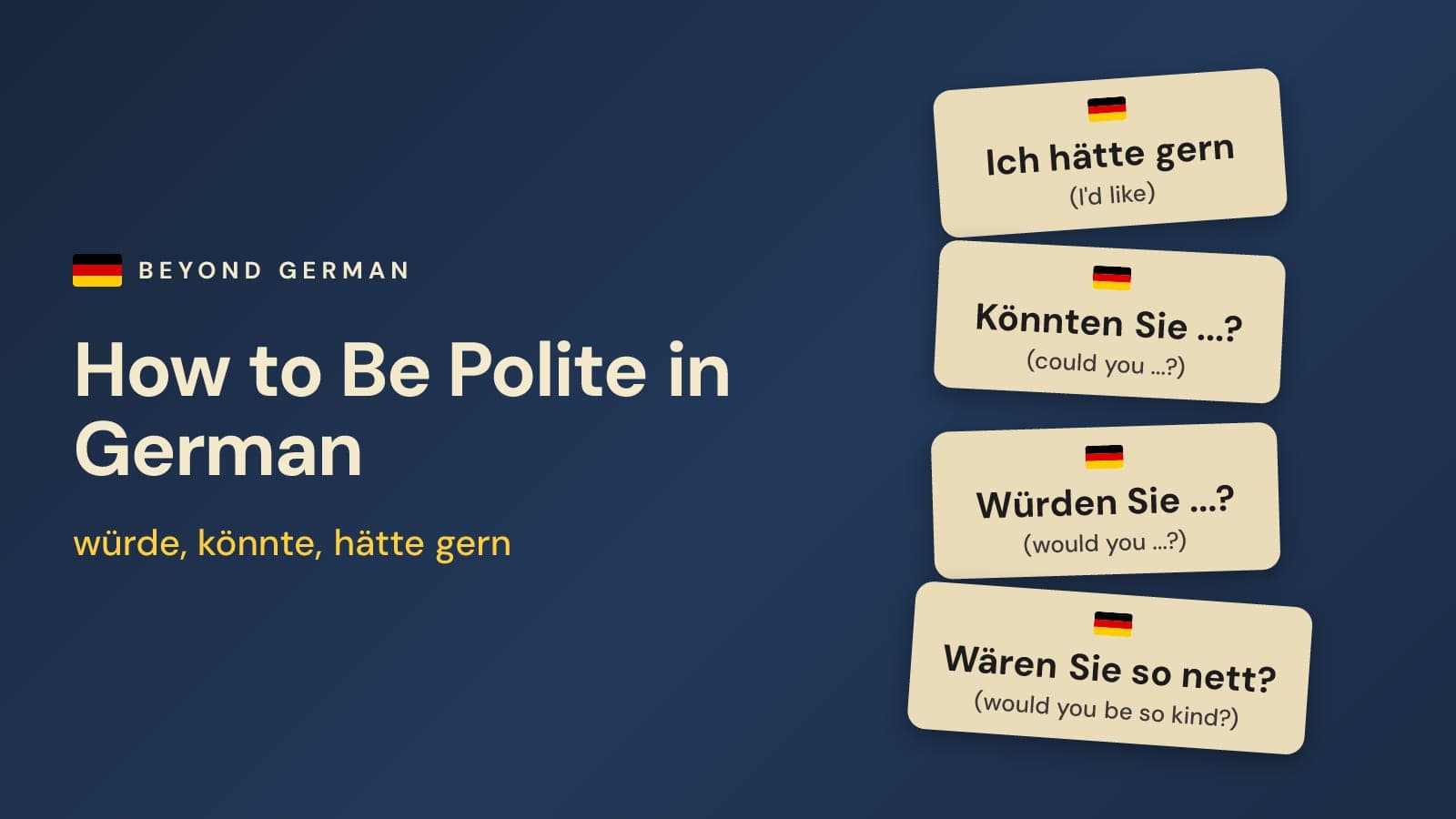
Sound polite in German with Konjunktiv II: Ich hätte gern, Könnten Sie, Würden Sie and Dürfte ich, plus softening words, Sie vs. du, polite refusals and dialogues.
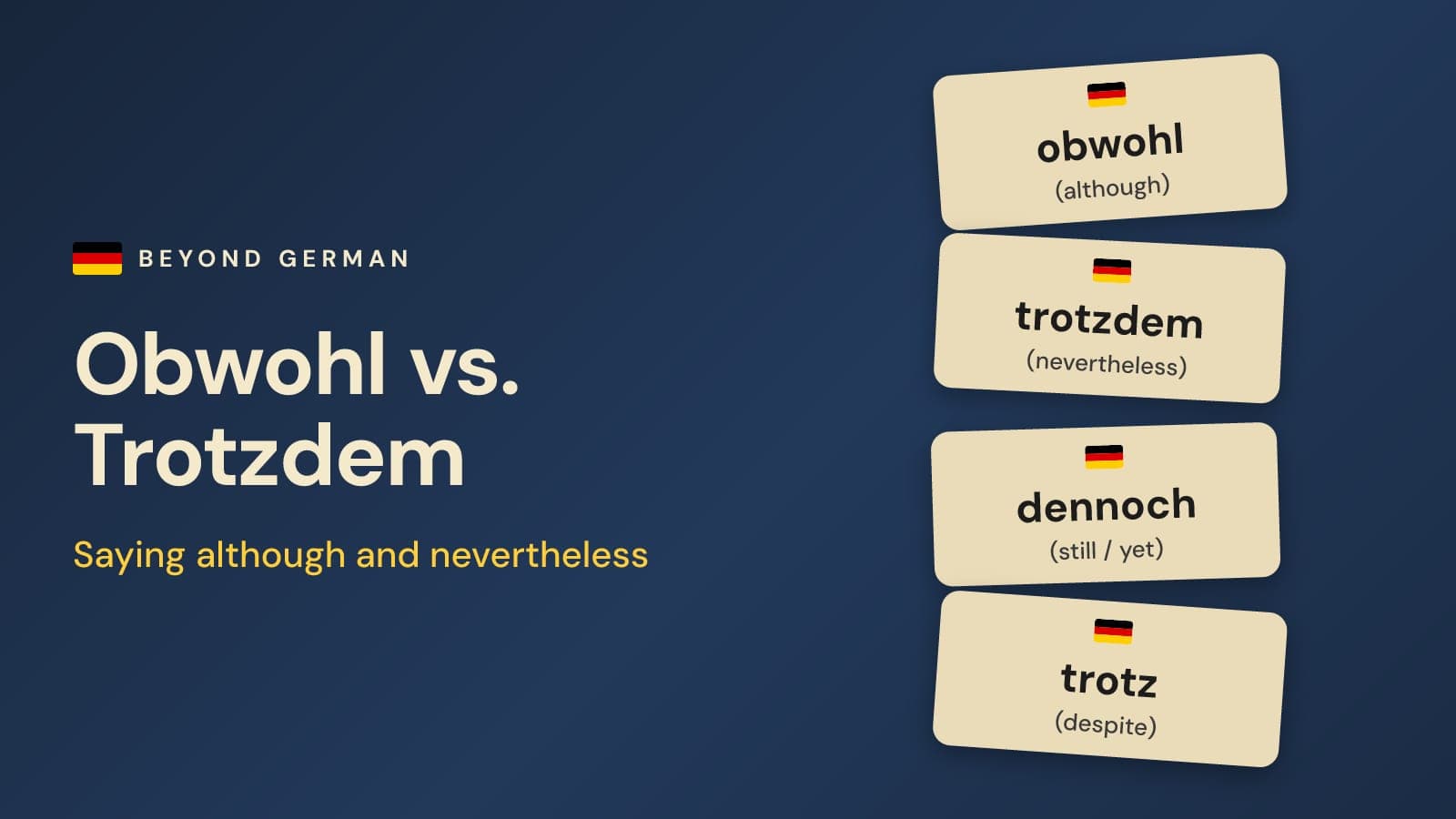
Obwohl means although and sends the verb to the end, while trotzdem and dennoch mean nevertheless and take the verb right after them. Allerdings, trotz and sondern are covered too.
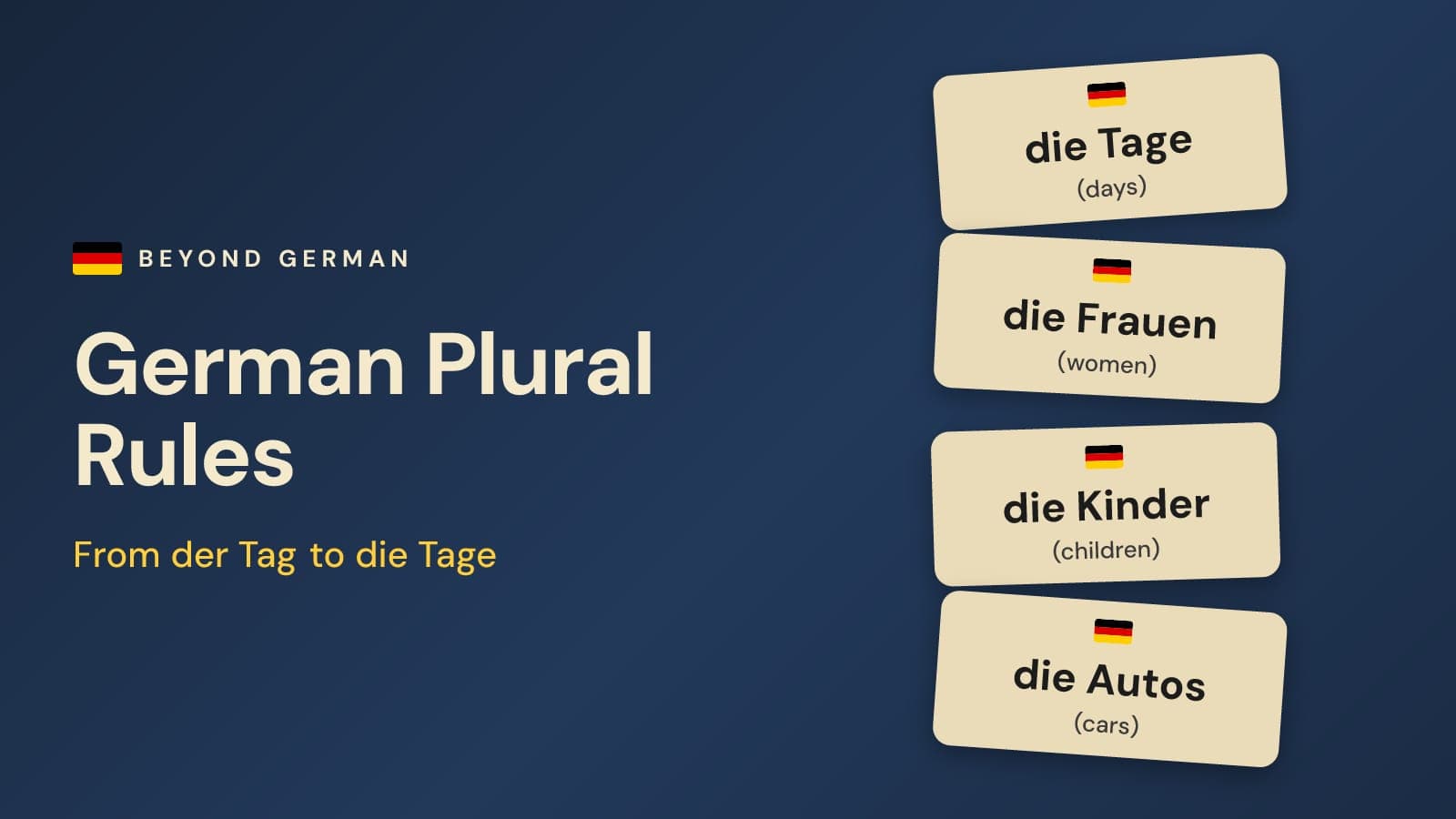
German nouns form plurals in five ways: -e, -(e)n, -er, -s or no ending, often with an umlaut. Learn which nouns take which ending, how reliable each pattern is, and the exceptions.
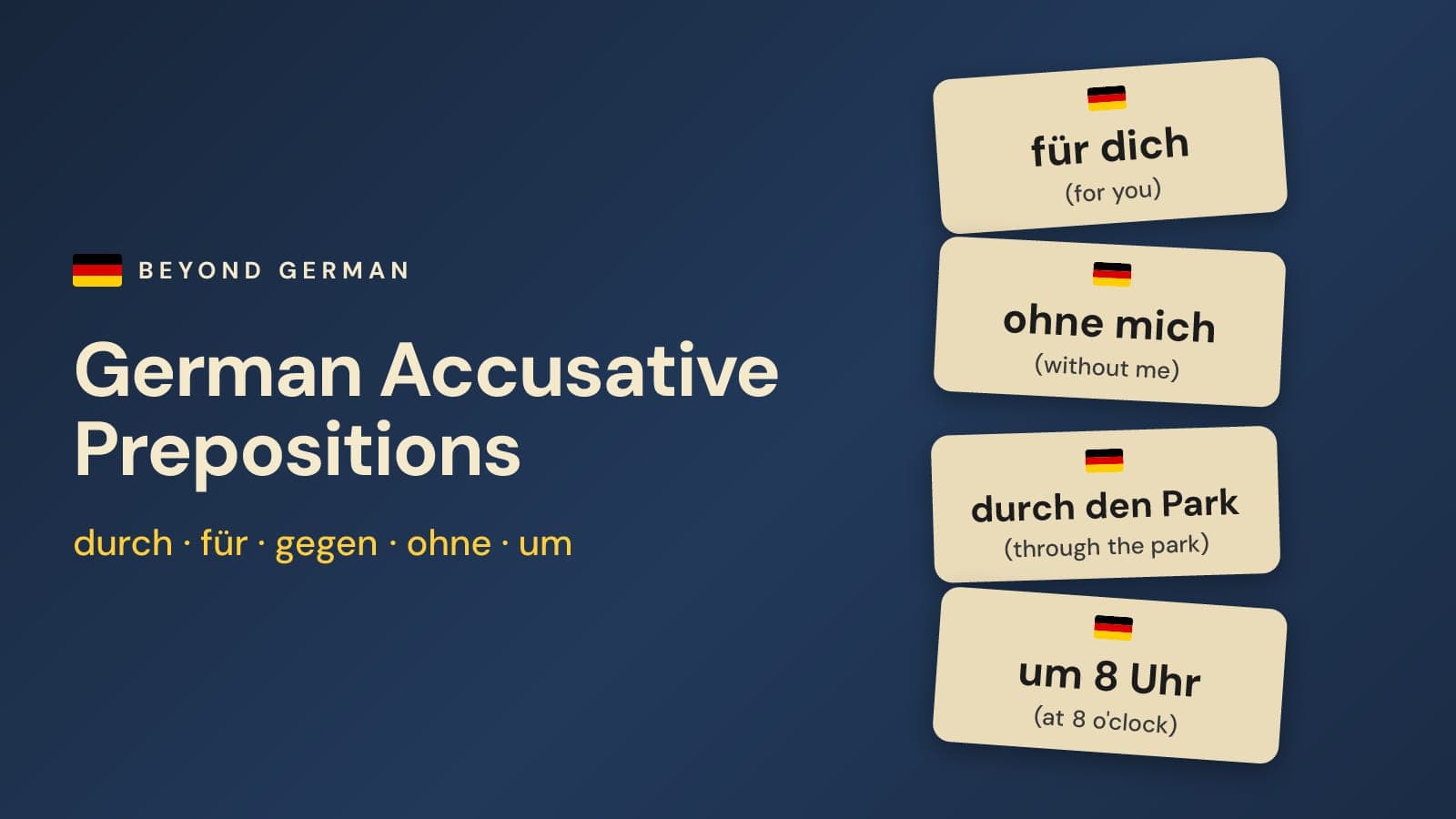
The German accusative prepositions durch, für, gegen, ohne and um (plus bis and entlang) with meanings, examples, endings, contractions and the DOGFU memory trick.
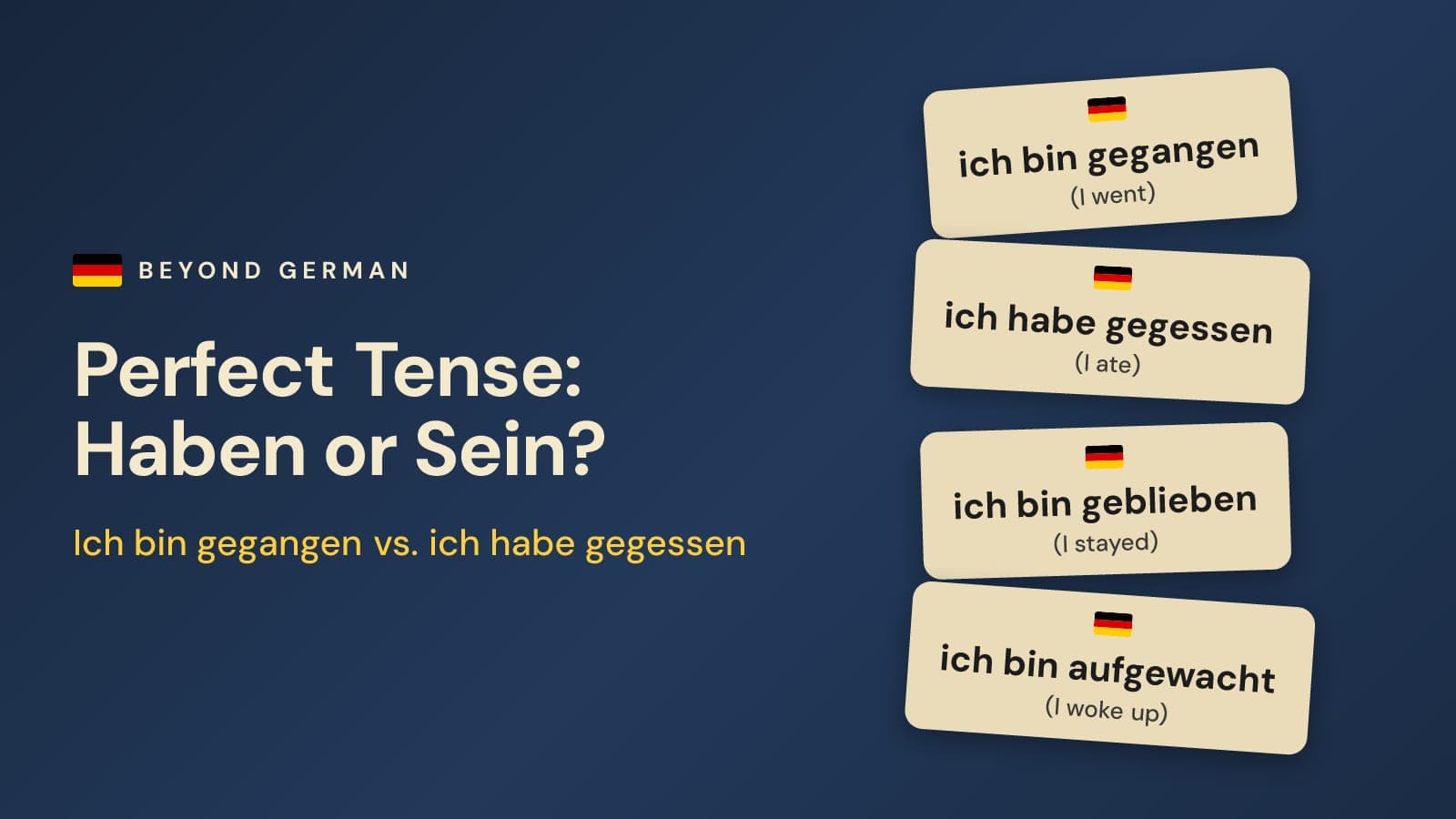
Most verbs form the German Perfekt with haben. Use sein for movement from A to B, a change of state, and sein, bleiben and passieren. Rules, tricky cases and 30 verbs.
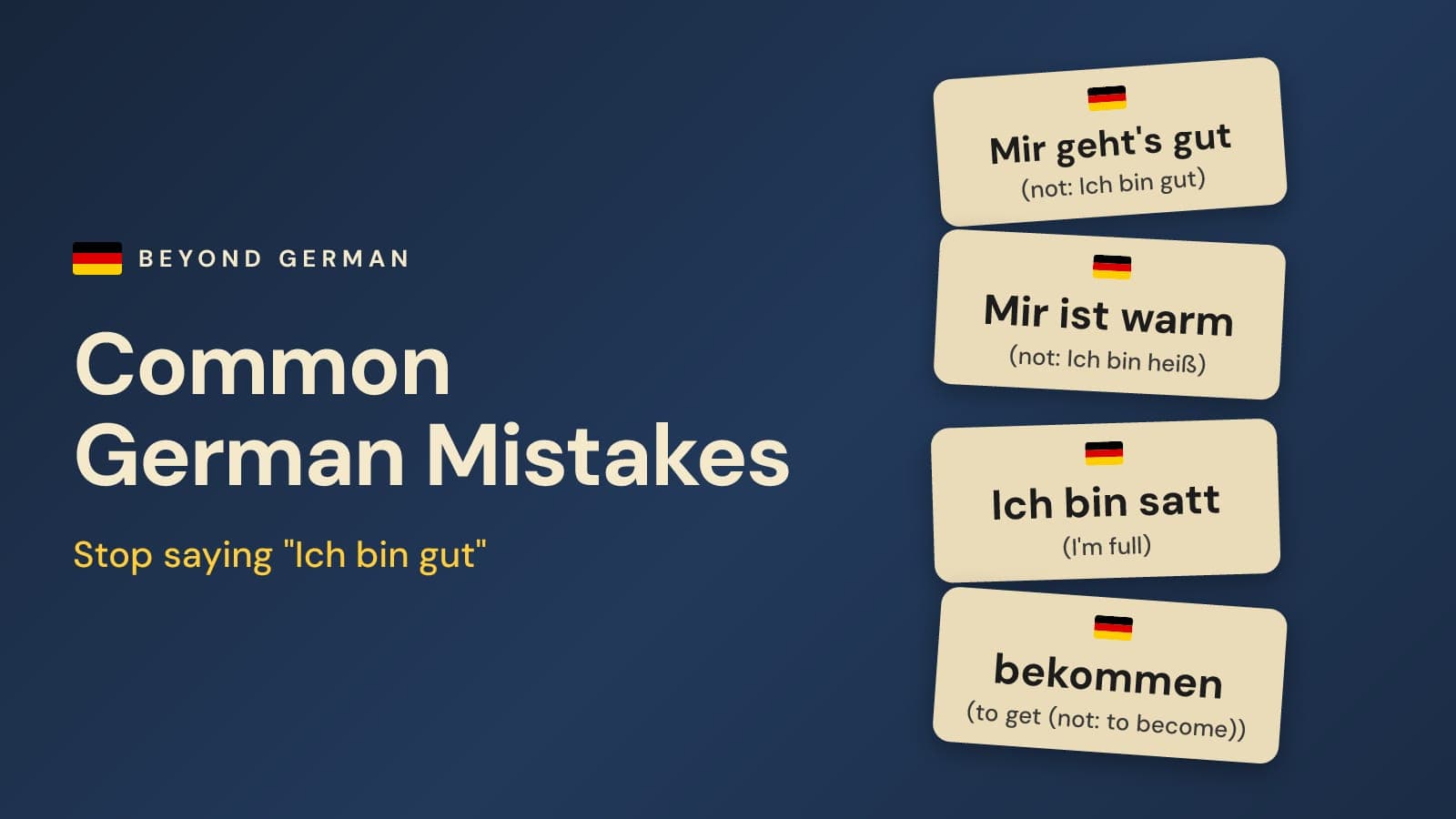
Why 'Ich bin heiß' gets laughs and 'Ich will' doesn't mean 'I will': 15 common German mistakes English speakers make, plus the false friends to watch out for.
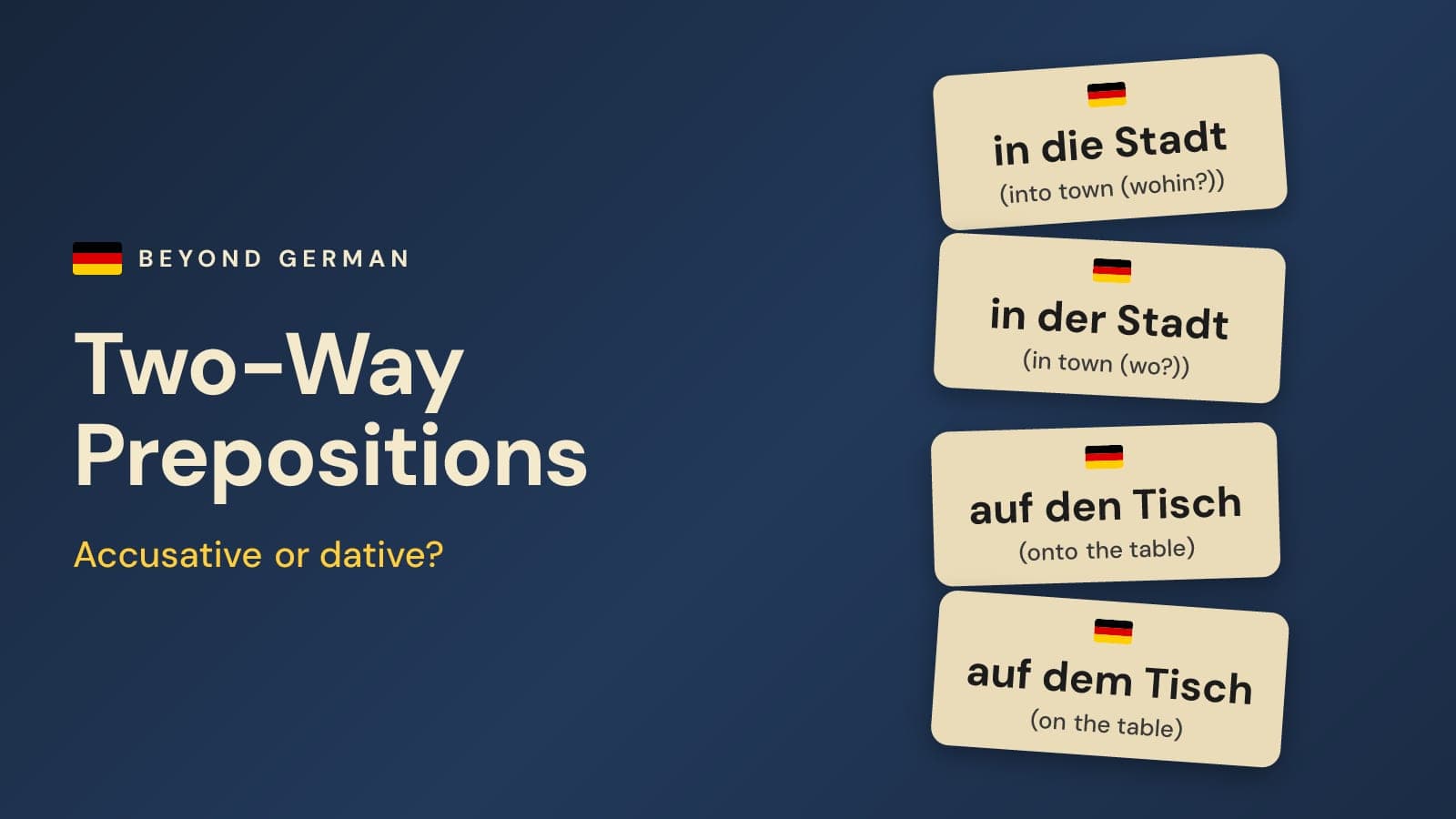
The nine German two-way prepositions (an, auf, hinter, in, neben, über, unter, vor, zwischen): when they take the accusative or dative, with verb pairs and examples.
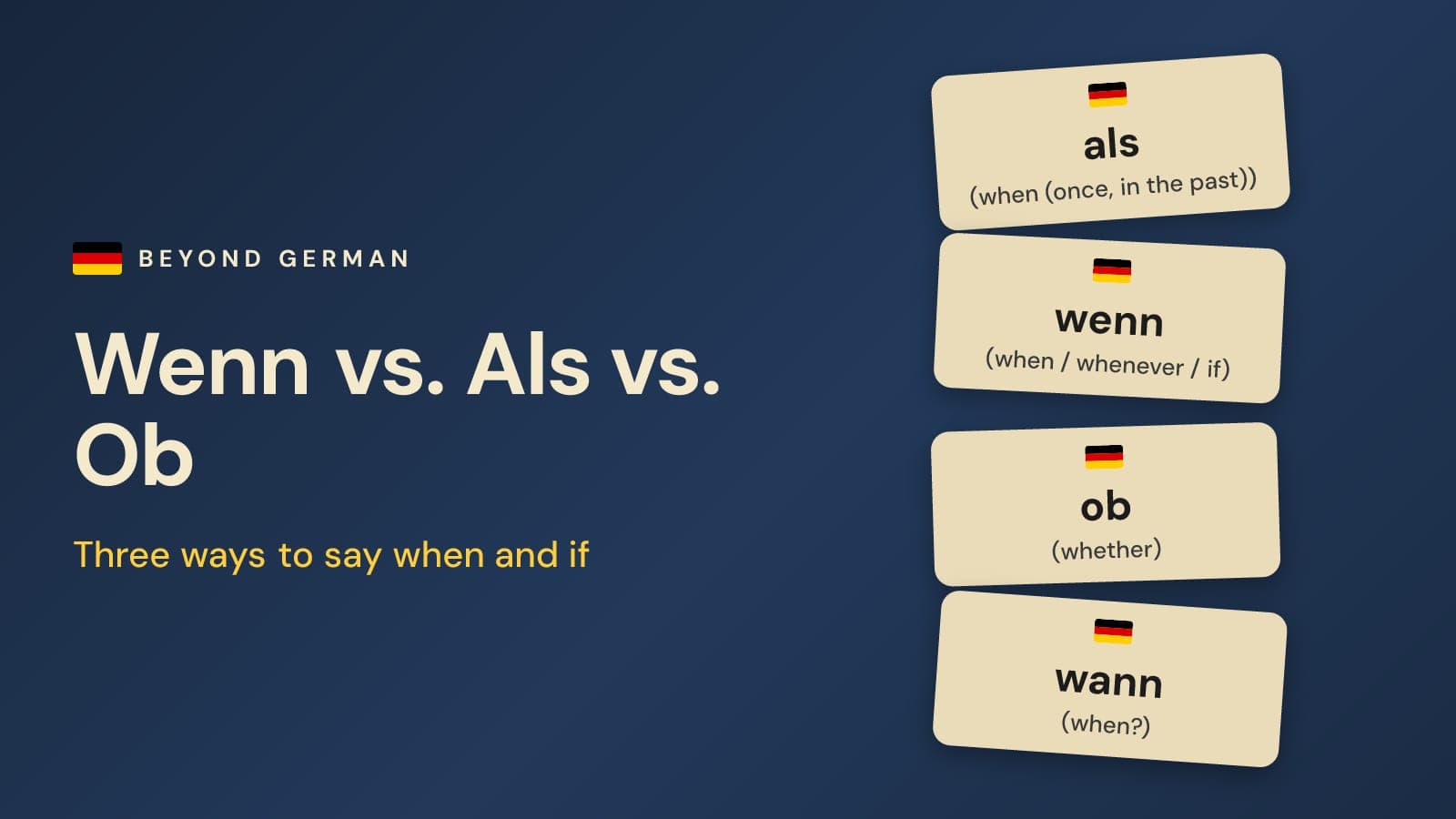
Als for one past event, wenn for whenever, now, later and if, ob for whether, and wann for questions: a quick decision table, clear examples and common mistakes.
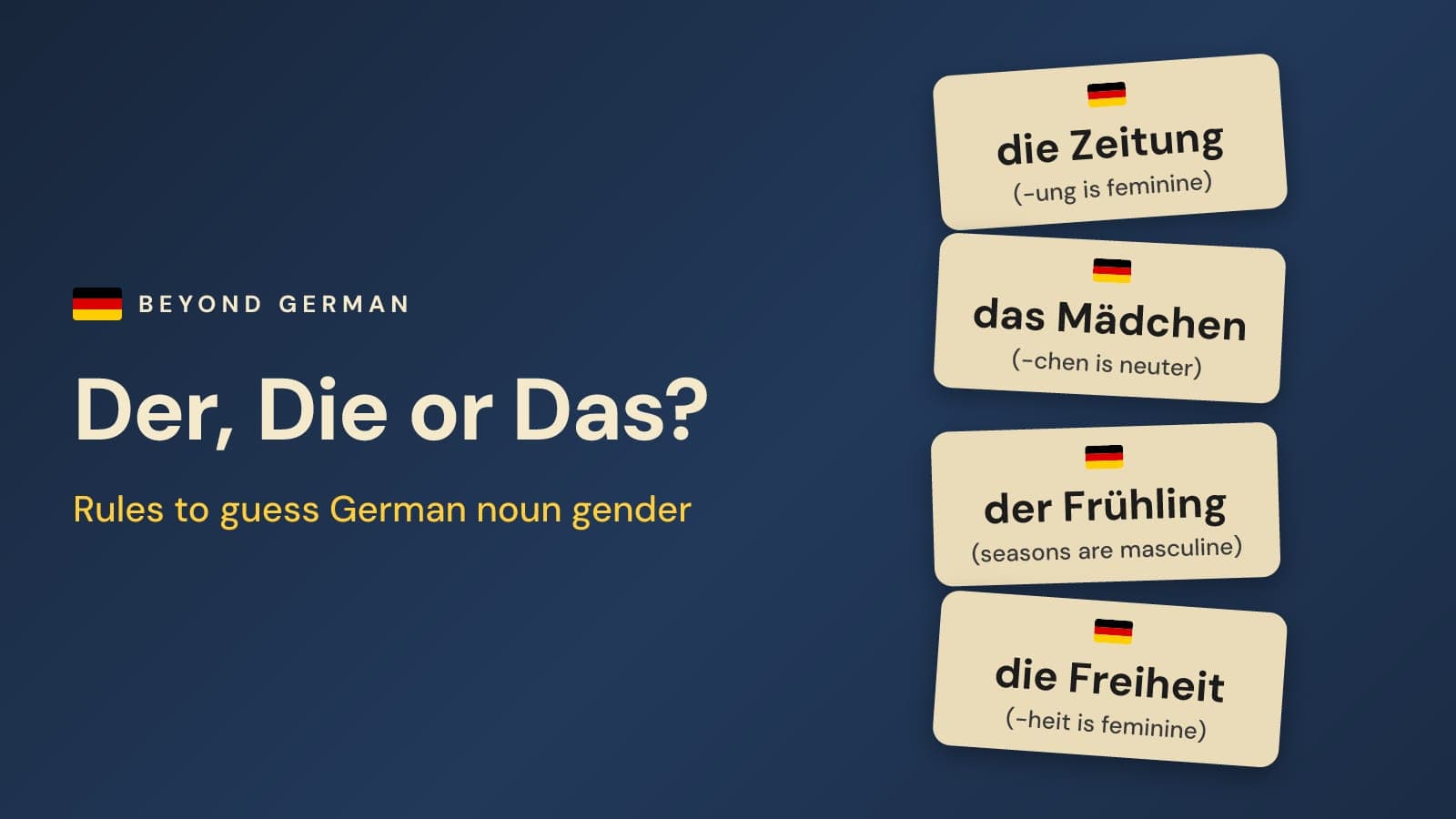
No single rule tells you if a German noun is der, die or das, but endings, meaning and compounds give strong clues. Here are the rules, how reliable each is, and the exceptions.
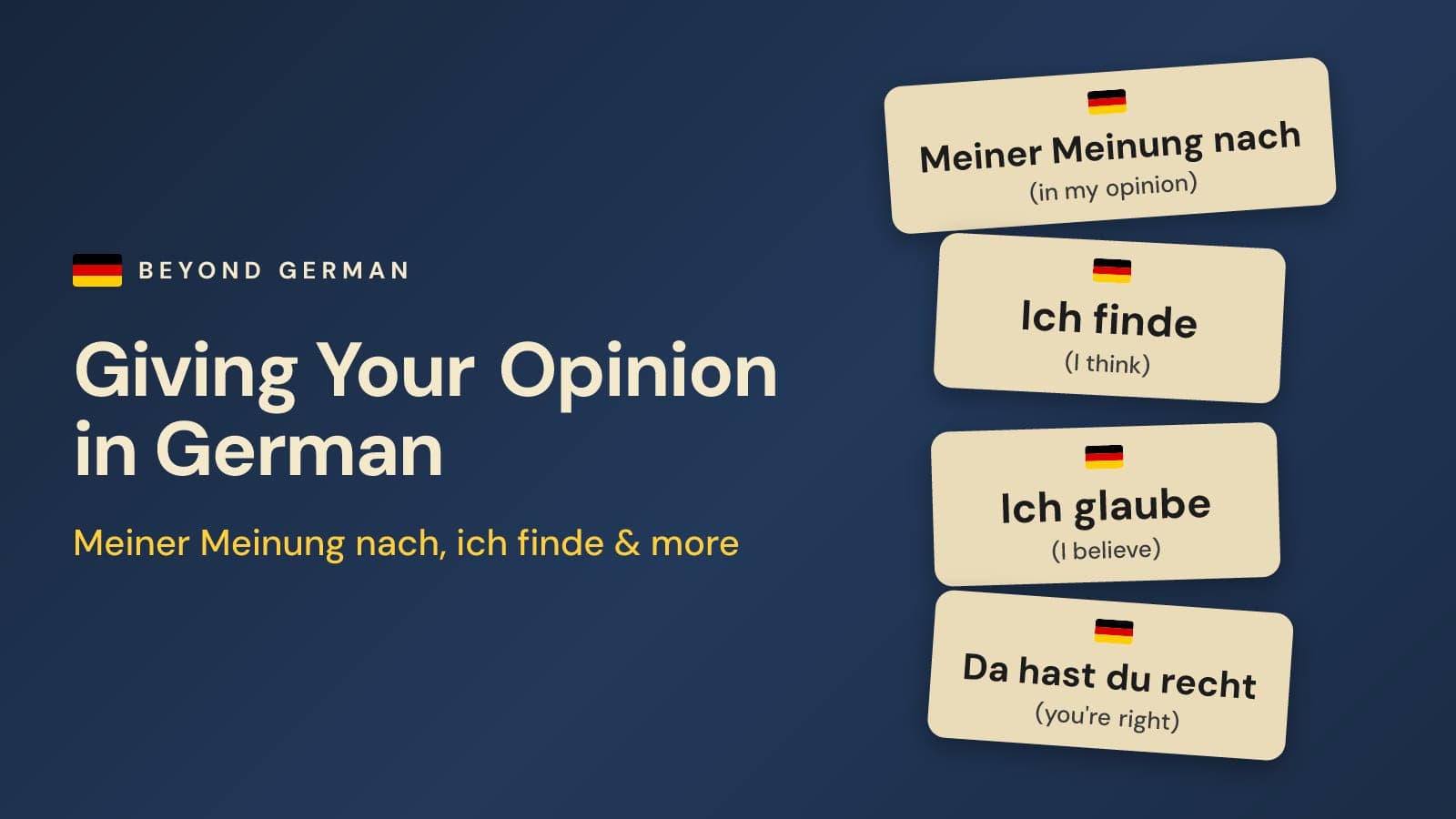
How to give your opinion in German: meiner Meinung nach, ich finde vs. ich denke vs. ich glaube, the word order rules, and phrases to agree and disagree politely.
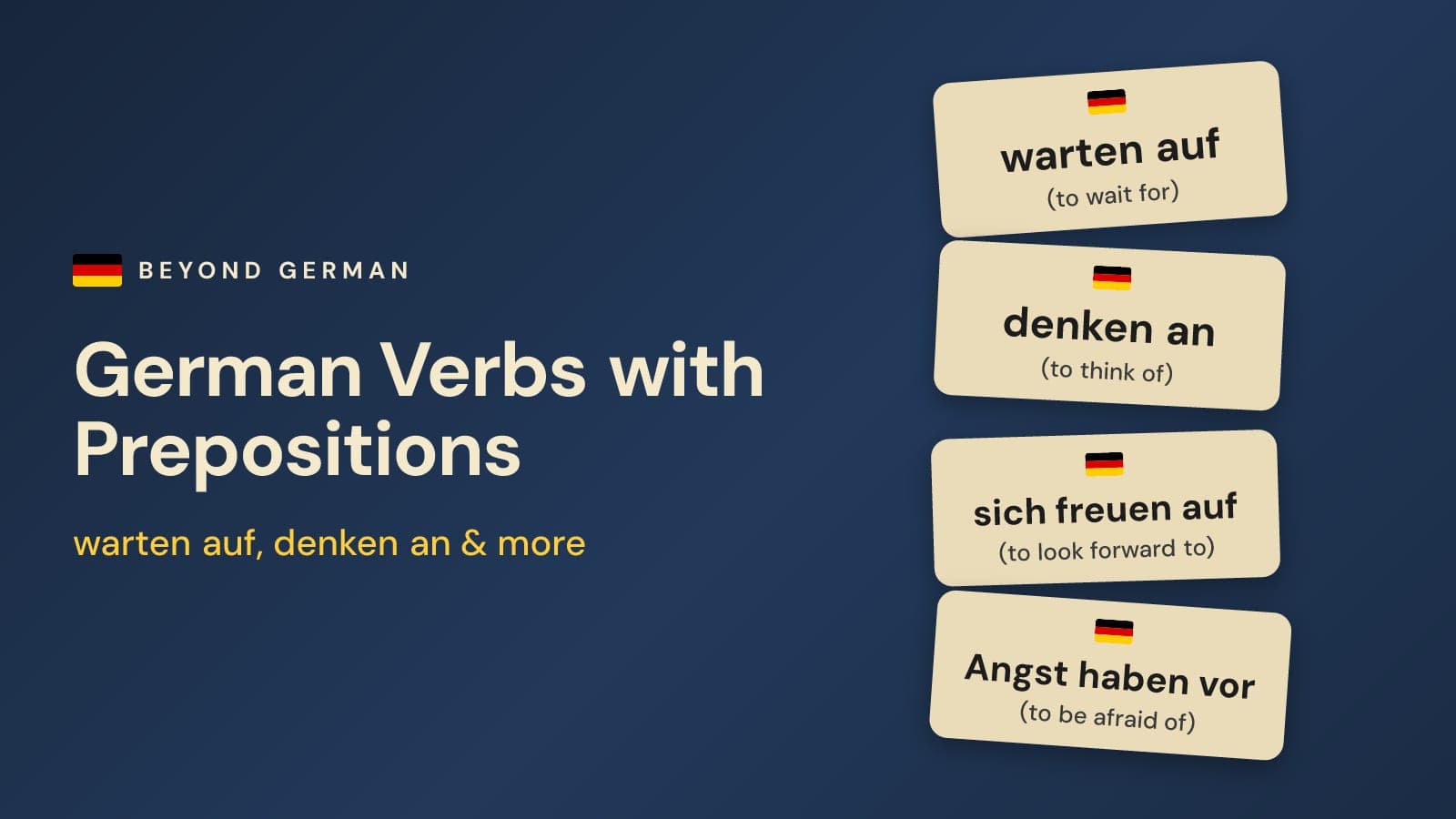
The 40 most useful German verbs with prepositions, from warten auf to sich freuen über, with their cases, example sentences and how to use worauf and darauf.
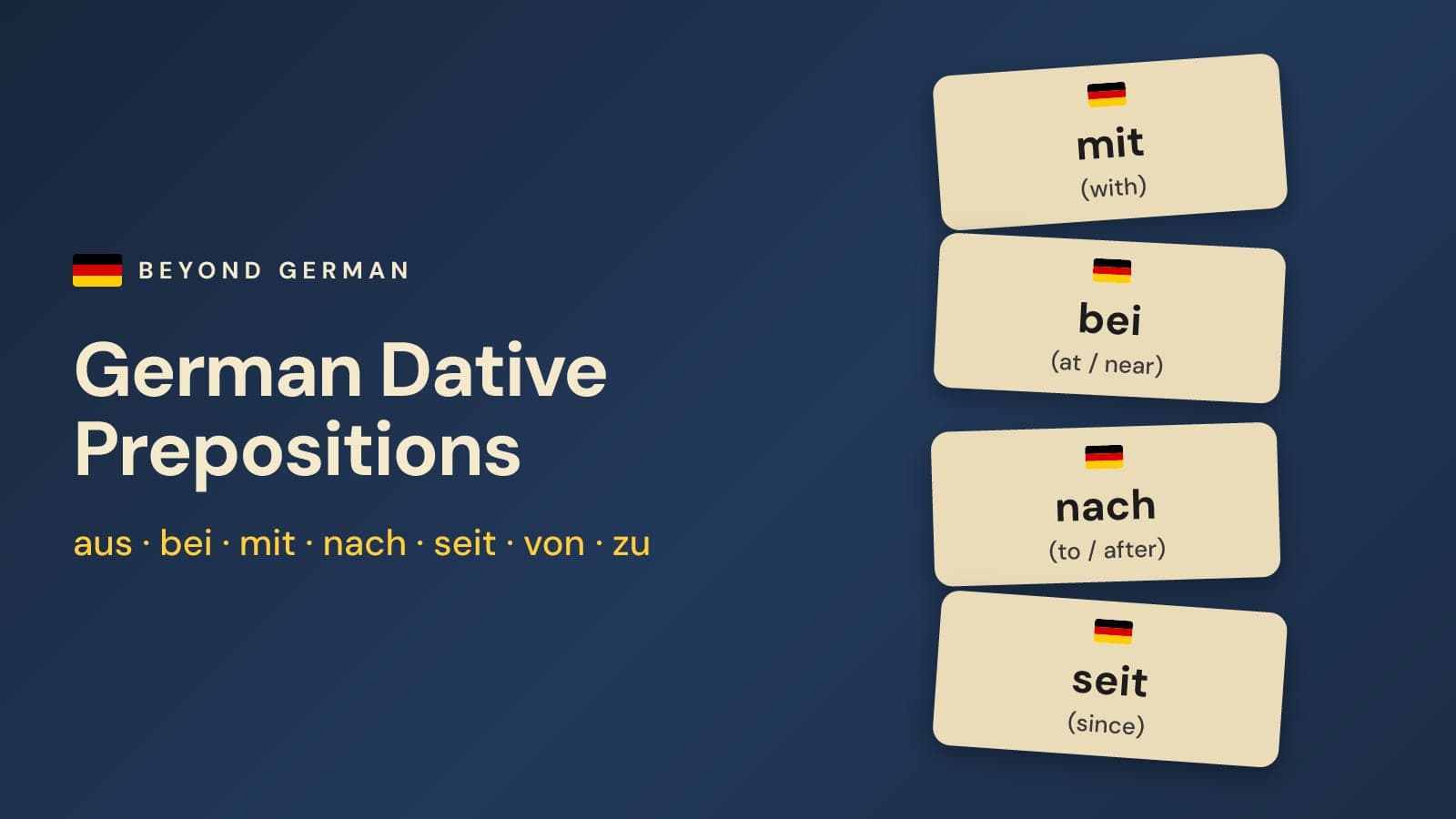
The nine German dative prepositions (aus, außer, bei, gegenüber, mit, nach, seit, von, zu) with meanings, examples, dative endings, contractions and a memory trick.

Asking questions is essential in any language. Whether you're ordering food, asking for directions, or having a conversation - you need to know how to ask questions in German. German question words are called W-Fragen (W-questions)...
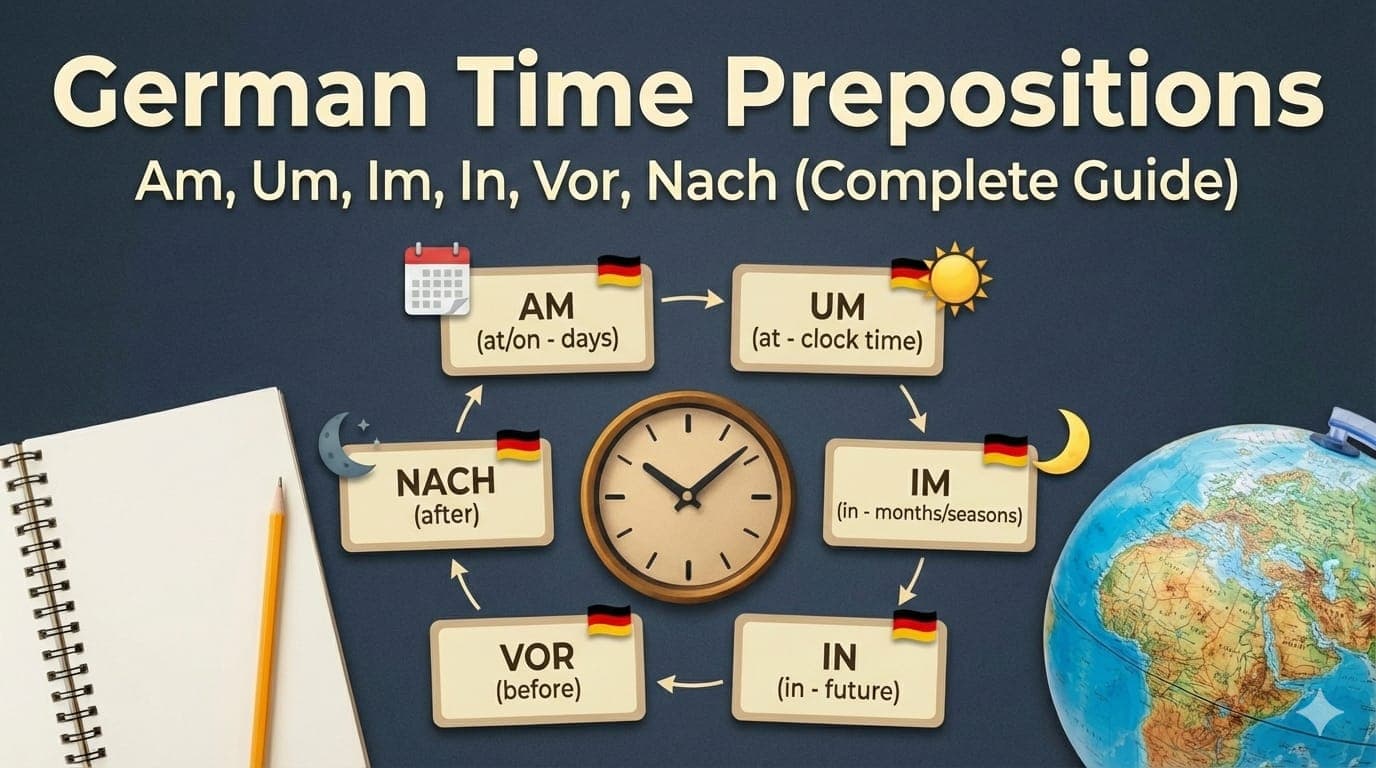
One of the trickiest parts of German for beginners is knowing which preposition to use when talking about time. Should you say 'am Montag' or 'an Montag'? This guide will clear up all the confusion...

Confused about when to use weil, denn, or deshalb? This guide breaks down the key differences between German causal connectors, including word order rules, common mistakes, and real-life examples.

Modal verbs are the 'cheat code' to speaking German fast. Learn all 6 Modalverben (können, müssen, wollen, sollen, dürfen, mögen), their conjugations, word order rules, and common mistakes to avoid.
Get our free German learning cheat sheet — the 50 most common mistakes German learners make (and how to fix them).