
German Greetings: 20 Ways to Say Hello (Formal, Informal, Regional)
 Beyond German Team
If you've ever greeted a German with "Wie geht es dir?" and watched them pause awkwardly, you're not alone.
Here's the truth: Germans do use "Wie geht es dir?" - but it's not the casual "Hi, how are you?" you might think. In German culture, asking someone how they're doing can feel surprisingly personal. It's not the default quick opener you'd use with a cashier or colleague.
So what do Germans actually say?
This guide will teach you 20+ authentic German greetings - organized by formality, context, and region - so you can sound natural in any situation.
Part 1: Formal German Greetings (Business, Strangers, Authority)
Use these in professional settings, with strangers, or when speaking to someone older or in a position of authority.
1. Guten Tag
Meaning: Good day
When to use: The safest, most universally understood formal greeting. Works anywhere in Germany, anytime from late morning to early evening.
Example: "Guten Tag, ich habe einen Termin bei Herrn Müller." (Good day, I have an appointment with Mr. Müller.)
2. Guten Morgen
Meaning: Good morning
When to use: Before noon. Standard in offices, shops, and when greeting neighbors in the morning.
3. Guten Abend
Meaning: Good evening
When to use: From around 6 PM onwards. Perfect for restaurants, formal dinners, or evening events.
4. Grüß Gott
Meaning: Literally "Greet God" (but used like "Hello")
When to use: Strictly in Southern Germany (Bavaria), Austria, and parts of Switzerland. It sounds extremely formal and old-fashioned in the North. In the South, it's the default polite greeting.
Pro tip: If you're in Munich or Vienna, use this. In Hamburg? Stick to "Guten Tag."
Part 2: Informal German Greetings (Friends, Family, Casual)
These are for people you're on a first-name ("du") basis with. Use them with friends, close colleagues, and younger people.
5. Hallo
Meaning: Hello / Hi
When to use: The universal casual greeting. Works for almost everyone in informal settings. Safe, friendly, and understood everywhere.
6. Hi
Meaning: Hi (borrowed directly from English)
When to use: Extremely common among younger Germans, especially in cities. Very casual.
7. Hey
Meaning: Hey
When to use: With close friends. Can sound a bit too casual or even attention-grabbing if used with strangers.
8. Na?
Meaning: Roughly translates to "What's up?" or just "Hey."
When to use: Only with people you know well. This is a super casual, almost lazy greeting. Think of it like the verbal equivalent of a head nod.
It's not a real question and doesn't require a detailed answer. The typical reply is just "Na?" back, or "Gut, und dir?"
Is "Na?" rude? No, but it's very informal. Don't use it with your boss or a stranger.
9. Was geht? / Was geht ab?
Meaning: What's up? / What's going on?
When to use: Slang, popular with teenagers and young adults. Friendly and energetic.
Part 3: Regional German Greetings (Where You Say It Matters)
German is not monolithic. What you hear in Hamburg is different from Munich, and even more different from Vienna. Here's a regional breakdown:
10. Moin (Northern Germany)
Meaning: Hello (any time of day)
Region: Hamburg, Bremen, Schleswig-Holstein, Lower Saxony, and parts of the North.
Fun fact: Despite sounding like "Morgen" (morning), "Moin" is used all day long. It comes from Low German and means something like "good" or "pleasant." You can even say "Moin Moin" for extra friendliness (though some northerners joke that's already too many words).
11. Servus (Bavaria & Austria)
Meaning: Hello / Goodbye (works for both!)
Region: Bavaria, Austria, and parts of Switzerland and South Tyrol (Italy).
Origin: From Latin "servus" (servant), implying "at your service." It's friendly but not overly formal.
12. Grüß dich (Bavaria & Austria)
Meaning: (I) greet you (informal)
When to use: Between people on "du" terms. A slightly warmer version of "Grüß Gott."
13. Habedere (Vienna)
Meaning: Shortened from "Habe die Ehre" (I have the honor).
When to use: A charming, old-fashioned Viennese greeting. You might hear it from older locals or in traditional cafes.
Part 4: When to Use "Wie geht es dir/Ihnen?" (And When NOT To)
Let's clear up the biggest misconception learners have.
"Wie geht es dir?" (informal) / "Wie geht es Ihnen?" (formal) means "How are you?" But unlike in American English, this is not a throwaway greeting.
When you ask a German this, they might actually tell you how they're feeling. It implies you have a moment to listen.
When to USE it:
- With friends and family you genuinely want to check in with.
- After a standard greeting, as a follow-up: "Hallo! Wie geht es dir?"
- In a business context (formal version) when you have established rapport.
When to AVOID it:
- With cashiers, waiters, or random strangers (too personal).
- When passing someone quickly in an office hallway (just say "Hallo" or "Moin").
- If you don't have time for a real answer.
Part 5: Cheat Sheet - What to Say and When
Here's a quick reference guide for different situations:
| Situation | Best Greeting |
|---|---|
| Meeting your boss | Guten Tag / Guten Morgen |
| Entering a shop | Hallo (North) / Grüß Gott (South) |
| Greeting a friend | Hi / Hey / Na? |
| Passing a colleague in the hall | Hallo / Moin (North) |
| At a restaurant (evening) | Guten Abend |
| Greeting an older neighbor | Guten Morgen / Guten Tag |
| Texting a friend | Hey / Was geht? |
| In Bavaria/Austria | Servus / Grüß dich |
Frequently Asked Questions (FAQ)
Is "Na?" rude?
No, but it's extremely informal. Only use it with friends or people you know well. It would be strange to use it with a stranger or in a professional setting.
Do Germans small-talk like Americans?
Generally, no. German culture values directness. The American-style "Hi, how are you?" exchanged with strangers isn't really a thing. Germans tend to greet efficiently and get to the point. This isn't rudeness - it's just a different communication style.
Can I use "Moin" everywhere in Germany?
You can, and people will understand you, but it clearly marks you as someone from the North or someone who's adopted northern habits. In Bavaria, you might get a puzzled look.
What's the difference between "Auf Wiedersehen" and "Tschüss"?
"Auf Wiedersehen" (formal) = "Goodbye" (until we see each other again).
"Tschüss" (informal) = "Bye!"
Use "Tschüss" with friends and "Auf Wiedersehen" in formal or professional contexts.
Final Thoughts: Sound Like a Native, Not a Textbook
The key to mastering German greetings is understanding context:
- Who are you talking to? (Boss vs. friend)
- Where are you? (Hamburg vs. Munich)
- When is it? (Morning vs. evening)
Stop worrying about perfection. Start using these greetings in real life, and you'll quickly see which ones feel natural to you.
Moin, and good luck!
Keep learning:
- Goodbye in German: Tschüss, Auf Wiedersehen & 30+ More Ways
- How Are You in German: Wie geht's? and How to Answer
- Thank You in German: Danke schön, Vielen Dank & How to Reply
- How to Introduce Yourself in German: Ich heiße & Sample Intros
- Essential German Phrases for Beginners: 60+ Survival Phrases
- Happy Birthday in German: Alles Gute zum Geburtstag & Wishes
- Merry Christmas in German: Frohe Weihnachten & Traditions
Level Up Your German
Join 1,000+ learners getting weekly tips, grammar shortcuts, and cultural insights.
Share this article
Continue Reading
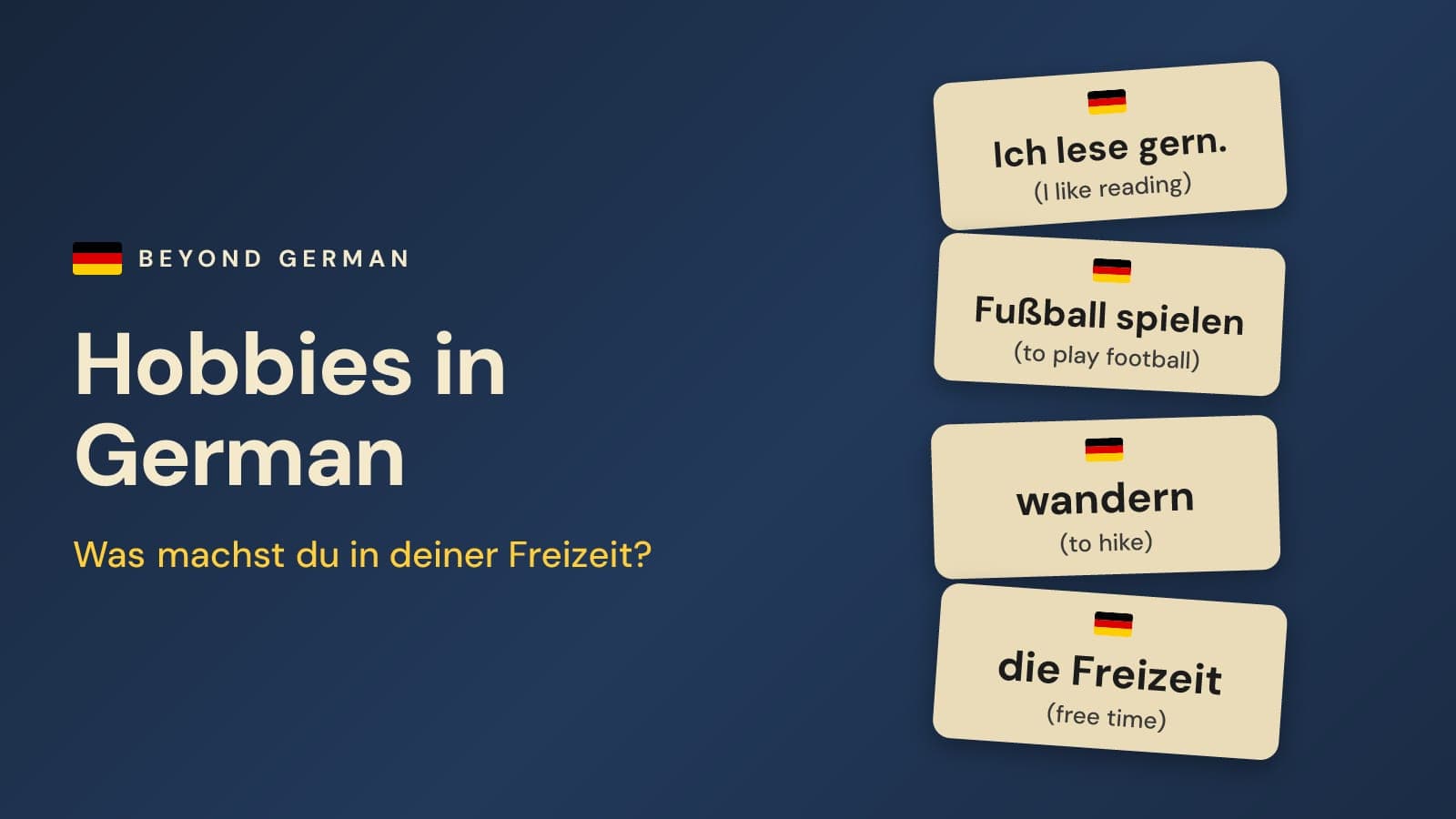
Hobbies in German: Was machst du gern? Freizeit Vocabulary
How to talk about hobbies in German: ask Was machst du in deiner Freizeit?, answer with gern, lieber and am liebsten, and learn Freizeit vocabulary by category.
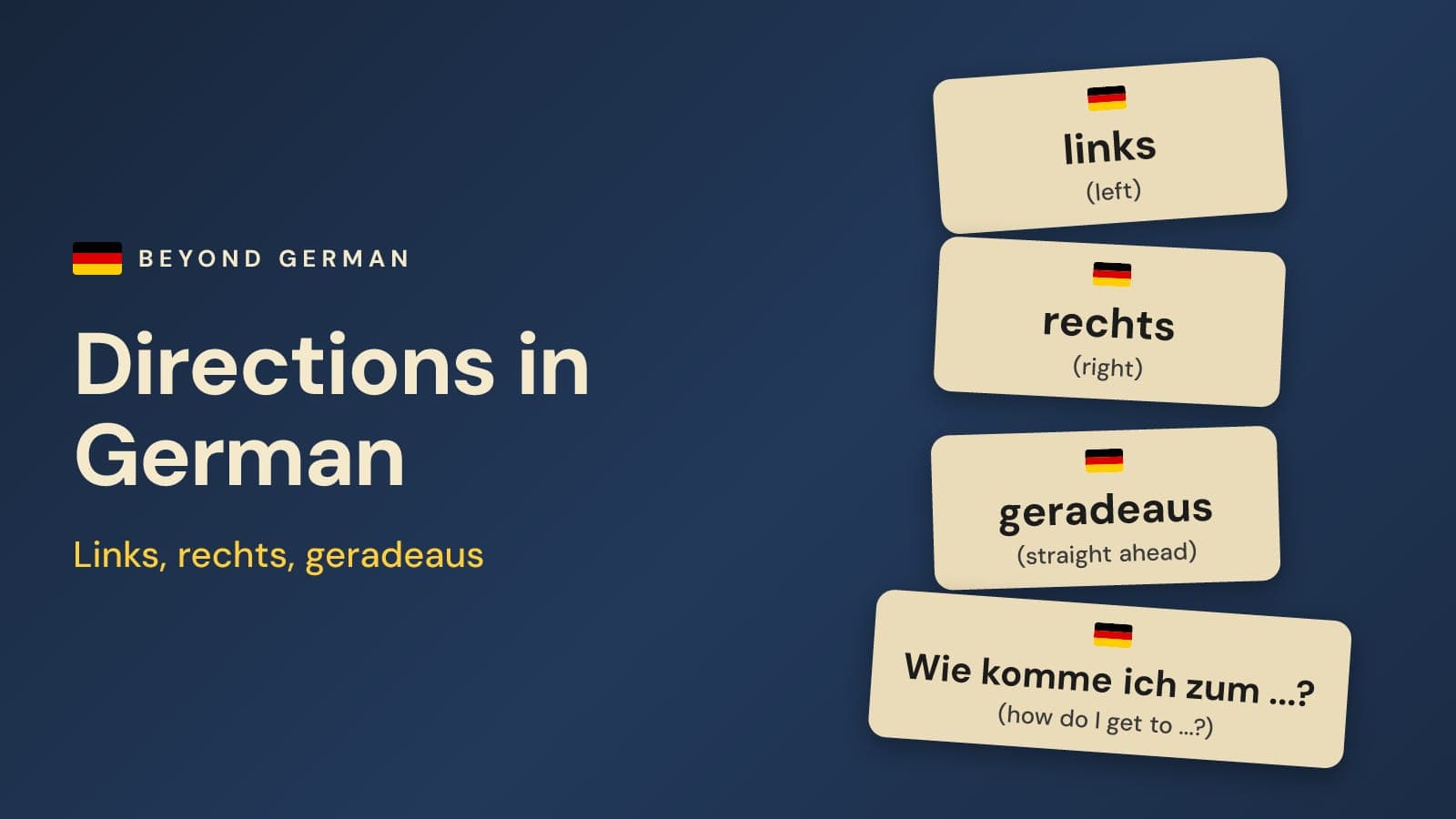
Directions in German: Links, Rechts, Geradeaus & How to Ask
How to ask for directions in German (Wie komme ich zum Bahnhof?), understand links, rechts and geradeaus, plus city vocabulary, two dialogues and common mistakes.
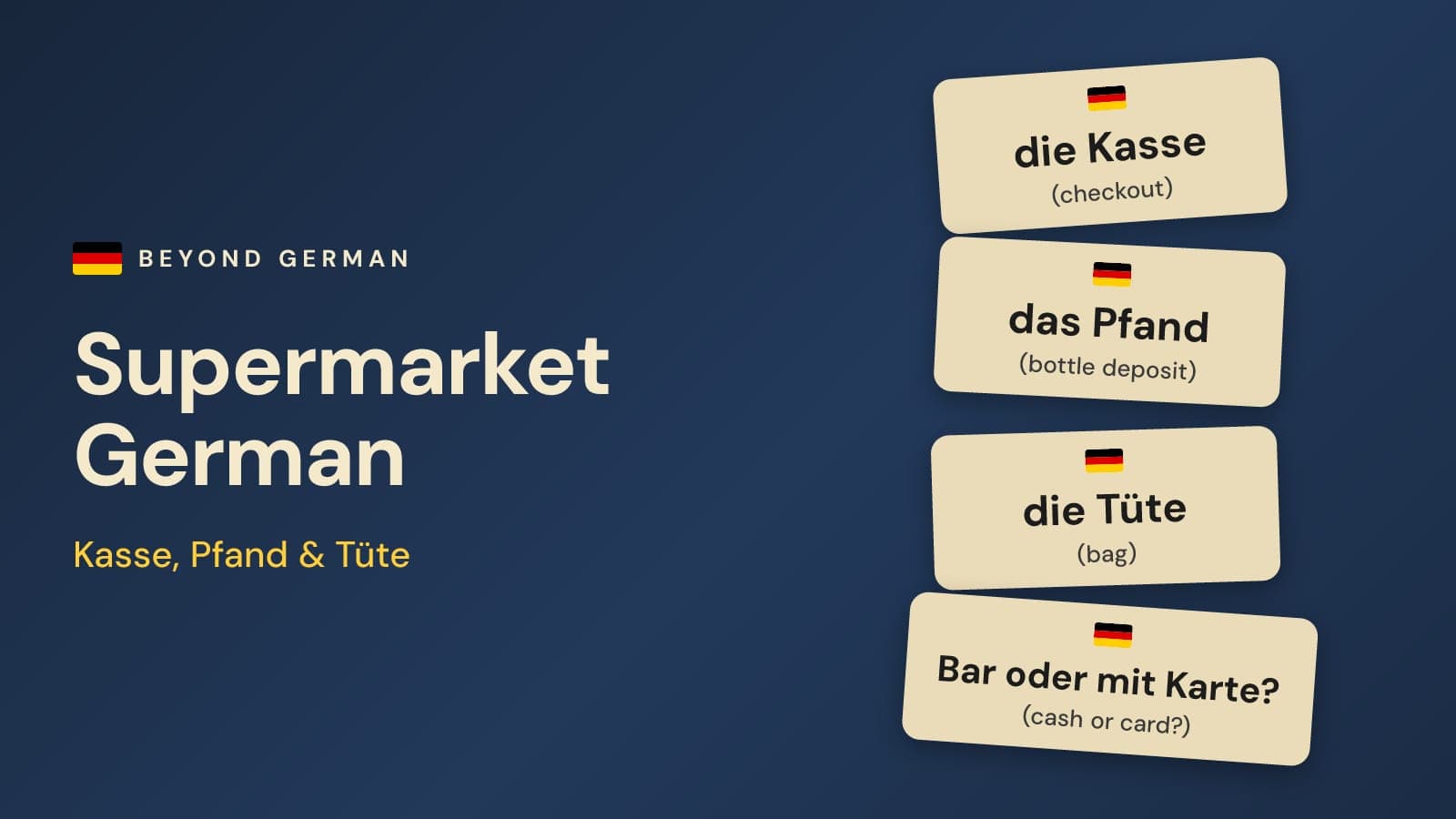
German Supermarket Vocabulary: Pfand, Kasse & Shopping Phrases
Shop like a local in Germany: types of shops, checkout phrases, how Pfand works, bags, quantities and Sunday closing, with the German you'll hear at the Kasse.